I remember the first time I stood in their backyard at night.
We turned the lights on.
Well… technically, we turned the one light on.
A single flood mounted under the deck blasted the yard in harsh white light. The patio glowed like an interrogation room. Everything beyond 20 feet disappeared into blackness.
The homeowner looked at me and said:
“Bob, we spent all this money on landscaping. Why does it feel like a parking lot at night?”
That question right there is why lighting design matters.
After 42 years designing and rebuilding outdoor lighting systems across Maryland, Northern Virginia, and Washington, DC — from Bethesda and Rockville to Columbia, Annapolis, Fairfax, Arlington, McLean, and Potomac — I can tell you this clearly:
A dark yard isn’t a fixture problem.
It’s a design problem.
And the transformation from dark yard to nighttime showcase has very little to do with adding brightness — and everything to do with layering, balance, and intention.
Let me walk you through one project that completely changed how a homeowner experienced their property after sunset.
The Starting Point: Technically Lit, Emotionally Flat
This property was in Potomac.
Beautiful mature trees. Custom stone patio. Outdoor kitchen. Extensive landscape beds.
During the day, it looked fantastic.
At night?
Flat. Uneven. Disjointed.
The existing lighting consisted of:
- One floodlight under the deck
• Four path lights along the walkway
• Two small uplights on the front facade
Nothing was broken.
But nothing felt intentional.
The floodlight created glare. The trees were invisible. The stonework lost its texture. The yard felt smaller than it actually was.
This is what I call “functional lighting.”
It lets you see.
It doesn’t let you feel.
Step One: Kill the Glare
The very first thing we did was turn off the floodlight.
Homeowners often assume more light equals better lighting.
In reality, glare destroys depth.
When a bright, harsh light dominates a space:
- Your eye adjusts to that brightness
• Everything else feels dark
• Shadows become exaggerated
• Texture disappears
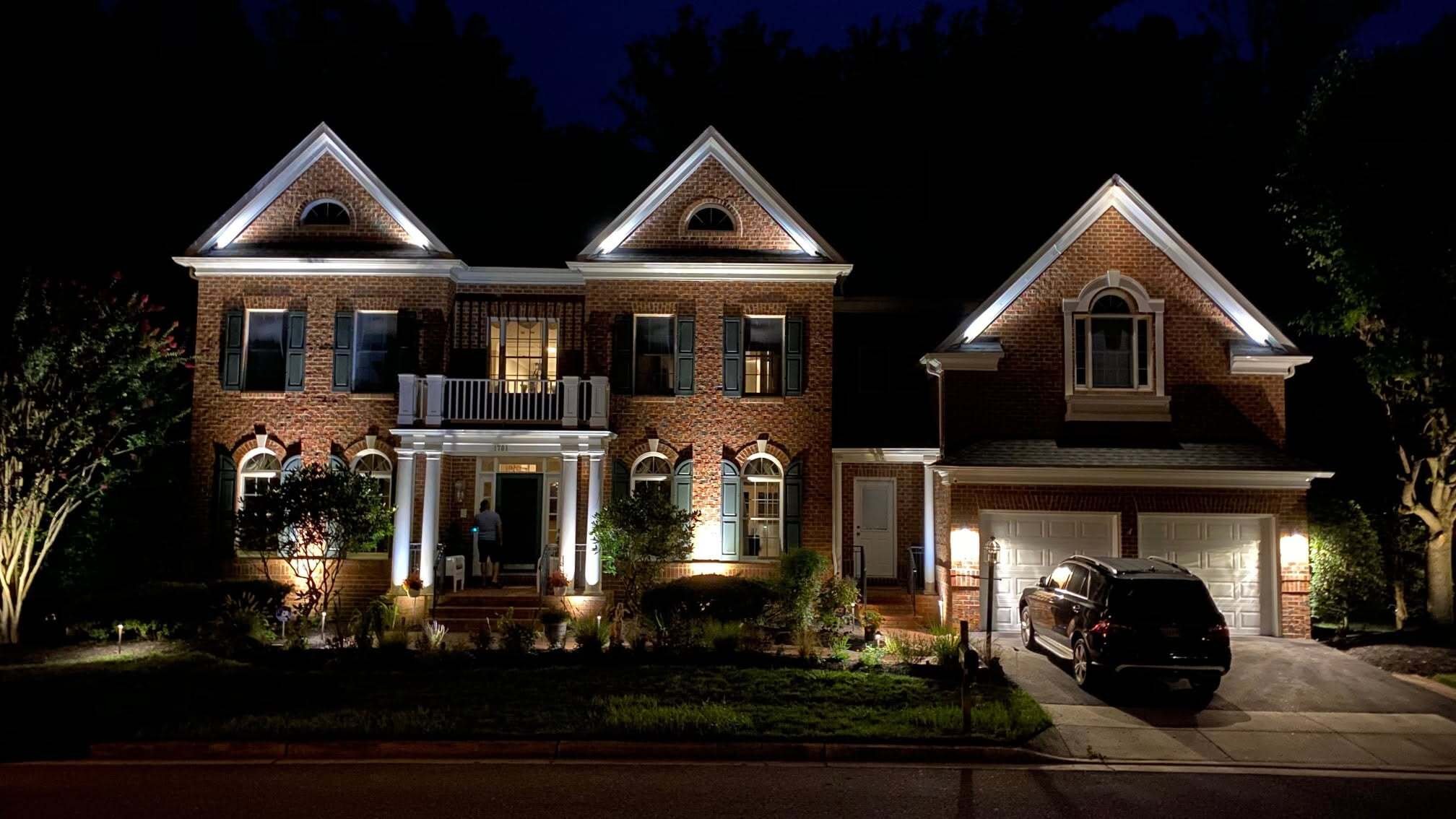
Instead of blasting the yard, we started with subtle architectural wash lighting.
Soft. Even. Controlled.
Immediately, the patio felt calmer.
Step Two: Create Layers
Lighting should work the way interior lighting works.
Inside your home, you have:
- Ambient lighting
• Accent lighting
• Task lighting
• Decorative lighting
Outdoor spaces are no different.
We added layers intentionally.
Architectural Wash
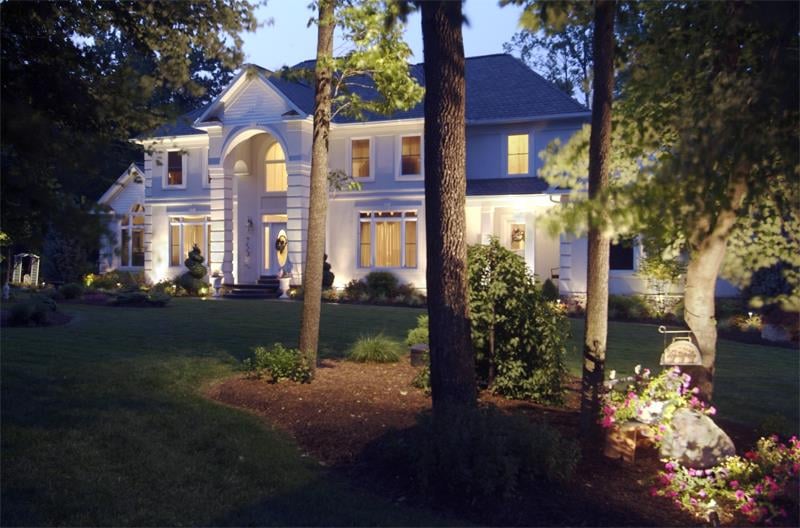
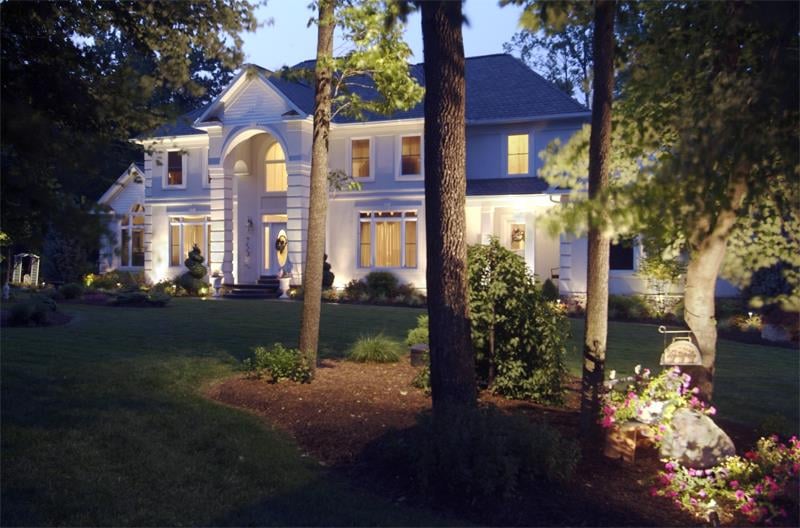
We softly washed the rear facade of the home with warm 2700K LED fixtures.
This created a visual backdrop.
Instead of floating in darkness, the house now framed the yard.
Tree Uplighting
There were three mature oaks on the property.
Before, they disappeared at night.
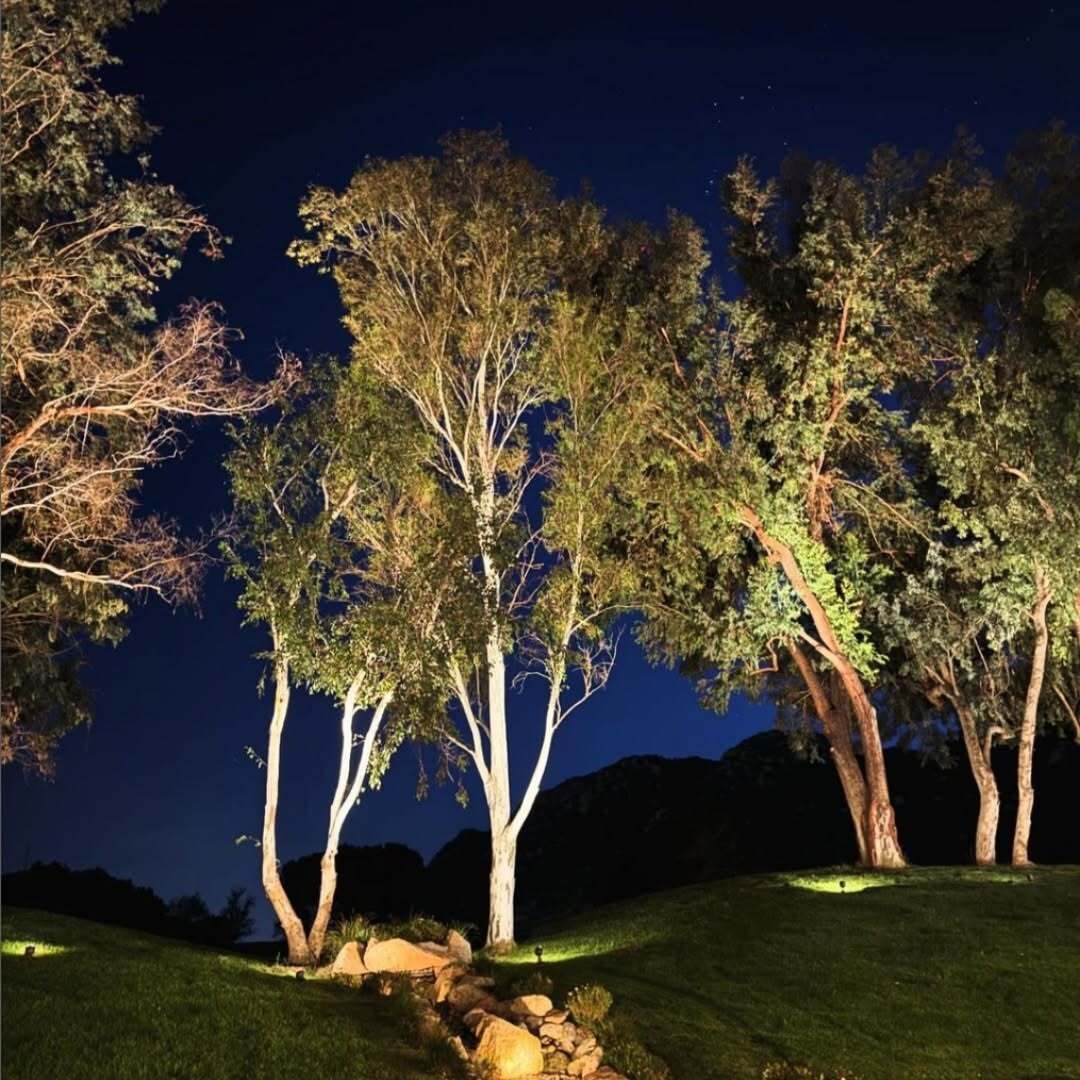
We installed focused uplights with narrow beam spreads to highlight trunk texture and canopy movement.
The yard instantly felt taller.
More dimensional.
Downlighting (Moonlighting)
One of my favorite techniques in Maryland yards is downlighting from mature trees.
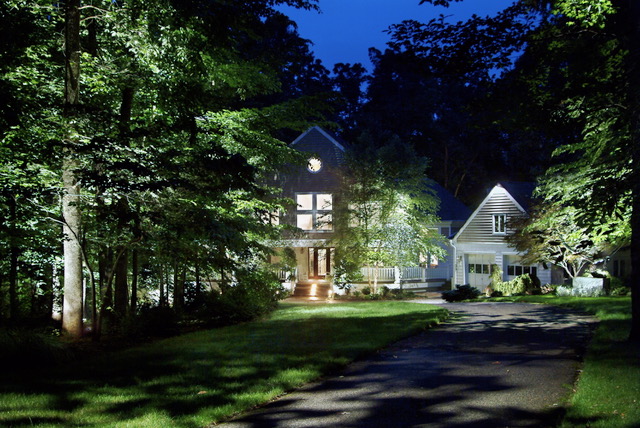
We installed fixtures high in the canopy to cast gentle, natural shadows on the patio below.
Instead of spotlighting the ground, we created a subtle moonlit effect.
The result?
Movement. Depth. Atmosphere.
Pathway Lighting With Restraint
The original path lights were spaced evenly — like fence posts.
We reduced the count and repositioned them to follow the natural rhythm of the walkway.
Lighting isn’t about symmetry.
It’s about flow.
Step Three: Balance Brightness
One of the biggest mistakes I see across Fairfax and Bethesda properties is imbalance.
One tree is bright. Another is dim. The facade is overpowering. The yard is underlit.
Lighting is visual math.
If one element is too bright, everything else feels darker by comparison.
We adjusted:
- Transformer taps
• Beam angles
• Fixture wattage
• Aiming direction
The goal wasn’t brightness.
It was harmony.
The Technical Side: Voltage Drop Matters
Here’s something homeowners rarely see.
In this yard, the original wiring ran over 120 feet from the transformer.
Voltage drop was causing fixtures farther away to appear dimmer.
We:
- Rebalanced load across transformer taps
• Upgraded wire gauge in key runs
• Split long circuits
That eliminated subtle dimming at the edges of the property.
Without that correction, uneven brightness would have persisted.
The Transformation Night
When everything was installed, we waited until full darkness.
We turned the system on.
No glare. No harsh hotspots. No disappearing edges.
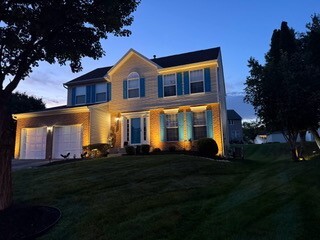
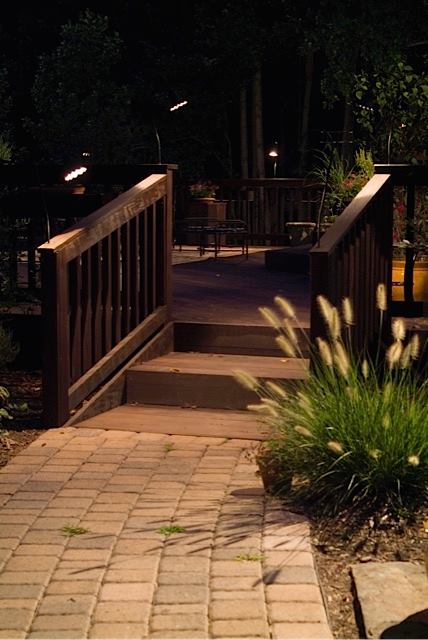
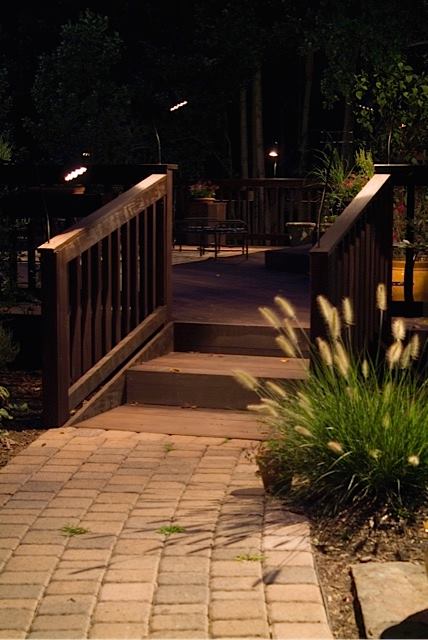
The patio felt intimate. The trees framed the space. The stone wall texture popped subtly. The yard felt larger.
The homeowner stood quietly for a moment and said:
“It feels like a resort.”
That’s what layered lighting does.
It changes how a space feels — not just how it looks.
The Cost of the Transformation
Let’s talk numbers.
The original lighting system had cost roughly $4,000.
The layered redesign and installation came to approximately $18,500.
That included:
- 28 fixtures
• New transformer
• Wire upgrades
• Downlighting installation
• Architectural wash lighting
• System zoning
Is that a small investment?
No.
But compare that to the total landscape investment — over $120,000 in hardscape and plantings.
Lighting was the final 15% that elevated the entire project.
Why So Many Yards Stay Dark
In Maryland and Northern Virginia, I see three common reasons yards stay visually flat at night:
- Over-reliance on floodlights
- Even spacing without layering
- No architectural wash or canopy lighting
Traditional layouts focus on safety.
Layered designs focus on experience.
There’s nothing wrong with safety lighting.
But when you invest in your property, design matters.
When a Lighting Transformation Makes Sense
A full transformation is usually worth considering when:
- The property has mature trees
• Architecture has texture and detail
• Hardscape investment is significant
• The homeowner entertains outdoors
• The goal is long-term ownership
It may not make sense when:
- The yard is small and simple
• The goal is strictly pathway safety
• Budget constraints are tight
Honest evaluation matters.
The Emotional Impact
Here’s something I’ve learned after four decades.
Outdoor lighting changes how you use your property.
Homeowners who once retreated inside after sunset start lingering outside.
They host dinners. They relax on patios. They enjoy quiet evenings under canopy glow.
Lighting extends livable space.
It doesn’t just illuminate it.
The Bigger Lesson
From dark yard to nighttime showcase isn’t about adding more fixtures.
It’s about adding intention.
In Maryland and Northern Virginia, where homes sit on mature lots with architectural character, layered lighting design often unlocks potential homeowners didn’t realize was there.
The yard was always beautiful.
It just needed to be revealed.
The Bottom Line
If your yard feels dark or uneven at night, the issue usually isn’t a lack of fixtures.
It’s a lack of design.
Layered lighting transforms:
- Depth
• Contrast
• Texture
• Scale
• Emotion
In the DMV, with mature trees, varied architecture, and seasonal changes, thoughtful lighting design turns a backyard into an experience.
Not just a lit space.
And when it’s done correctly, you don’t notice the fixtures.
You notice how the yard feels.
Inviting. Balanced. Intentional.
That’s what a true lighting transformation looks like.