If you’ve ever Googled “sprinkler repair cost”, you already know the frustration.
Most articles give you a range so wide it’s almost useless: “$50 to $1,500.”
That’s not an answer. That’s a dodge.
So let’s do this the way we do it at TLC Incorporated — warm, plainspoken, and honest. I’m going to tell you what homeowners actually pay for lawn sprinkler repairs, what drives the cost up or down, and how to avoid paying for repairs you don’t need.

The real-world cost range (what most homeowners pay)
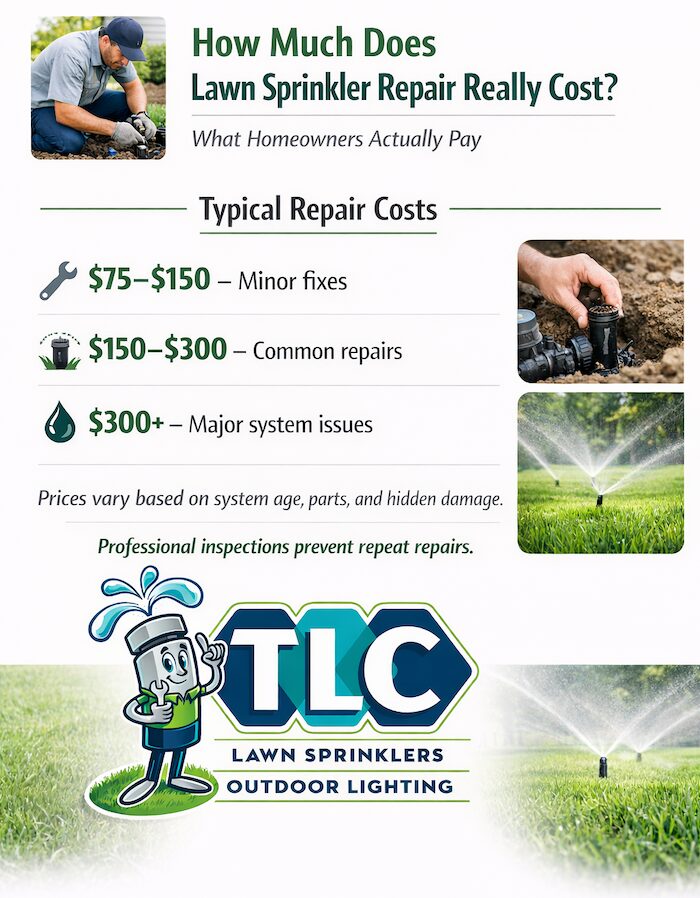
In most homes we service, sprinkler repairs land between $125 and $450.
Here’s a practical breakdown:
- Small repairs: $125–$200
(broken sprinkler head, clogged nozzle, minor leak at a fitting) - Moderate repairs: $200–$350
(valve issues, zone not turning on/off, wiring/connection problems) - Larger repairs: $350–$800+
(underground line breaks, multiple zones failing, hard-to-locate leaks)
If you’re seeing quotes above that, it usually means one of these is true:
- The problem is underground and hard to access (digging is the real cost).
- The system is older and parts are discontinued or mismatched.
- There are multiple issues, not one (and they’ve been building for a while).
Why sprinkler repair pricing feels confusing
Sprinkler repairs are one of those services where homeowners feel like they’re being kept in the dark.
And I get it.
Two companies can walk the same yard and give quotes that differ by hundreds of dollars. That can feel like someone’s guessing… or worse.
Here’s the honest truth:
- A lot of the cost comes from finding the problem, not just fixing it.
- The same symptom (like a soggy spot in the lawn) can have three different causes.
- Some companies “solve” it by swapping parts until it works — which is how you end up paying for things you didn’t need.
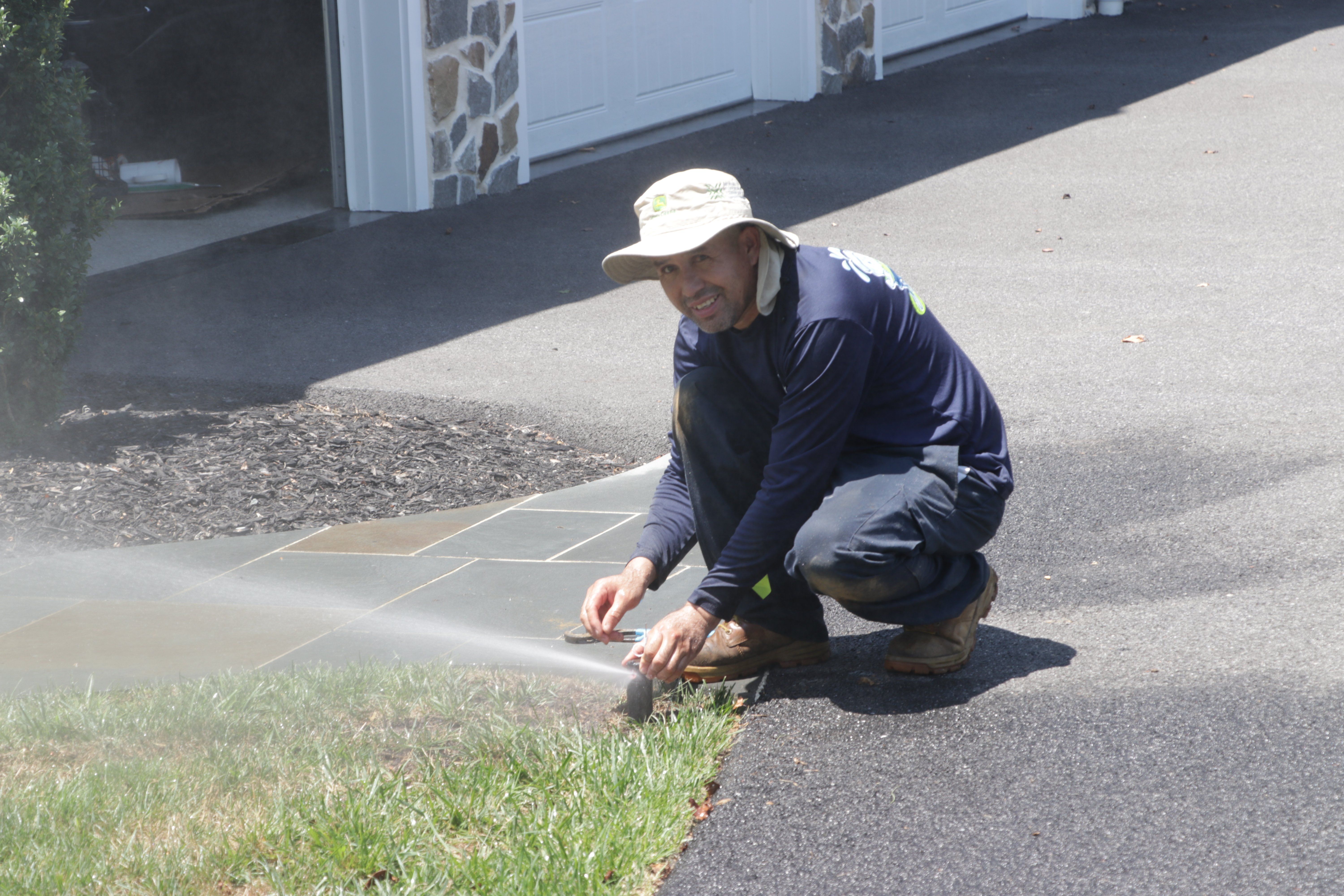
At TLC Incorporated, our goal is simple: show you what’s wrong, explain your options, and let you decide.
The most common sprinkler repairs (with real cost ranges)
Let’s talk about the repairs homeowners actually run into — and what they typically cost.
1) Broken or clogged sprinkler heads
Typical homeowner cost: $125–$175
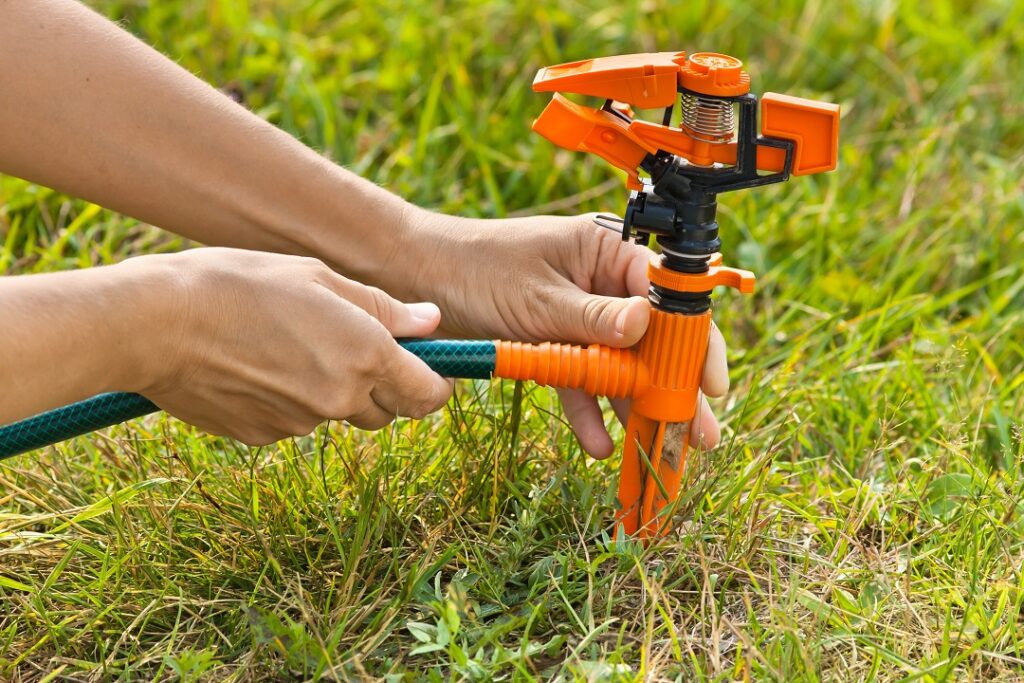
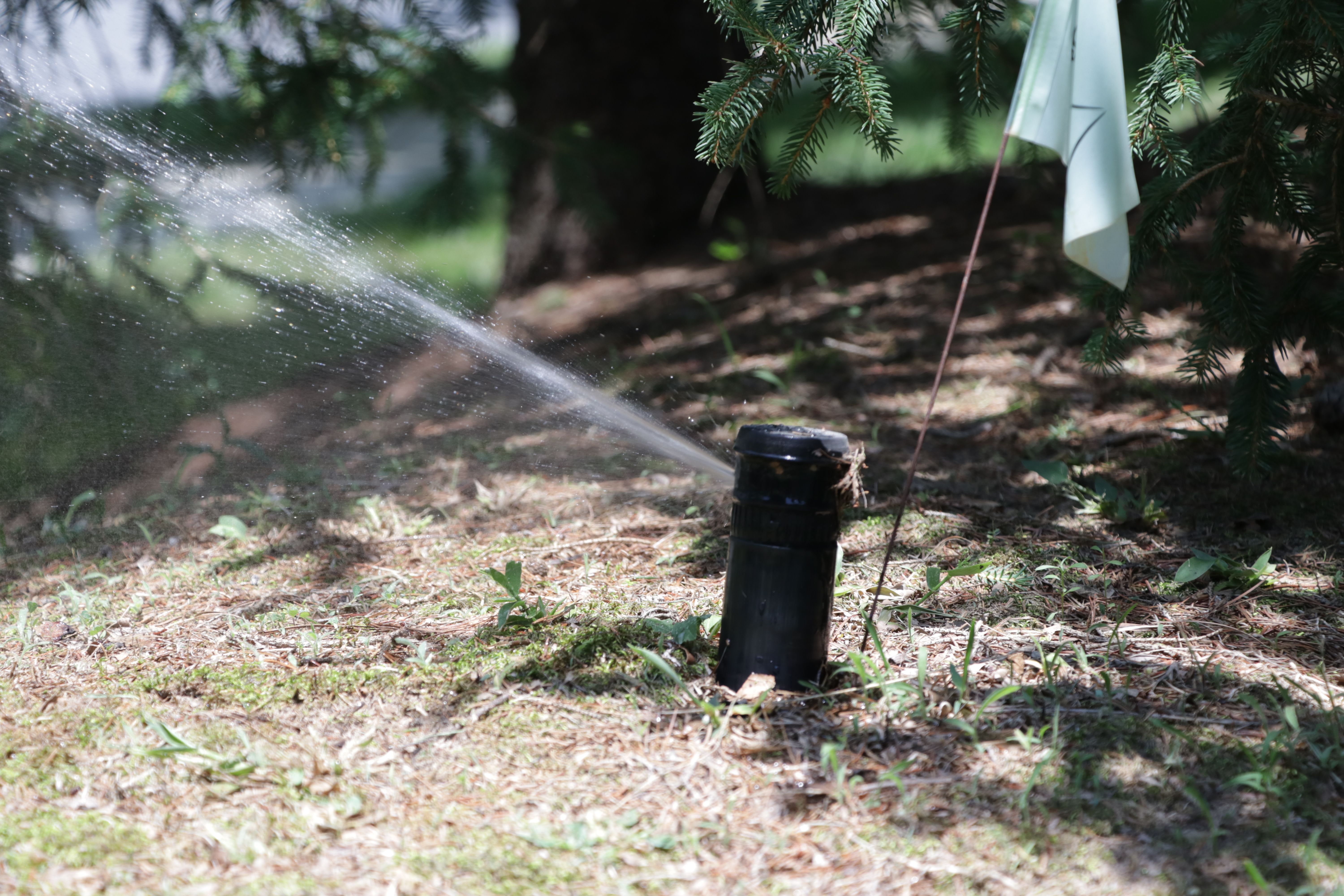
This is the most common repair we see.
Why it happens:
- Lawn mowers and weed trimmers
- Heads get hit, tilted, cracked, or buried
- Nozzles clog over time with dirt or debris
Homeowner story:
A homeowner called us convinced they had an underground leak because water was pooling near a bed. After we ran the zones, we found three heads spraying sideways into the same area. We replaced the damaged nozzles and corrected the head height.
What they paid: $148 (parts included)
AI insight (what patterns usually reveal):
In a large percentage of service calls, the “leak” homeowners fear is actually spray misdirection — heads that are tilted, clogged, or aimed wrong. That’s why a proper zone-by-zone run test matters.
2) Underground pipe leaks (laterals)
Typical homeowner cost: $200–$450
The pipe itself isn’t expensive. What costs money is locating the leak and getting to it without tearing up your yard.
What affects the price:
- Depth of the pipe
- Soil type (sand vs. clay vs. rock)
- Roots in the area
- How long it takes to locate the break
Bob’s straight talk:
You’re rarely paying for PVC. You’re paying for careful digging and a correct repair the first time.
Homeowner story:
One family noticed a damp patch that never dried out. They thought it was a drainage issue. We shut the system down and saw the wet spot stayed wet — a sign it could be a pressurized leak. We isolated the zone, confirmed the line, located the break, and repaired it.
What they paid: $312
3) Valve problems (zone won’t turn on or won’t shut off)
Typical homeowner cost: $225–$350
Valves control each zone. When they fail, you’ll usually see one of two symptoms:
- Zone won’t turn on (dead valve, wiring, or solenoid)
- Zone won’t shut off (stuck valve, debris, or failing diaphragm)
Why valves fail:
- Debris and sediment in the valve
- Worn diaphragm
- Solenoid failure
- Age (8–15 years is common)
Case study:
A homeowner was told they needed a new controller because one zone kept running. We tested the controller output and it was fine. The real issue was a valve that wouldn’t close fully. We repaired the valve assembly.
What they paid: $267
What they avoided: a $700–$1,000+ replacement controller + labor they didn’t need
4) Wiring or connection issues
Typical homeowner cost: $150–$400
Controllers don’t fail as often as people think — but wiring issues are common.
Common causes:
- Corroded wire connections (especially in valve boxes)
- Rodents chewing low-voltage wire
- Nicked wire from landscaping work
- Lightning/power surges
AI insight:
Many “controller problems” are actually signal problems: weak or inconsistent electrical flow from bad splices or corroded connections. A good tech confirms this with testing rather than guessing.
5) Main line breaks (the big one)
Typical homeowner cost: $400–$1,200+
This is less common, but when it happens it can be dramatic — especially if the system is pressurized and the break is significant.
Usually caused by:
- Roots
- Heavy equipment
- Improper winterization
- Old brittle pipe
Trust signal:
If a company quotes you a huge number without showing you the break, confirming the line, or isolating the system properly — you should ask questions.
What drives costs up (and how to keep them down)
1) Waiting too long
Small problems turn into bigger ones.
A head that’s spraying wrong can cause pooling that leads you to think you have a broken pipe. A tiny leak can wash out soil around fittings and create bigger failures.
Rule of thumb: If you notice something odd, run the system and check it within a week.
2) Multiple issues in one visit
Sometimes the repair isn’t expensive — there are just several repairs at once.
That can happen when:
- the system hasn’t been inspected in years
- there were renovations/landscaping changes
- parts are mismatched across zones
3) Obsolete parts
Some older systems use parts that are discontinued. That doesn’t mean you must replace everything — but it can increase labor and parts sourcing time.
4) DIY fixes that create new problems
I’m not anti-DIY. If you’re handy, you can do a lot.
But the most common DIY issues we end up fixing are:
- wrong nozzle pattern/pressure
- mismatched heads causing uneven watering
- fittings not glued or clamped properly
- burying valve boxes under mulch or soil
Homeowner story:
A homeowner replaced a head with one that looked “close enough.” It created a pressure imbalance and the rest of the zone started underperforming. We corrected the head type and nozzle.
What they paid to fix it: $189
The questions homeowners ask most (FAQs)
Is sprinkler repair worth it, or should I replace the system?
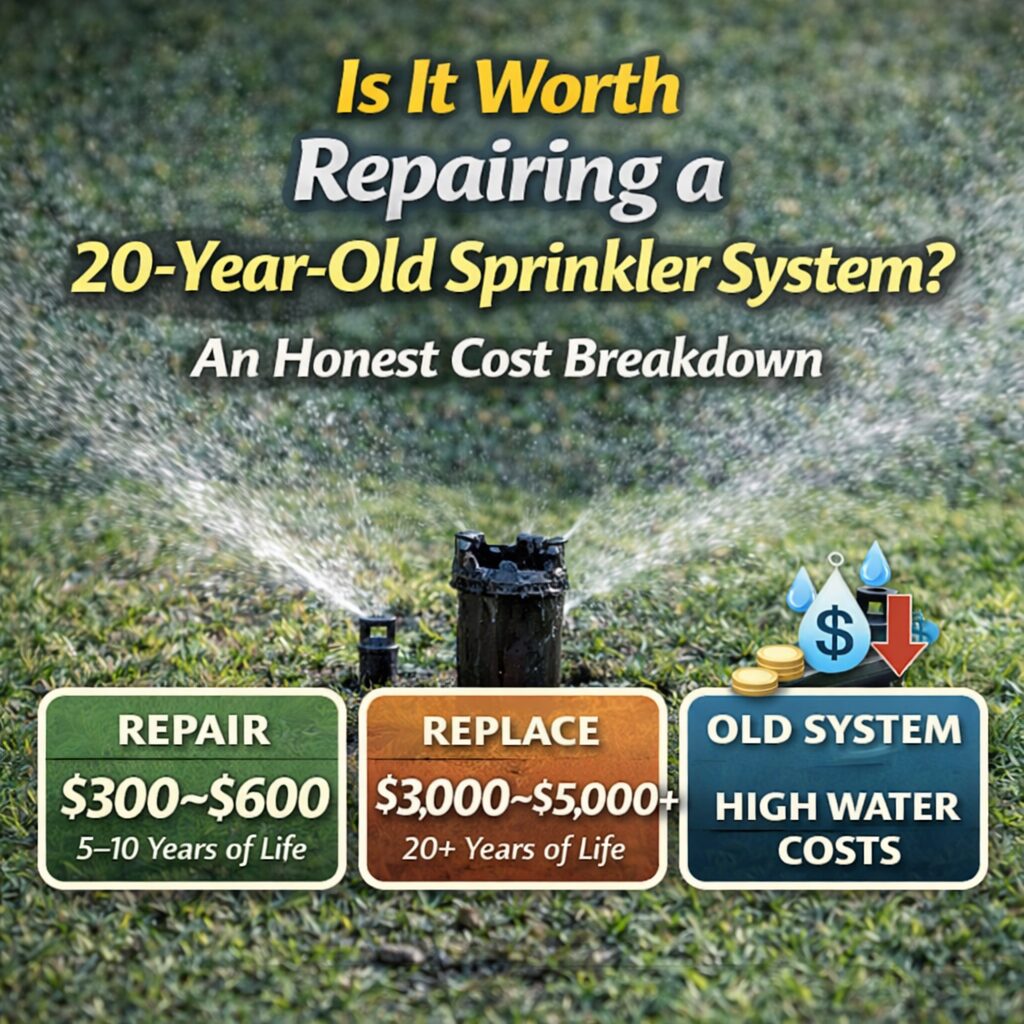
If your system is under 20 years old and the pipes are generally sound, repair is usually the smarter move.
Replacement makes sense when:
- leaks are happening in multiple places
- parts are consistently failing
- repairs are approaching 50% of replacement cost
Why does my sprinkler keep running after it’s supposed to shut off?
Most of the time, it’s a valve issue — not the controller.
Can I replace sprinkler heads myself?
Yes, as long as you match:
- spray pattern (fixed, rotary, etc.)
- pressure/nozzle type
- spacing and coverage
If you’re guessing, it’s easy to create uneven watering.
How do I prevent expensive sprinkler repairs?
- Run a quick zone check monthly in season
- Fix head issues early
- Keep valve boxes accessible
- Winterize properly if applicable
- Have an annual inspection
Bob Carr’s “when we tell you not to repair” section
Here’s something most contractors won’t say:
Sometimes the right answer is, “Don’t spend money repairing this.”
We advise homeowners to consider replacement when:
- the system is patched in multiple places
- parts are discontinued and constantly failing
- the piping is brittle throughout
- you’re paying for the same issues every season
We’d rather earn trust than win one invoice.
Final thoughts: what you should budget
If you’re a homeowner trying to plan responsibly, here’s a good baseline:
- Budget $200–$300 for most sprinkler repairs.
- Expect $125–$450 for the majority of service calls.
- If someone throws out a massive price before diagnosing, ask them to show you why.
At TLC Incorporated, our goal is simple: clear answers, fair options, and repairs that hold up — so you can stop worrying about your yard and get back to enjoying your home.
— Bob Carr
Topics: