Sprinkler Winterization in Maryland: The Quick Answer
Most Maryland homeowners with an in-ground sprinkler system should winterize before the first frost to prevent trapped water from freezing and damaging pipes, valves, sprinkler heads, or the backflow preventer. Professional sprinkler winterization typically costs $175–$375 for most homes in Maryland and the DMV, with smaller systems starting around $125.
Every fall, I hear the same thing from homeowners who aren't quite sure what to do (or sure whether it's even necessary) to winterize their lawn sprinkler systems. They'll ask me, "Bob, do I really need to do this? What if it's a mild winter?"
It's a fair question. Maryland and surrounding winters are unpredictable.
For more than 40 years, TLC Incorporated has specialized in the planning, installation, and maintenance of lawn sprinkler and irrigation systems in the DMV area. We've seen first-hand how some years we barely see a hard freeze, while other years we're digging out from ice and snow.
So instead of just telling you "yes, you need winterization!" I'm going to walk you through the whole thing honestly.

This guide will cover:
-
What lawn sprinkler winterization costs
-
Exactly what happens during the process
-
How to tell whether it was done right
-
When to schedule it
-
Who doesn't need to hire someone for this at all
By the end, you'll be able to make the right decision for your own home, whether you work with us or not.
Why winterization matters
Your sprinkler system isn't just a few pipes under the lawn. It's a connected network of underground lines, fittings, valves, and sprinkler heads. When you shut it off for the season, there's always water left inside those pipes.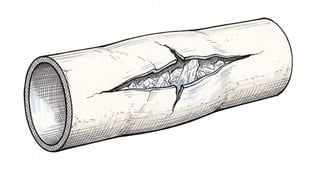
When water freezes, it expands.
That expansion is strong enough to crack pipes, split valves, and even damage your backflow preventer. You might not notice any signs all winter, but when spring rolls around, those cracks turn into leaks, low pressure, and repair bills.
Even when a part doesn't crack the first winter, that freeze stress weakens the material, and the next freeze can be the one that finally causes it to fail.
Winterization is the small, affordable step in the fall that protects a system worth thousands.
How much does sprinkler winterization cost?
While you may see an enormous cost range between $75 and $1,000+, we’ve seen that professional sprinkler winterization typically costs between $175 and $375 for most homes in the Maryland and DMV area, and starts at $125 for smaller systems.
Here are the factors for why this price can vary:
-
Number of zones. More zones means more lines to blow out, one at a time. A small yard with a few zones sits at the low end; a large property with many zones sits at the high end.
-
System size and complexity. Bigger, more elaborate systems simply take more time and air to clear completely.
-
Points of connection. The more places your system ties in, the more there is to drain and check.
Knowing your zone count is one of the fastest ways to get an accurate quote from a professional winterization company.
Why you'll see wildly different winterization prices online
If you go searching, you'll find winterization prices anywhere from about $75 to $450. That spread confuses a lot of homeowners, so let me explain what's actually going on.
A lot of the cheapest numbers you'll see come from two places: national average websites that aren't quoting the DMV at all, and flat-rate shops that price a quick blowout for a small system — often just the air, no real inspection, and steep add-on fees once you're past a handful of zones.
There's nothing wrong with a bare-bones blowout if that's all your system needs. But a $95 headline price and a fully inspected, documented winterization on a 12-zone system in Maryland clay are not the same service, even though they share a name.
Here in the DMV area, a few things push the regional price up:
-
Maryland systems tend to be larger and more zoned than the national average
-
Clay-heavy soil and sloped lots make for more complex layouts
I'll be straight with you about where we land at TLC: our $175–$375 sits at the fuller-service end of that market.
That's deliberate.
We'd rather do it once, do it right, and hand you documentation than be the cheapest name on a list. If you get a quote that's dramatically lower than ours, it's a fair question to ask what's included.
"Cheap" and "thorough" are occasionally the same thing. Usually they're not.
What does it cost if you don't winterize?
Here are cost ranges for what the repairs cost when a system freezes. These numbers are pulled from the ranges our own crews charge for these repairs here in Maryland and the DMV area:
|
Freeze damage |
What the repair typically costs |
|---|---|
|
Cracked or split sprinkler head |
$125–$175 |
|
Split underground line (lateral) |
$200–$450 |
|
Cracked valve or valve housing |
$225–$350 |
|
Main line break |
$400–$1,200+ |
|
Backflow preventer replacement |
$475–$1,780 |
Put the two side by side:
-
A $175–$375 sprinkler system winterization
-
A cracked backflow preventer that can run past $1,700.
The repair bill alone could be enough to cover roughly a decade of winterizations.
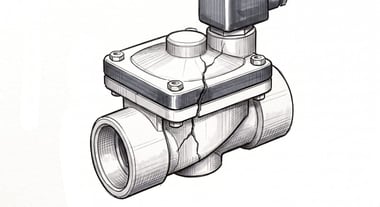
Freeze rarely damages just one thing. When water expands inside a system, it goes after the weakest points all at once, so a bad freeze often means a valve and a line and a backflow, not a single tidy repair.
Think of winterization as more of an insurance. The small yearly payments are worth avoiding a large bill when things break.
How sprinkler winterization actually works (step by step)
Whether you hire us or have someone else do it, this is what a proper winterization looks like.
Step 1 — Shut down the water supply
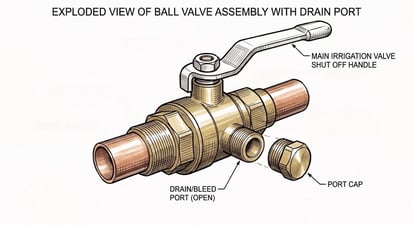
Turn off the main irrigation line (usually near the water meter or in the basement) and open the drain valves to release the easily accessible water. That drains some of the system, but not the water trapped underground.
Step 2 — Connect a commercial-grade air compressor
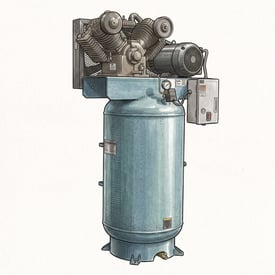
A proper blowout uses a commercial-grade compressor that delivers high air volume at a safe, steady pressure (usually 50–80 PSI) — not a garage air pump. Too much pressure damages the system, while too little pressure too little won't clear the system completely.
Step 3 — Blow out each zone, one at a time
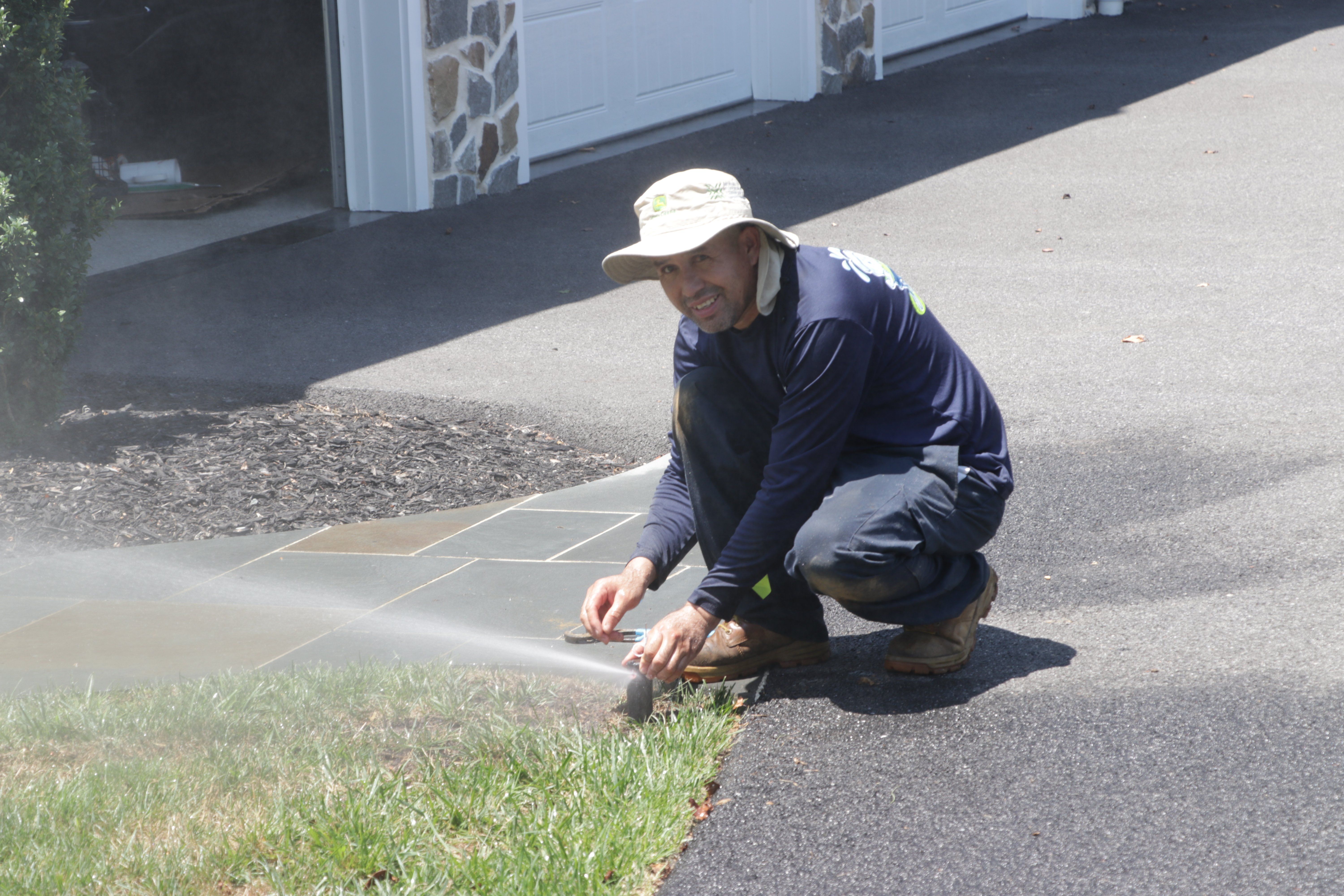
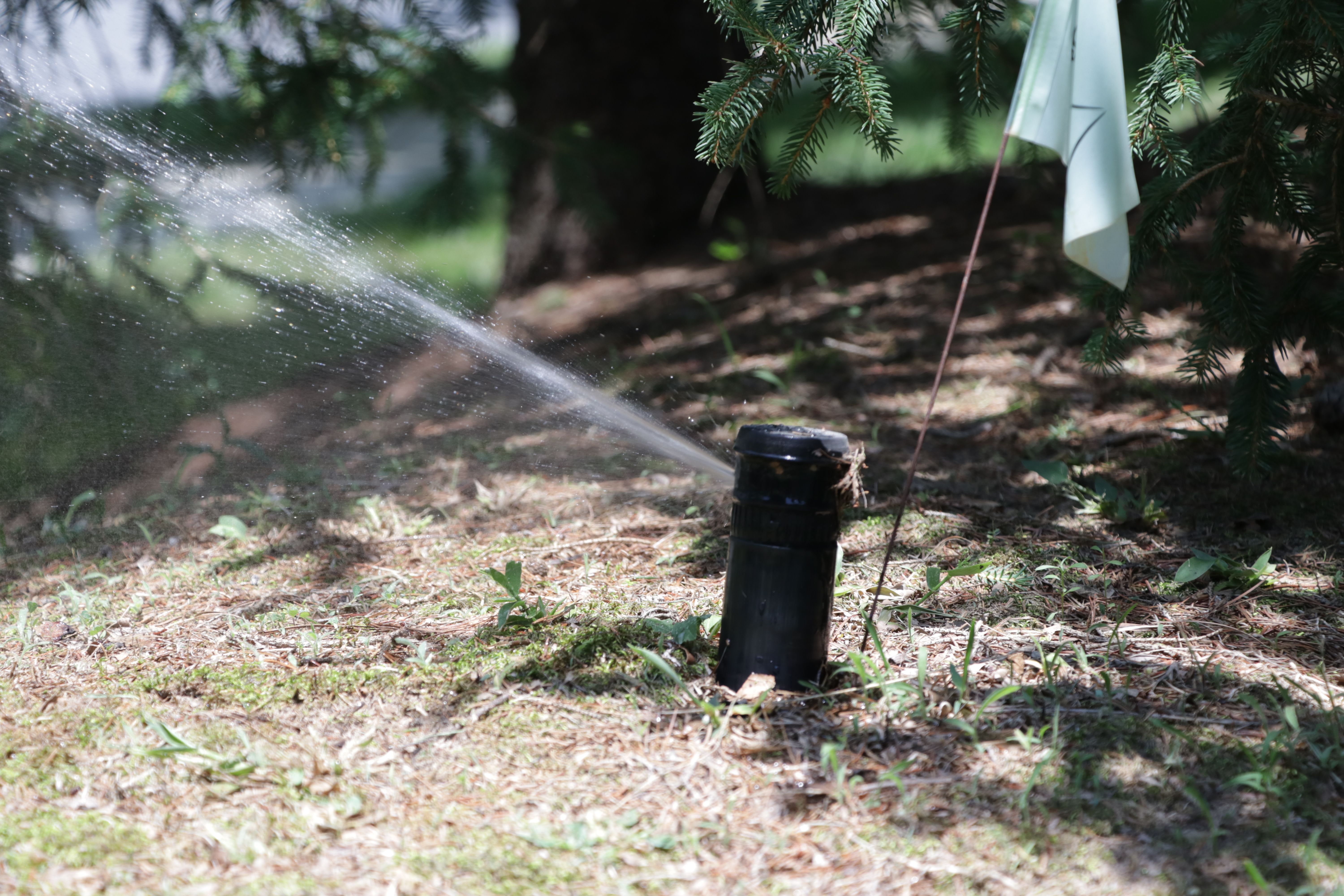
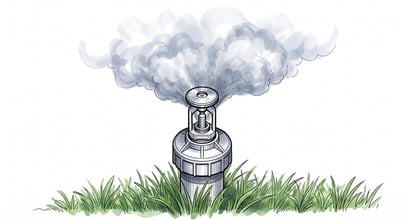
With the compressor connected, you go zone by zone. You'll see air and mist shooting from each head — that's the trapped water being forced out. Keep going until nothing comes out but dry mist, then shut that zone down and move to the next. Each zone generally takes around 1–2 minutes.
Step 4 — Clear the backflow preventer
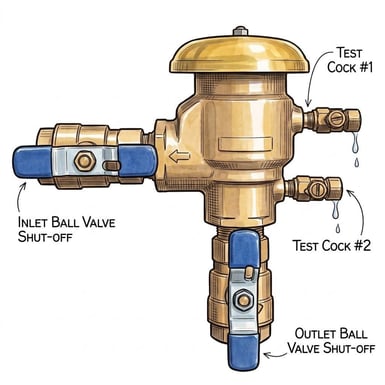
Your backflow preventer protects your home's drinking water, and it's the most expensive part of the system. Inside are small chambers and valves that crack if even a few drops of water freeze. Opening the test cocks and relief valves so every last drop drains is the step that saves homeowners the most money come spring.
Step 5 — Final check and controller shutdown
Inspect each valve and head, check for wear or leaks, then set the controller to "Off" or "Rain Mode" so your programming stays intact for next year but the system won't run during winter.
To see this full process in action, check out this video of TLC performing a winterization at a real customer's home:
How to know your sprinkler system winterization was done right
Whether TLC does your winterization or another company does, here's the checklist you can use to verify the job was actually complete. If any of these got skipped, your system may not be fully protected.
The main irrigation water supply was shut off-
The drain valves were opened to release accessible water
-
A commercial-grade compressor was used (not a garage pump), at a steady 50–80 PSI
-
Every zone was blown out individually, until only dry mist came from the heads
-
The backflow preventer was drained — test cocks and relief valves opened
-
A final visual inspection of valves and heads was done, checking for wear or leaks
-
The controller was set to "Off" or "Rain Mode" (your programming preserved)
Print this, or pull it up on your phone while the work is being done. A company doing it right will happily walk you through every box.
When should you schedule winterization?
The freeze that cracks your pipes is a hard freeze (28°F or below), but the water in your lines starts freezing at the first frost (32°F). So you want your system cleared before that first frost, not before the deep freeze.
In our Maryland service area, that first frost typically arrives on the following dates (these dates are from historical averages. Know that an early cold snap can always beat them):
|
Area |
Average first frost |
|---|---|
|
Bel Air |
Late October (~Oct 23) |
|
Bethesda |
Late October (~Oct 25) |
|
Bowie |
Late October (~Oct 26) |
|
Rockville |
Early November (~Nov 1) |
|
Towson |
Early November (~Nov 2) |
|
Columbia |
Early November (~Nov 3) |
|
Annapolis / Gambrills area |
Early November (~Nov 7) |
|
Baltimore |
Mid-November (~Nov 15) |
Source: dates reflect NOAA's 1991–2020 U.S. Climate Normals. For the science behind first-freeze timing, see NOAA's National Centers for Environmental Information: When to Expect the First Fall Freeze. To look up the average first-frost date for your exact ZIP code, the Old Farmer's Almanac frost date tool draws on the same NOAA data.
If you're near the Chesapeake, a river, or a reservoir, the water moderates the air and your first frost usually comes a little later.
If you're inland or in a low-lying spot, cold air settles and it comes earlier.
Our recommendation is to book by mid-October. That gives you a safety buffer ahead of the first-frost window, so you're protected even in a year that turns cold early.
Do you really need to hire someone for lawn sprinkler winterization?
I'd rather tell you the truth than sell you something you don't need.
You may not need to hire a winterization pro if:
-
You have a self-draining system designed to clear itself.
-
You genuinely know what you're doing, own or can rent a proper commercial-grade compressor, and are comfortable running a blowout yourself.
If that's you, you might be just fine handling it. I'd rather you know that than pay for something you don't need.
Paying a professional for winterization is for you if:
-
You have a standard in-ground system with a backflow preventer.
-
You don't own the right equipment (a garage air pump doesn't have the correct pressure or volume).
-
You'd rather have it done right, documented, and off your plate.
Most Maryland homeowners with an in-ground system fall in the second group, but not everyone does.
Common myths about sprinkler winterization
"I can just drain it myself."
You might get some of the water out, but rarely all of it. Even a few ounces left in a line can freeze and split a pipe. The trapped underground water is the part a simple drain-down misses.
"It's not that cold here — I'll be fine."
Maryland dips below freezing without much warning. It only takes one cold night on an un-cleared line to cause real damage.
"I'll just fix it in the spring if something breaks."
Repairs can cost several times what winterization does. A single cracked valve or backflow runs from a couple hundred dollars to well over a thousand (see the repair-cost table above). Prevention is often the cheaper bet.
Questions Maryland homeowners ask us
Do I need to be home for a winterization appointment?
Not always. In many cases, as long as our technician can reach your gate and your controller, we can complete the blowout, shut the system down correctly, and send you documentation afterward. The one wrinkle is your main irrigation shut-off valve. In a lot of Maryland homes it sits inside your home in a basement, utility closet, or crawl space. If that's your setup, we either need access to that room or we need it isolated ahead of time so the tech can do everything from outside. When you book, just tell us where your shut-off is and we'll tell you exactly what we need from you.
What do I do if a hard freeze is coming tonight and my winterization isn't scheduled yet?
Don't panic, but do act. As a temporary stopgap until a professional can get out there: shut off the water supply to your irrigation system, set your controller to "Off" or "Rain," and protect your above-ground backflow preventer. Open its test cocks a quarter-turn to relieve pressure and let trapped water drain, then wrap the assembly in an insulated backflow cover (or, in a pinch, towels and foam pipe insulation with a dry bag over the top — never bare plastic, which traps moisture). Understand this only protects the exposed parts; there's still water in your underground lines, so you'll want the full blowout as soon as possible. If you're not sure how to work your backflow valves, call us or another professional before you touch anything
I just aerated and overseeded. How do I keep new grass watered and still winterize before the freeze?
New seed needs consistent moisture for its first few weeks, and that window can bump right up against the winterization deadline. The cleanest fix is to overseed on the early side (late August to early September) so the lawn is established before we need to blow the system out. If your seed goes down later, we can winterize on schedule and you can hand-water the new grass with a hose on milder days.
Why homeowners choose TLC for lawn sprinkler winterization
I've been in this business for over 40 years, and one thing hasn't changed: I treat every homeowner the way I'd want to be treated. When you schedule winterization with us, here's what you get every time:
-
A friendly reminder before your appointment
-
On-time arrival from experienced technicians
-
A thorough, safe blowout with commercial-grade equipment
-
A visual inspection before the system is shut down
-
A clean workspace and clear communication before we leave
Our goal is to make sure your sprinkler system wakes up in the spring working exactly as well as it did last summer.
How do I schedule my lawn sprinkler winterization appointment with TLC?
Sprinkler winterization isn't glamorous, but it's one of the smartest, most affordable things you can do to protect your property. A small step now saves you major headaches (and major repair bills) later.
Don't wait for that first cold snap to catch you off guard.
Schedule your sprinkler winterization with TLC Incorporated — or if you've got questions first, give us a call and we'll give you a straight answer.
Topics: