Drainage System Failure Guide – Bob Carr
If you’ve installed a drainage system and it works fine most of the time—but then a heavy storm hits and suddenly water is backing up, overflowing, or flooding areas you thought were fixed—you’re not alone.
And the question I hear all the time across Maryland, DC, and Northern Virginia is this:
“Bob, why does my drainage system overflow during storms?”
This one can be especially frustrating.
Because from your perspective:
- You already spent money to fix the problem
- The system works during light rain
- But when you need it most… it fails
After more than 42 years as a home improvement contractor in the DMV—since 1983—helping thousands of homeowners (with over 600 reviews averaging 4.8 stars and an A+ Better Business Bureau rating), I can tell you this clearly:
👉 Drainage systems don’t overflow randomly
👉 They overflow because they’ve reached their limit—or were never designed for real storm conditions
And once you understand why, the fix becomes much clearer.
So in this guide, I’m going to walk you through this the same way I would if we were standing in your yard during a storm watching it happen:
- What “overflow” actually means
- The most common reasons drainage systems fail during storms
- What it typically costs to fix each issue
- Real DMV homeowner case studies
- And how to design a system that actually works when it matters most
Let’s break it down.
The Big Idea Most Homeowners Miss
Before we dive into causes, you need to understand this:
👉 Drainage systems are only as good as their capacity
That means:
- A system can work perfectly in light rain
- And completely fail in heavy rain
Because storms introduce:
- Higher water volume
- Faster flow
- Saturated soil conditions
👉 And if your system wasn’t designed for that level of demand, it will overflow
What “Overflow” Actually Looks Like
Homeowners describe this problem in a few consistent ways:
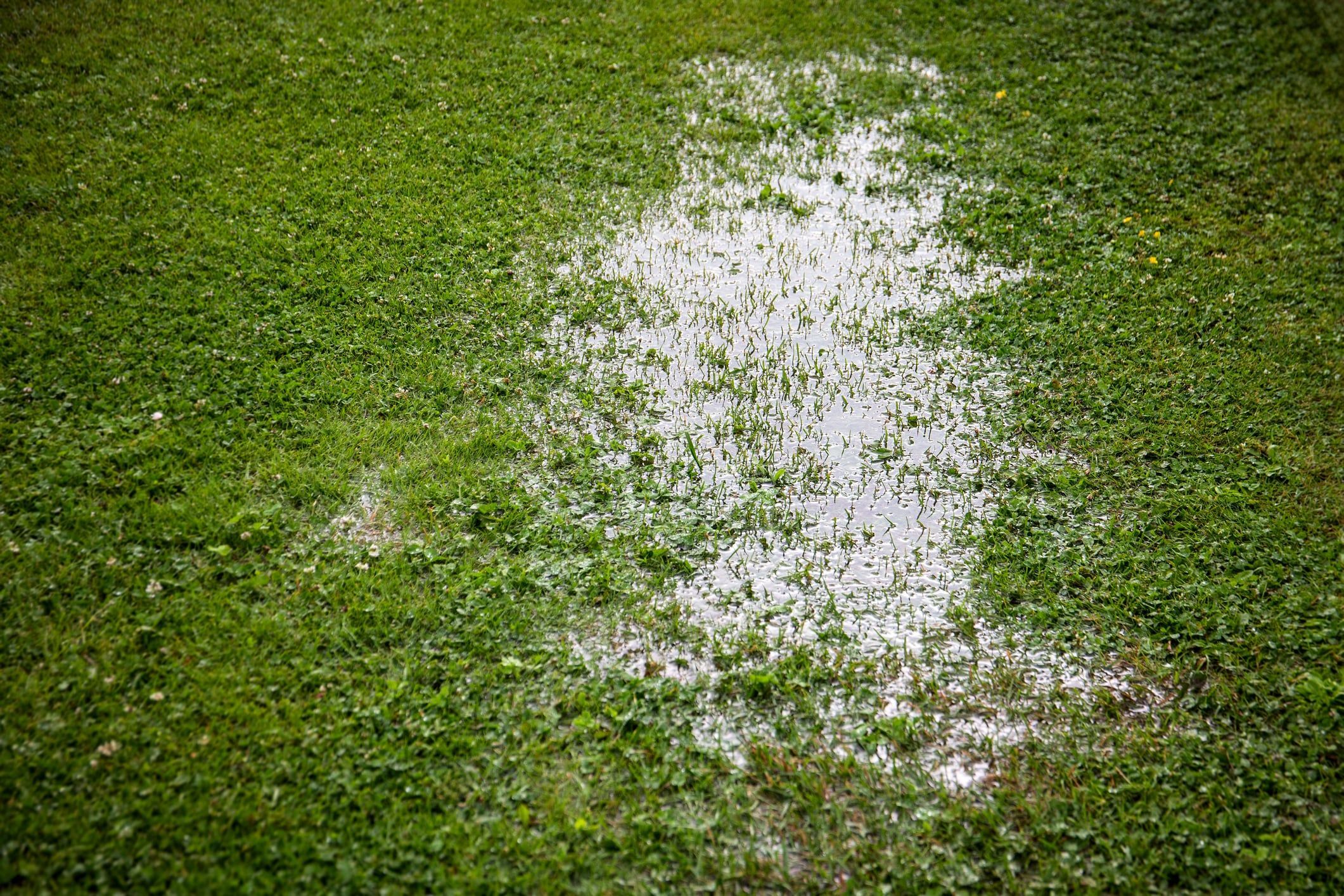
- “Water backs up out of my drains”
- “Catch basins fill and overflow”
- “Water comes back toward the house”
- “The system works until heavy rain hits”
Each of these is a sign of one thing:
👉 The system cannot move water away fast enough
The 9 Most Common Causes (And What They Cost to Fix)
Let’s walk through what we actually see in the field.
1. System Is Undersized (Most Common)
This is the #1 issue.
What happens:
- System was designed for average rain
- Storm produces much higher water volume
👉 The system gets overwhelmed
Typical fix: Increase capacity (larger pipes, more drains)
Cost: $3,000 – $12,000
2. Poor or Inadequate Discharge Point
If water has nowhere to go:
👉 It backs up
Common issues:
- Discharge too close to house
- Outlet area floods easily
Typical fix: Extend or redesign discharge
Cost: $1,500 – $6,000
3. Clogged Drainage System
Over time:
- Dirt
- Debris
- Leaves
- Roots
can clog pipes or basins.
👉 Flow is restricted
Typical fix: Clean and clear system
Cost: $300 – $2,500
4. Improper Pipe Slope
Drainage pipes rely on gravity.
If slope is incorrect:
👉 Water slows down or stops
Typical fix: Reinstall sections properly
Cost: $2,000 – $8,000
5. Too Few Collection Points
If water isn’t captured efficiently:
👉 It spreads and overwhelms the system
Typical fix: Add catch basins or inlets
Cost: $1,500 – $5,000
6. Soil Saturation (Clay Soil Issue)
In heavy storms, clay soil becomes fully saturated.
👉 Water cannot absorb into the ground
So everything becomes surface runoff.
Typical fix: Add subsurface drainage
Cost: $3,000 – $12,000+
7. Downspouts Overloading the System
Roof runoff adds massive volume.
If downspouts tie into the system:
👉 It can overwhelm capacity quickly
Typical fix: Separate or upgrade drainage
Cost: $1,500 – $6,000
8. System Was Installed as a Partial Solution
This is very common.
- Only one area was addressed
- Whole-property flow wasn’t considered
👉 Water moves to another location
Typical fix: Full system redesign
Cost: $5,000 – $20,000+
9. Increased Water Load Over Time
Changes like:
- New landscaping
- Added hardscapes
- Neighbor runoff changes
👉 Increase water volume beyond system capacity
Typical fix: System expansion
Cost: $3,000 – $10,000
Real DMV Case Studies
Case #1: “It Only Overflowed During Big Storms”
Rockville
Problem:
- System worked normally
- Overflowed during heavy rain
Cause:
- Undersized system
Cost: 👉 $4,500 upgrade
Result: 👉 No more overflow
Case #2: “Water Came Back Toward the House”
Northern Virginia
Cause:
- Poor discharge location
Cost: 👉 $3,200
Result: 👉 Water redirected properly
Case #3: “Drains Filled Up and Spilled Over”
Bethesda
Cause:
- Clogged system
Cost: 👉 $900 cleaning
Result: 👉 Immediate improvement
Case #4: “We Fixed One Area, Another Flooded”
Silver Spring
Cause:
- Partial system
Cost: 👉 $9,800 redesign
Result: 👉 Balanced drainage across property
What It Typically Costs to Fix Overflow Issues
Minor Fixes
👉 $300 – $2,000
Moderate Corrections
👉 $2,000 – $7,500
Major System Upgrades
👉 $7,500 – $20,000+
👉 Most homeowners fall between $3,000 – $10,000
Why This Problem Gets Worse Over Time
If ignored:
- Soil erosion increases
- Drainage pathways fail
- Foundation risk increases
👉 Small overflow becomes major flooding
What Most Homeowners Get Wrong
Mistake #1: Assuming the System “Should Handle It”
👉 It depends on design capacity
Mistake #2: Ignoring Discharge
👉 Water must leave the property
Mistake #3: Not Accounting for Storm Conditions
👉 Light rain ≠ storm performance
How to Diagnose It Yourself
- Watch system during heavy rain
- Identify where overflow begins
- Check discharge points
- Look for clogged areas
- Observe water volume
The Right Way to Fix It
After 42+ years, here’s how we approach overflow issues:
- Measure water volume
- Evaluate system capacity
- Identify bottlenecks
- Improve collection and flow
- Ensure proper discharge
👉 That’s how you fix it permanently
Cost Timeline (If You Wait)
Year 1: Occasional overflow ($1,000 fix)
Year 2–3: Regular overflow ($5,000 fix)
Year 4+: Flooding and damage ($15,000+)
Long-Term Value of Fixing It Right
- No overflow during storms
- Yard stays usable
- Property protected
- Maintenance reduced
Final Thoughts
If your drainage system overflows during storms, remember this:
👉 It’s not failing randomly
👉 It’s being overwhelmed or restricted
After more than four decades helping homeowners throughout the DMV, I can tell you this:
👉 The solution isn’t just more drainage
👉 It’s the right system designed for real conditions
And when you get that right:
👉 Your system works when you need it most
Quick Answers
Q: Why does my drainage overflow?
A: Usually capacity or discharge issues
Q: Is this common?
A: Yes—especially in undersized systems
Q: Cost to fix?
A: Typically $3,000 – $10,000
Q: Can I fix it myself?
A: Minor issues, yes—most require redesign
Bob Carr is the founder and president of TLC Incorporated, which he started in 1981 as a small residential lawn sprinkler and irrigation business in Maryland. Over four decades later, he leads a team of specialists serving the Mid-Atlantic region with lawn irrigation, outdoor and holiday lighting, and yard drainage solutions. Bob's approach is built on transparent pricing, quality installation, and treating every customer with respect.
Topics: