Best Seasonal Irrigation Adjustments for Maryland Weather (What Homeowners Need to Know)
April 7th, 2026
3 min read
By Bob Carr
Let me start with something I hear all the time here in Maryland:
“Bob, I set my sprinkler system in the spring… and then I pretty much leave it alone. Is that okay?”
I get it. Life’s busy.
But here’s the truth—especially in a place like Maryland where the weather doesn’t sit still:
👉 If you’re not adjusting your irrigation system seasonally, you’re either overwatering, underwatering… or sometimes doing both at the same time.
And over time, that leads to: – Higher water bills
– Stressed, uneven lawns
– Fungus and disease issues
– Wasted water
– Constant frustration trying to “fix” your yard
The good news?
👉 This is one of the easiest things to fix once you understand how it works.
So let’s walk through what seasonal irrigation should actually look like here in Maryland—and how to dial it in the way a professional would.
Why Maryland Is One of the Hardest Places to Get Irrigation Right
If you’ve lived here long enough, you already know:
👉 Maryland weather is unpredictable.
We deal with: – Cold, wet springs
– Hot, humid summers
– Dry spells mixed with sudden storms
– Freezing winters
Some weeks you get too much rain. Other weeks, nothing at all.
👉 That inconsistency is exactly why your irrigation system needs to change throughout the year.
Because your lawn’s needs are constantly shifting.
The Real Problem: “Set It and Forget It” Irrigation
Let me be blunt.
👉 There is no such thing as a set-it-and-forget-it irrigation system in Maryland.
When homeowners do this, here’s what happens:
Spring:
- Too much water (because of rain + irrigation)
Summer:
- Not enough water (system isn’t adjusted properly)
Fall:
- Watering when it’s no longer needed
👉 The system is always slightly off—and those small imbalances add up.
The 3 Things You Should Be Adjusting All Year
This isn’t complicated once you break it down.
Every seasonal adjustment comes down to three things:
1. Run Time
How long each zone runs.
2. Frequency
How often the system runs.
3. Start Time
When during the day it runs.
👉 Get those three right—and your system works the way it should.
Spring Irrigation (March – May): Don’t Overwater
What’s Happening:
- Soil is already saturated from winter
- Rainfall is frequent
- Temperatures are mild
The Biggest Mistake:
👉 Running your system like it’s summer
This leads to: – Soggy soil – Shallow root growth – Fungus issues
What You Should Do:
- Water 1–2 times per week at most
- Shorter run times
- Skip watering after rain (this is huge)
👉 In many cases, spring irrigation is supplemental—not primary.
Summer Irrigation (June – August): This Is Where It Counts
What’s Happening:
- High temperatures
- High humidity
- Rapid evaporation
- Increased lawn stress
The Goal:
👉 Deep, consistent watering
What You Should Do:
- Water 2–4 times per week depending on heat
- Increase run times
- Water early morning (before 9 AM)
Why morning matters: – Less evaporation – Better absorption – Lower disease risk
👉 This is where most lawn success—or failure—happens.
Fall Irrigation (September – November): Ease Off Gradually
What’s Happening:
- Cooler temperatures
- Reduced evaporation
- More consistent rainfall
The Goal:
👉 Maintain—not push growth
What You Should Do:
- Reduce watering frequency
- Shorten run times
- Adjust based on rainfall
👉 Overwatering in fall is extremely common—and completely unnecessary.
Winter Irrigation (December – February): Protect the System
What’s Happening:
- Freezing temperatures
- Dormant grass
The Goal:
👉 Prevent damage
What You Should Do:
- Shut the system off completely
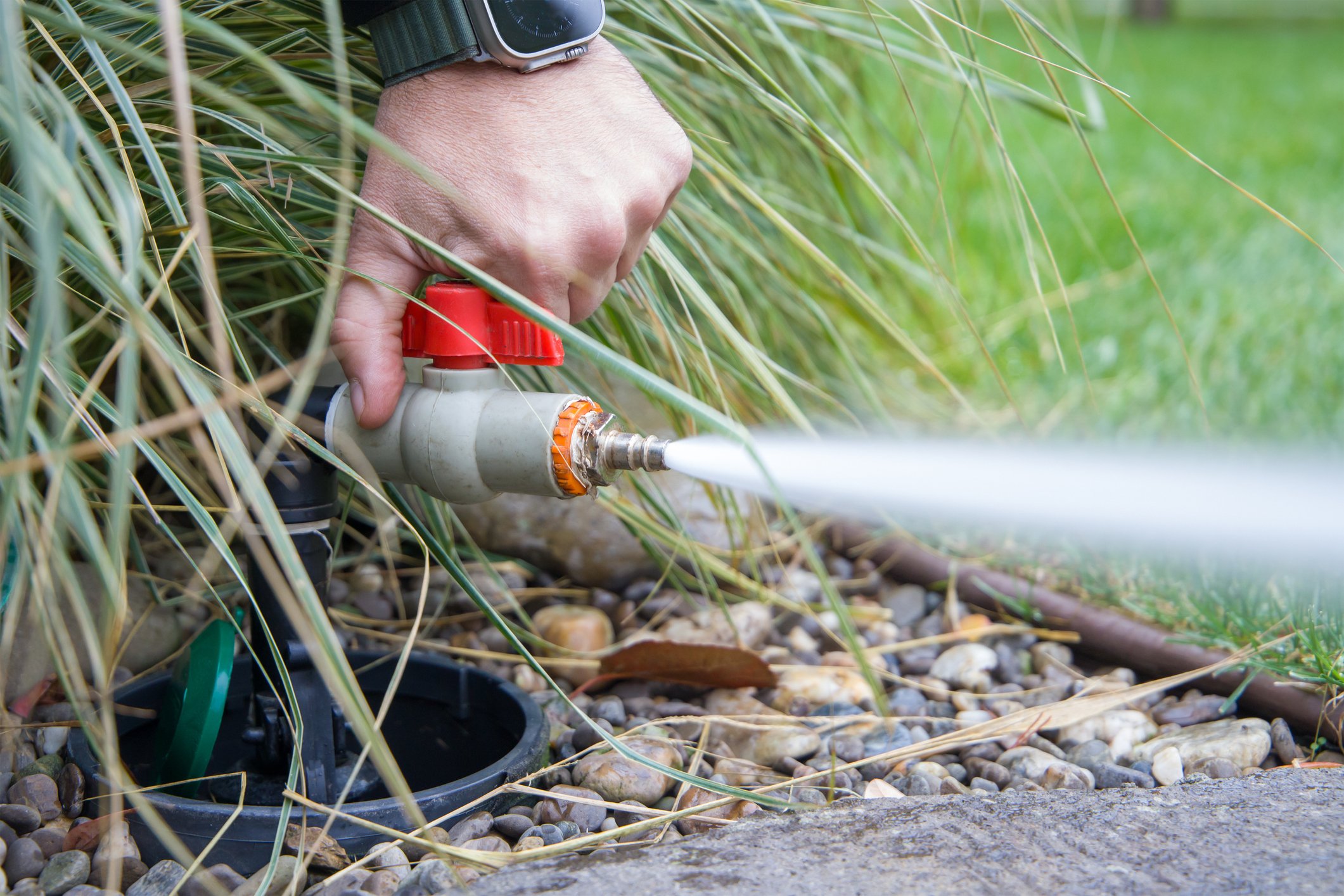
- Winterize (blow out lines)
👉 Skipping this step can cost you thousands in repairs.
A Real Story From the Field
We had a homeowner tell me:
“Bob, my lawn never looks consistent. I’m always adjusting something.”
When we checked the system, here’s what we found:
- Same watering schedule year-round
- Overwatering in spring
- Underwatering in summer
- No seasonal awareness at all
Nothing was broken.
👉 It was just set wrong for the season.
Once we adjusted it properly, everything stabilized.
The Hidden Factor: Maryland Humidity
Here’s something most people overlook.
👉 Humidity changes everything.
In high humidity: – Water evaporates slower – Soil retains moisture longer
So even in summer, you may not need as much water as you think.
👉 Overwatering in humid conditions leads to disease.
Signs Your Seasonal Adjustments Are Off
If you’re seeing these, something isn’t dialed in:
- Mushy or soggy lawn in spring
- Dry, stressed grass in summer
- High water bills year-round
- Uneven lawn color
👉 These are almost always schedule issues—not system failures.
How We Handle Seasonal Adjustments at TLC
Here’s what a professional approach looks like.
Step 1: Evaluate the Property
We look at: – Sun exposure – Soil type – Grass type
Step 2: Set Seasonal Baselines
We build schedules for: – Spring – Summer – Fall
Step 3: Adjust for Real Weather
We adapt based on: – Rainfall – Temperature swings
Step 4: Teach You What to Watch
So you don’t have to guess.
What This Costs (And Why It’s Worth It)
Seasonal adjustments are usually:
- A few hundred dollars
- Or part of a maintenance visit
But they save you:
👉 Hundreds to thousands in water costs
👉 Lawn repair costs
👉 Time and frustration
When You Should Adjust Your System
At minimum:
👉 3 times per year
- Spring startup
- Summer adjustment
- Fall reduction / winter prep
Final Thoughts from Bob Carr
Your irrigation system isn’t broken most of the time.
👉 It’s just not adjusted for the season.
When you fix that:
- Your lawn evens out
- Your water usage drops
- Your system becomes predictable
And that’s what you want.
Ready to Get Your System Dialed In?
If you’re not sure your irrigation system is set correctly for Maryland weather, let’s take a look.
👉 Call TLC Incorporated today
👉 Or schedule your irrigation inspection
We’ll make sure your system is working with the seasons—not against them.
Bob Carr is the founder and president of TLC Incorporated, which he started in 1981 as a small residential lawn sprinkler and irrigation business in Maryland. Over four decades later, he leads a team of specialists serving the Mid-Atlantic region with lawn irrigation, outdoor and holiday lighting, and yard drainage solutions. Bob's approach is built on transparent pricing, quality installation, and treating every customer with respect.
Topics: