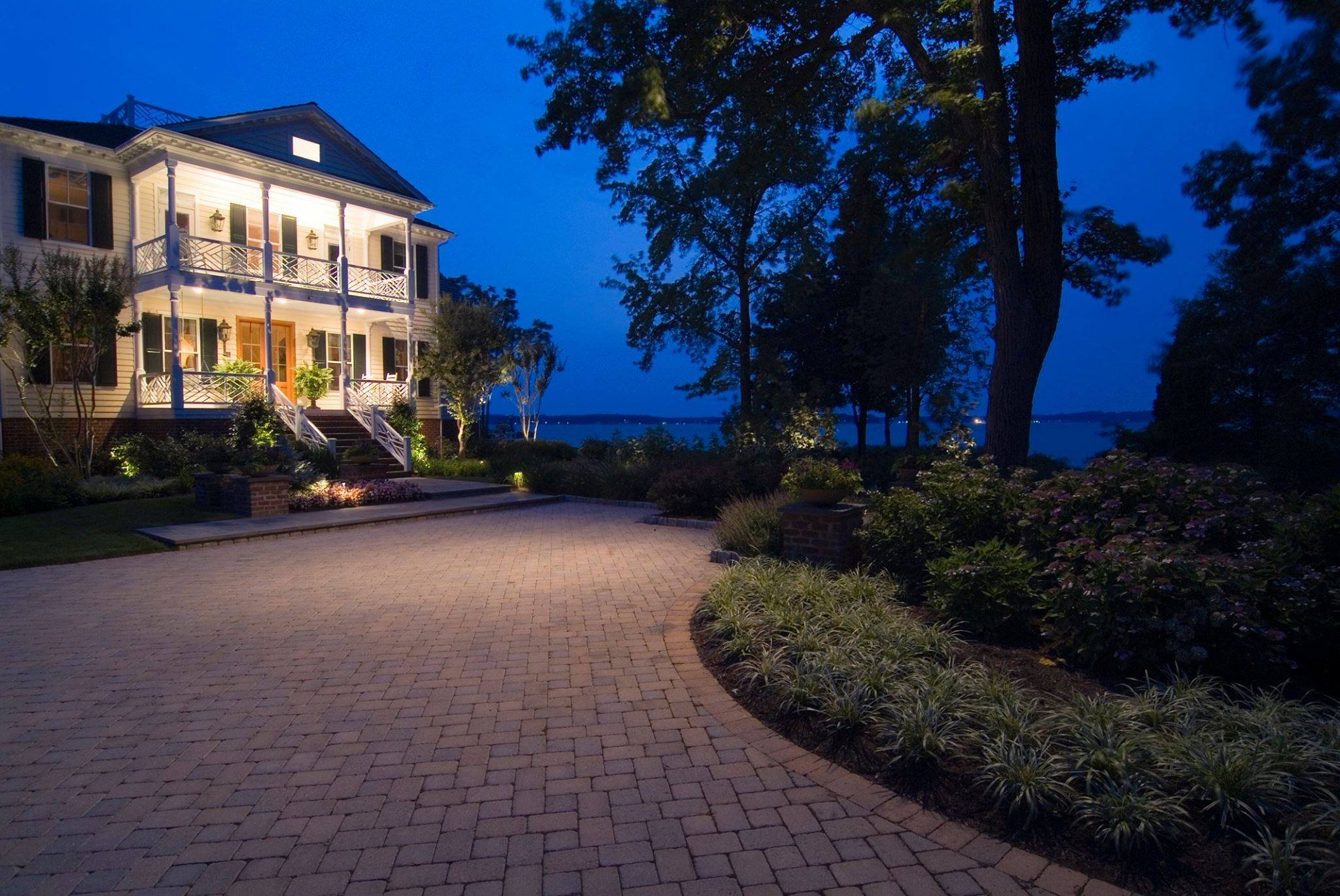
It's a fair question, and one we'd rather answer honestly than dodge. The short version: a well-designed landscape lighting system does very little harm to healthy trees and plants. A poorly installed one absolutely can, and the damage usually has nothing to do with the light itself.
TLC has been designing and installing outdoor lighting in Maryland for over 40 years, and we plan every system around your landscape, not just your house. That means routing wire around root zones, using tree-mount hardware we can adjust as the tree grows, and aiming fixtures so your yard looks lit rather than floodlit.
Here's what actually causes problems, ranked by how often we see it.
The Real Risks Are Physical, Not Light-Related
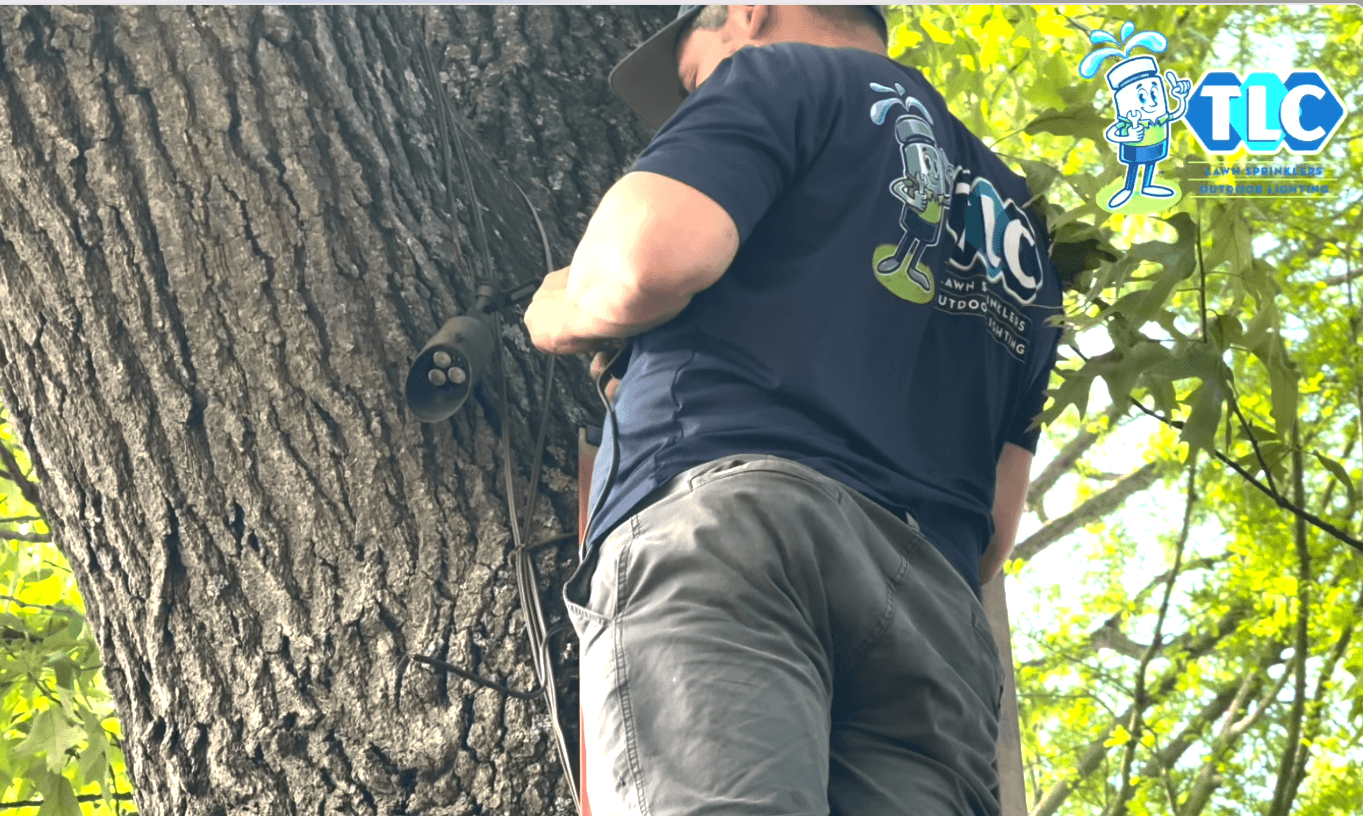
Mounting fixtures to trees. This is the biggest one. When a fixture is strapped or screwed to a trunk or limb and left there, the tree keeps growing, and the hardware doesn't. Over a few seasons, the strap cuts into the bark, girdling the limb and choking off the flow of water and nutrients above that point. Wire wrapped around a trunk does the same thing faster.
Note: moonlighting, mounting downlights high in a tree to cast dappled light like moonlight through the canopy, is one of the most beautiful effects in landscape lighting, and it's worth doing. It just has to be done with hardware designed to be adjusted as the tree grows, and a professional should come back to adjust it.
Cutting roots during installation. Most tree roots live in the top 12 to 18 inches of soil and spread well past the edge of the canopy, not in a tidy ball near the trunk. Running a trencher straight through that zone to get a wire from point A to point B can sever a significant share of a mature tree's root system. The tree may look fine for two or three years, then decline for reasons nobody connects to the lighting job.
Soil compaction. Equipment and foot traffic over a root zone squeeze air out of the soil. Roots need that air. This one is invisible and cumulative, and it's why careful crews stay off root zones with heavy equipment.
Fixtures crowded into plants. An uplight jammed into the middle of a shrub, or a path light buried in a bed, gets overgrown, holds moisture against foliage, and makes the plant hard to prune. The plant usually wins that fight, but not before the light stops working.
What About Heat?
With modern LED fixtures, heat is a minor concern, and much less of one than it was in the halogen era. A halogen MR16 lamp ran hot enough to scorch leaves resting against the lens. LEDs run cool at the lens by comparison, though the fixture body still sheds heat.
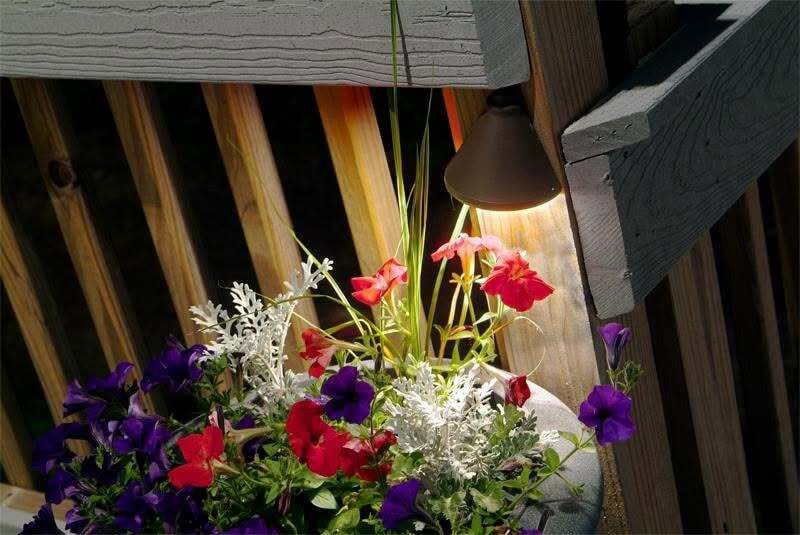
The practical rule hasn't changed: don't let foliage touch the lens. Leave at least 3 inches of clearance, and re-aim fixtures as plants fill in. A leaf pressed against any light source for a full night, every night, will eventually dry out and brown at the contact point. That's a small, local problem, not a threat to the plant.
What About the Light Itself?
This is where the answer gets more interesting, because plants do read light as information, not just energy.
Trees use day length to decide when to break bud in spring and when to shut down for winter. Artificial light at night can shift that timing. Researchers analyzing observations across dozens of species and hundreds of sites found that trees exposed to artificial light broke their buds about nine days earlier and their leaves changed color about six days later than trees at comparable sites without it.
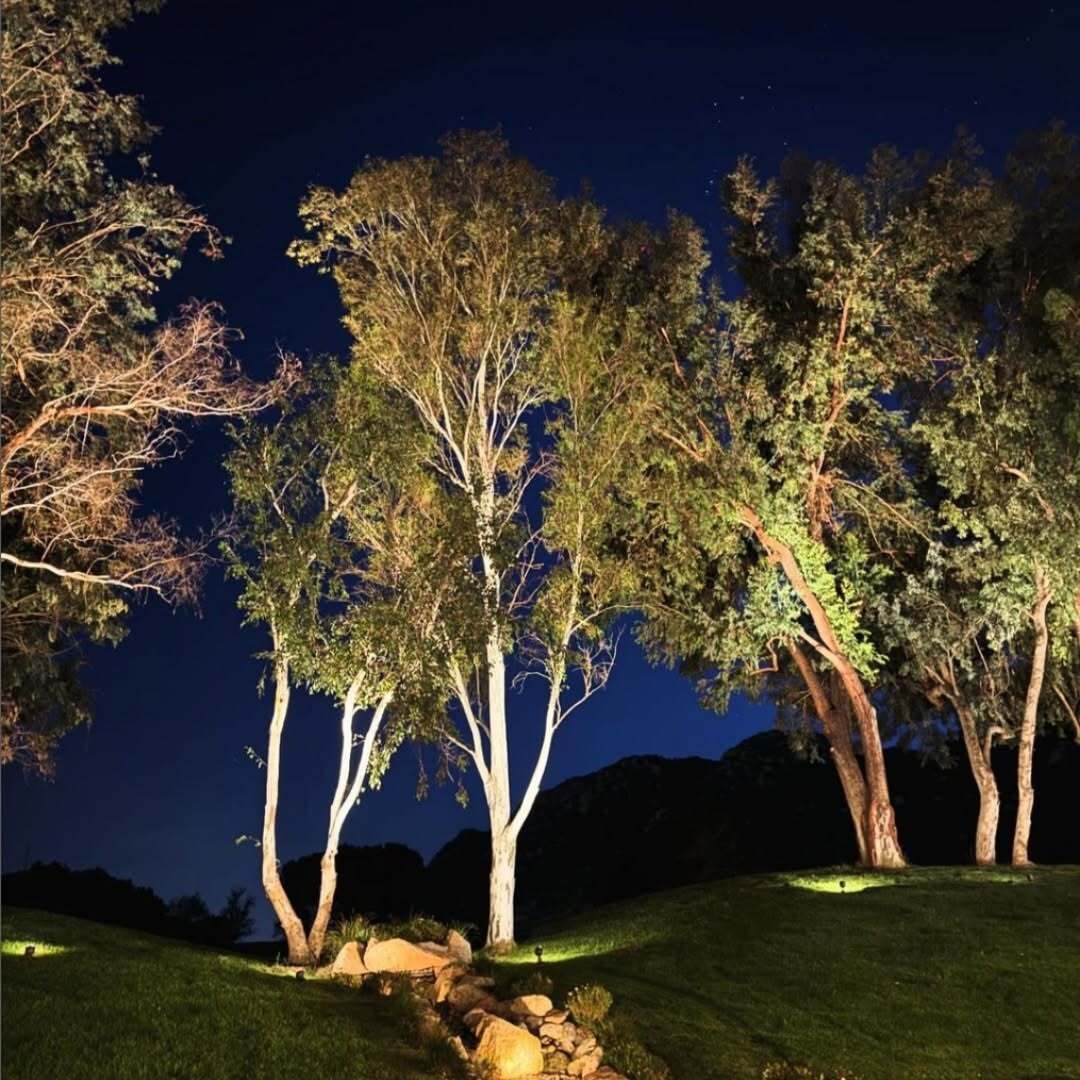
A longer growing season sounds like a gift, but breaking bud early in Maryland means meeting a late frost, and staying green late means going into winter less prepared for a hard freeze.
Two important caveats. That research looked at street lighting, which is far brighter, higher up, and left on all night. A 3-watt uplight aimed at a trunk is a much smaller signal than a 100-watt street light standing above a canopy. And the effect is concentrated on the part of the plant being lit, so a single accent light on one side of a tree doesn't put the whole tree on a new schedule.
The Bigger Ecological Question: Insects
If you care about pollinators and birds, this is the part worth your attention.
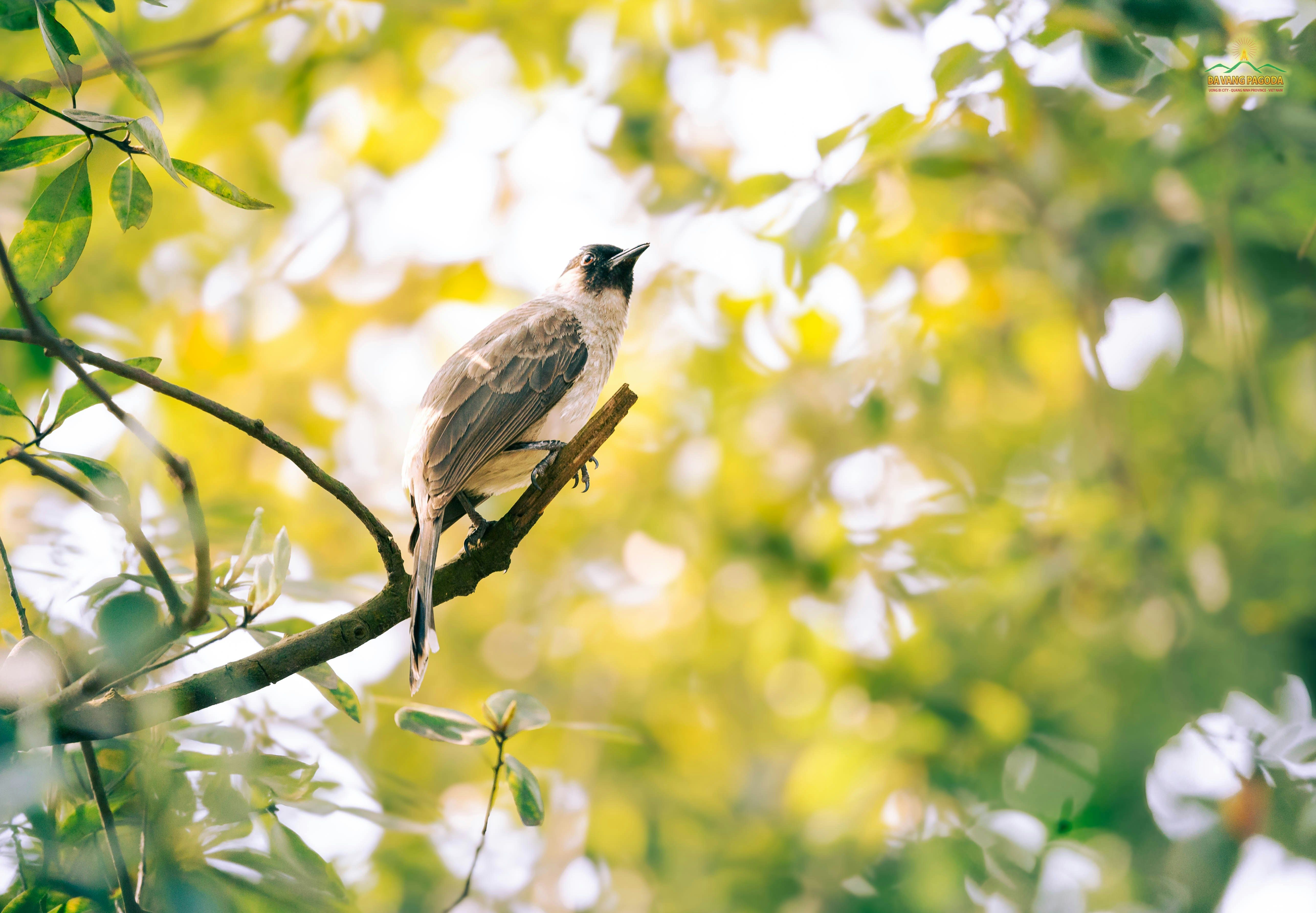
Lighting affects nocturnal insects more than it affects plants. In a match-pairs study in southern England, street lighting reduced moth caterpillar abundance by 47 percent in hedgerows and 33 percent in grass margins compared with unlit sites, and also disrupted caterpillar development and feeding behavior. Notably, the negative effects were stronger under white LEDs than under older yellow sodium lamps. Earlier work found that moth abundance at ground level was halved at lit sites and that lighting reduced nocturnal pollen transport, since a meaningful share of moths carry pollen between plants.
Caterpillars matter beyond moths. They're the primary food most songbirds feed their young. Fewer caterpillars in the yard means fewer birds nesting successfully in it.
Again, scale matters. A residential system running at low output for a few hours after dark is not a street light burning until dawn. But the direction of the effect is clear, and it's the strongest argument for the design choices below.
How to Light a Landscape Without Hurting It
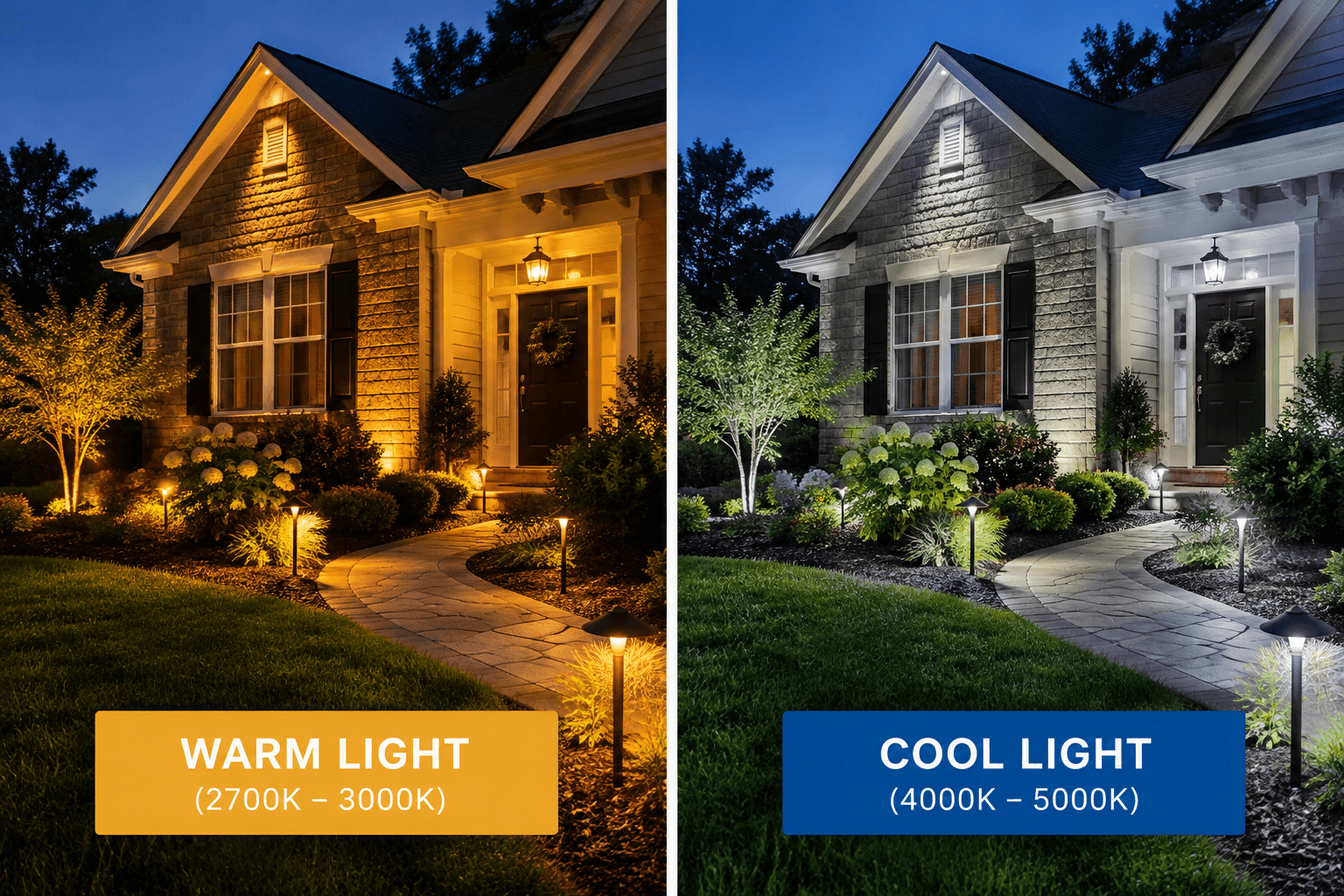
- Go warm. Stick to 2700K or warmer. Warm light is both more flattering on bark and foliage and less disruptive to insects than cool white.
- Use less light than you think you need. Most residential systems are over-lit. Lower wattage looks better and does less damage.
- Aim light at the target, not the sky. Shielded, well-aimed fixtures put light on the trunk or wall instead of scattering it through the canopy and into your neighbor's yard.
- Turn it off. The single most effective thing you can do is not run lights until dawn. A schedule that shuts the system down at 11 p.m. or midnight gives the yard most of the night in darkness, and cuts your energy use.
- Dim it. Zoning and dimming let you run accent lighting low on ordinary nights and bring it up when you're entertaining.
- Leave part of the yard dark. You don't need to light everything. A dark back corner with native plantings is genuinely valuable habitat.
- Insist on careful installation. Hand-dig or use narrow, shallow trenches within the root zone, keep equipment off root areas, and never fasten hardware directly around a trunk or limb without a plan to adjust it.
The honest summary: the light is a modest concern and a manageable one. The trencher, the mounting strap, and the crew's boots are where the real damage happens, and all three are a matter of who does the work.
TLC installs custom outdoor lighting systems throughout central Maryland — request a free lighting design, and we'll show you exactly what your property would look like after dark.
Best Outdoor Lighting Design for Long-Term Reliability
Frequently Asked Questions
Will uplighting a tree kill it?
No. Uplighting a healthy tree with LED fixtures aimed at the trunk and lower canopy doesn't kill trees. The risk comes from how the fixtures get there: cut roots, compacted soil, and hardware attached to the trunk.
Does outdoor lighting hurt pollinators?
It can. Research on street lighting has found substantial reductions in moth caterpillar abundance at lit sites and reduced nocturnal pollen transport, with white LEDs performing worse than warmer sodium lighting. Warm color temperatures, lower output, shielded fixtures, and shutting the system off before midnight all reduce the impact considerably.
Will lighting confuse my plants about the seasons?
Bright, all-night light can shift the timing of bud break and fall color in trees. A residential system at low output for a few evening hours is a far weaker signal than a street light, and the effect is limited to the lit portion of the plant.
Is there a safe distance to keep fixtures from plants?
There's no single number, since it depends on the fixture and how fast the plant grows. As a working rule, leave enough room that mature foliage won't touch the lens and that someone can still reach the fixture to clean and aim it.
Does landscape lighting attract more bugs to my yard?
Warm-toned, well-shielded, lower-output fixtures attract noticeably fewer insects than bright cool-white lights. Keeping light off the house and away from doors and patios also helps.
