Water is one of the few lawn-care costs that quietly climbs every year — and traditional sprinkler timers do nothing to stop it. Traditional sprinkler timers water on a fixed schedule whether it rained last night or not. Smart irrigation changes that equation, and in 2026 the technology has matured to the point where upgrading is one of the highest-return improvements you can make to an in-ground system.
For more than 40 years, TLC Incorporated has provided Maryland homeowners with expert lawn irrigation services — from smart controller upgrades to full system design, repair, and seasonal care.
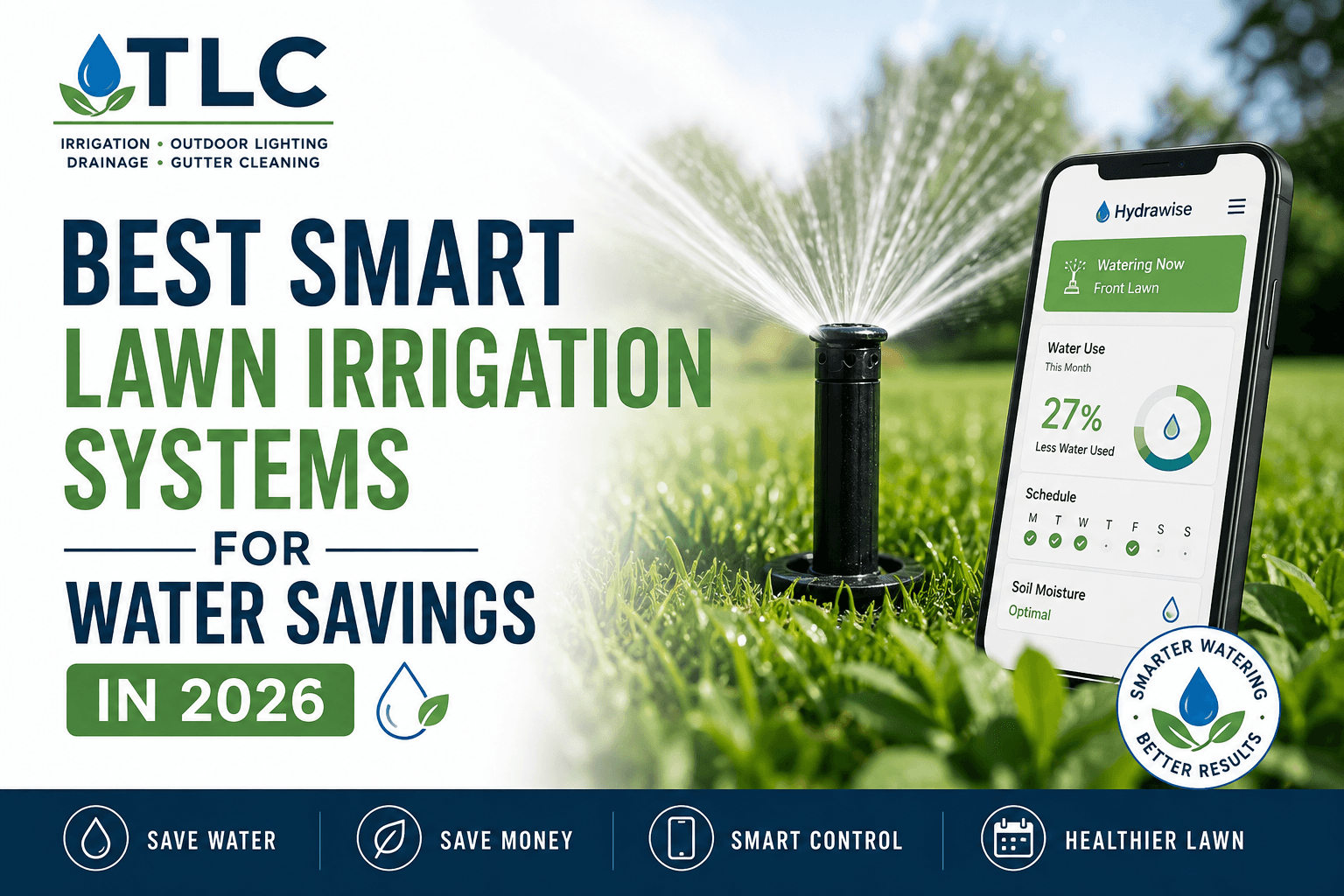
This guide walks through the best smart lawn irrigation systems available this year, how much water and money they can actually save, and why the smartest hardware still performs best when it's paired with professional lawn irrigation services that design and tune the system underneath it.
What Makes an Irrigation System "Smart"?
A smart irrigation system is built around a Wi-Fi-connected controller that replaces your old timer and makes watering decisions for you. Instead of running a rigid schedule, it adjusts automatically based on real conditions. The best systems in 2026 share a core set of capabilities:
Weather-based scheduling is the headline feature. The best smart controllers draw on several data sources to make watering decisions on their own:
- Hyper-local forecasts and evapotranspiration data — essentially how fast your lawn is losing moisture to heat, wind, and sun — let the controller lengthen, shorten, or skip cycles automatically.
- Rain skip and freeze skip pause watering when a storm is coming or temperatures drop.
- Soil-moisture awareness, either through sensors or modeling, prevents overwatering already-saturated ground.
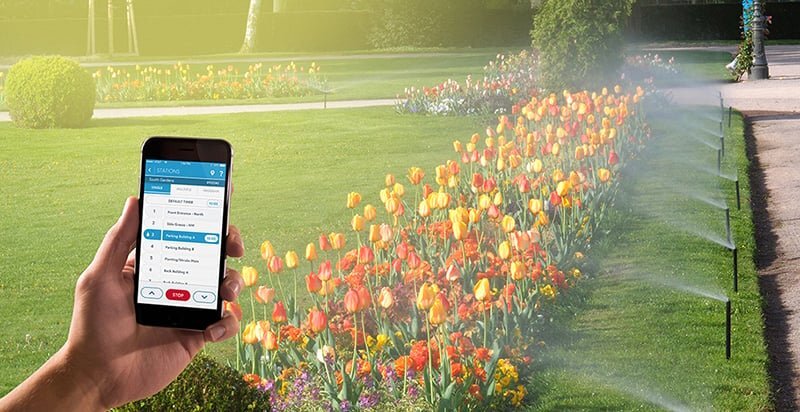
Remote app control lets you adjust any zone from your phone, and most models work with Alexa, Google Home, or Apple HomeKit. Increasingly, flow monitoring adds real-time leak detection, flagging a broken head or cracked line before it wastes hundreds of gallons.
The important thing to understand is that a smart controller works with your existing sprinkler system. You're upgrading the brain, not tearing out the pipes.
How Much Water ( and Money) — Can You Actually Save?
The savings are real and independently verified. The EPA's WaterSense program certifies irrigation controllers that meet strict water-efficiency standards, and the leading certified models report reducing irrigation use by roughly 20% to 30% or more compared with conventional timers.
For a household spending $80 to $120 a month on outdoor watering during the season, that can translate to real money back each month, with many controllers paying for themselves within a year or two.
There's often an additional incentive: many water utilities offer rebates for installing a WaterSense-certified controller, which shortens the payback period further. It's worth checking with your local water provider before you buy.
Smart Lawn Irrigation Controllers — 2026 Comparison
The four leading smart irrigation controllers for 2026, at a glance.
|
Controller |
Best for |
Weather-based scheduling |
Zone Options |
Flow monitoring/leak detection |
Relative price |
|
Rachio (3 & Pro Series) |
All-around choice |
Yes — daily, hyper-local |
8 or 16 zones |
Optional add-on |
Premium |
|
Hunter Hydrawise |
Professional-grade platform |
Yes — predictive |
Robust multi-zone |
Yes |
Higher (pro-grade) |
|
Rain Bird (ESP-TM2 & ARC8) |
Simple upgrade |
Yes — straightforward |
Works with existing system |
Varies by model |
Moderate |
|
Orbit B-hyve XR |
Value pick |
Yes — app-controlled |
Multi-zone models |
Varies by model |
Budget |
Wi-Fi loss: All four keep running their last-saved schedule if the connection drops — you only lose remote app access until it reconnects.
WaterSense: Orbit B-hyve is WaterSense certified (the EPA's water-efficiency label).
One reassuring note across all four: quality smart controllers keep running their last-saved schedule even if your Wi-Fi drops. Your lawn keeps getting watered — you lose remote access until the connection returns.
Getting the Most From Your Smart System in Maryland
Local conditions matter more than any single feature. Maryland's humid summers, clay-heavy soil, and swing from heavy spring rain to dry August stretches all affect how a smart system should be programmed. Clay soil, for example, absorbs water slowly, so "cycle and soak" scheduling — several short bursts instead of one long run — prevents runoff and lets moisture reach the roots. Seasonal adjustments keep the system from overwatering in spring or underwatering during a late-summer heat wave.
And no matter how smart the controller, a Maryland system still needs proper winterization each fall to protect it from freeze damage. These are the adjustments a local irrigation professional dials in based on your property, not a factory preset.
The Bottom Line
The best smart lawn irrigation systems for 2026 — Rachio, Hunter Hydrawise, Rain Bird, and Orbit B-hyve — all deliver genuine, verifiable water savings when they're set up correctly. Choosing the right one comes down to your property size, budget, and how hands-on you want to be. But the controller is only half the equation. To capture the full savings, the system it manages needs to be well designed, properly tuned, and maintained for local conditions.
If you're ready to cut your water use in 2026, request a free, no-obligation estimate and let TLC help you choose and set up the right smart system for your lawn.
Frequently Asked Questions
What makes an irrigation system "smart"?
A smart irrigation system is built around a Wi-Fi-connected controller that makes watering decisions for you instead of running a fixed schedule. The best models use hyper-local weather forecasts and evapotranspiration data to lengthen, shorten, or skip cycles automatically, pause watering when rain or freezing temperatures are coming, and let you control every zone from your phone. Many now add flow monitoring that flags a leak before it wastes hundreds of gallons. Importantly, a smart controller works with your existing sprinkler system — you're upgrading the brain, not replacing the pipes.
How much water can a smart controller actually save?
The savings are real and independently verified. The EPA's WaterSense program certifies controllers that meet strict water-efficiency standards, and the leading certified models report cutting irrigation use by roughly 20% to 30% or more compared with conventional timers. For a household spending $80–$120 a month on outdoor watering, many controllers pay for themselves within a year or two — and some water utilities offer rebates that shorten the payback further.
Which smart irrigation system is best?
It depends on your property and budget. Rachio (3 and Pro Series) is the best all-around, user-friendly choice; Hunter Hydrawise is the strongest professional-grade platform; Rain Bird's ESP-TM2 is the easiest upgrade if you already have a Rain Bird system; and Orbit's B-hyve XR is the best value for smaller lawns or tighter budgets. All four adjust to the weather and keep running their last saved schedule even if your Wi-Fi drops.
Will a smart controller work if my Wi-Fi goes down?
Yes. Quality smart controllers keep running their last-saved schedule if the connection drops — your lawn keeps getting watered, and you simply lose remote app access until the Wi-Fi reconnects.
Do I need a professional to install a smart irrigation system?
A smart controller can only optimize the system it's connected to — so installing one on a poorly designed or aging system just automates the waste more precisely. The biggest water losses come from problems no controller can fix on its own: overlapping or dry-gap coverage, mismatched nozzles, low pressure, leaks, or zones grouped incorrectly. Professional lawn irrigation services audit and correct those issues, then program the smart features for your specific landscape — which is what actually unlocks the water savings the hardware promises.
How do I get the most out of a smart system in Maryland?
Local conditions matter more than any single feature. Maryland's clay-heavy soil absorbs water slowly, so "cycle and soak" scheduling — several short bursts instead of one long run — prevents runoff and gets moisture to the roots. Seasonal adjustments keep the system from over- or under-watering as the weather swings, and the system still needs proper winterization each fall to protect it from freeze damage. These are the settings a local professional dials in based on your specific property.
