Choosing the Right Sprinkler System: A Homeowner's Guide
By Bob Carr, Founder & President of TLC Incorporated Updated July 2026 · 5 min read
Choosing the right sprinkler system isn't as simple as picking one off a shelf. There are several types of systems and sprinkler heads, each with its own strengths, and the "best" one depends entirely on your lawn — its size, shape, soil, water pressure, and how much of the work you want to do yourself. Get the match right, and you'll have a healthier lawn, a lower water bill, and one less chore. Get it wrong, and you'll be chasing dry spots, soggy patches, and wasted water all season.
Here's how to think through the decision like a pro.
Start With Your Lawn, Not the Equipment
Before you look at a single sprinkler head, gather the details that actually drive the design:
- Water pressure (PSI) and flow (GPM). This determines which heads will work and how many you can run at once. Spray heads generally want 20–30 PSI; rotors typically need closer to 30–45 PSI.
- Yard size and shape. Wide-open turf, narrow strips, and curved beds each call for different heads.
- Soil type. Sandy soil absorbs water quickly; clay soil — common across Maryland — absorbs slowly and is prone to runoff, so it favors slower-applying heads.
- Sun, shade, and slope. Slopes and hot, sunny areas need water applied slowly enough to soak in without running off.
Skipping this step is the single most common reason a system underperforms. Every good design starts here.
In-Ground vs. Above-Ground Systems
Above-ground systems — hose-end sprinklers you move around by hand — are cheap and fine for a small yard or a temporary fix, but they water unevenly, waste water, and require you to be the timer.
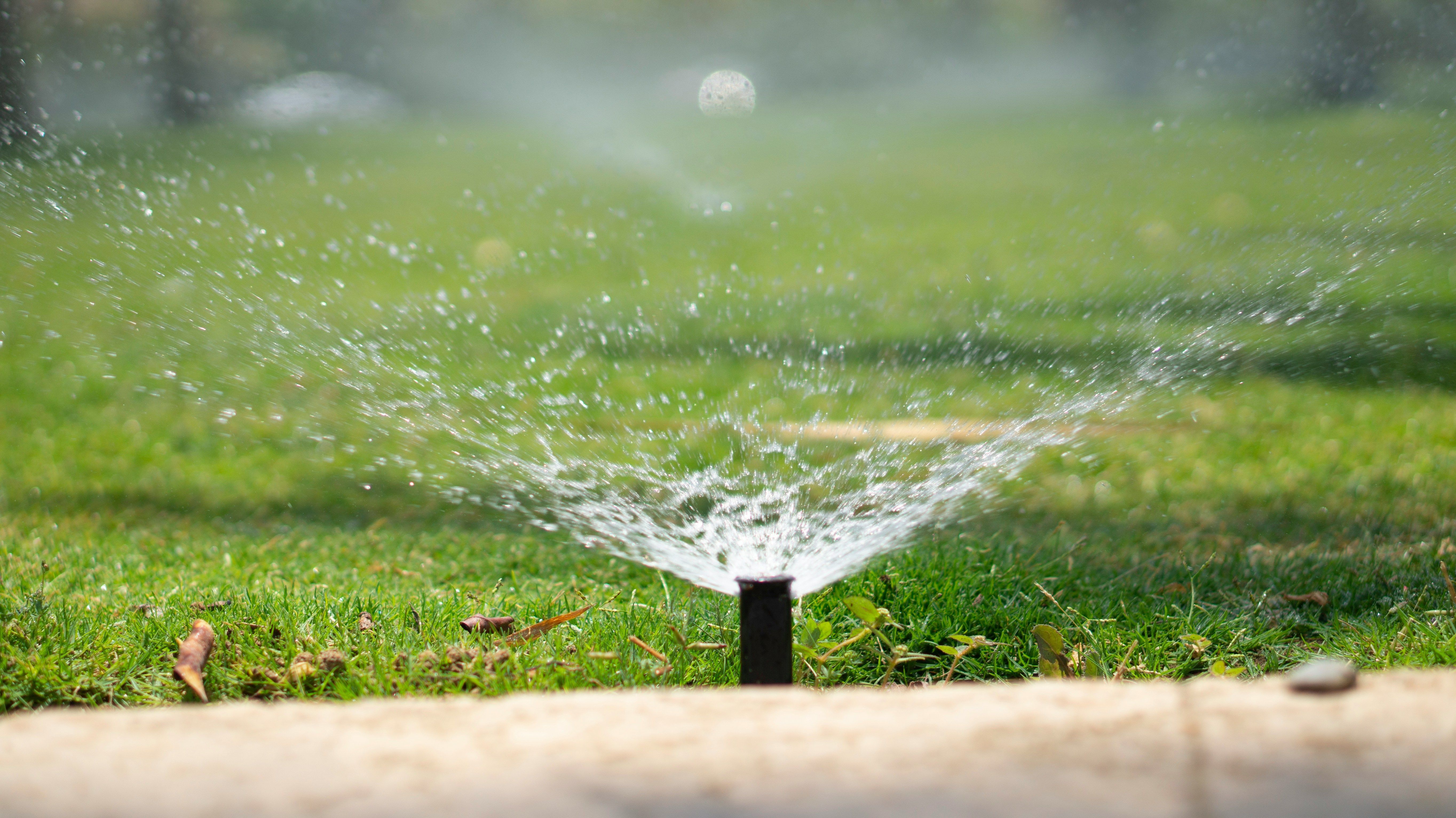
In-ground (underground) systems are the real solution for a healthy, permanent lawn. Heads sit flush with the ground and pop up only when running, so nothing interferes with mowing or foot traffic. Paired with an automatic controller, the system waters at the ideal early-morning hour on its own — consistent coverage with zero effort. For most homeowners investing in their lawn long-term, this is the way to go.
Understand the Main Sprinkler Head Types
Not all sprinkler heads are created equal. Matching the head to the area is what separates an efficient system from a wasteful one.
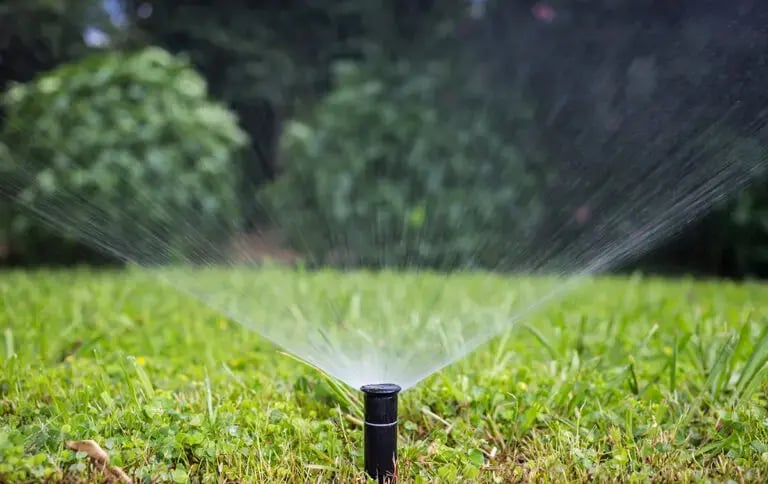
Spray heads deliver a fixed, fan-shaped mist and cover small to medium areas (up to roughly 15 feet). They apply water quickly, which makes them great for compact lawns and tight spaces — but they're more prone to wind drift and evaporation.
Rotor heads shoot rotating streams of water across medium to large areas (roughly 20 feet and up, with some reaching 50+ feet). They apply water more slowly, which means less runoff and better absorption — ideal for big, open stretches of turf.
Rotary nozzles are a high-efficiency hybrid: they fit on spray-head bodies but send out slow, rotating streams that cover mid-sized areas (about 15–35 feet). Their larger droplets resist wind better, and their low application rate makes them a favorite of water-conservation programs — a smart pick for slopes and irregular shapes.
Drip and micro-irrigation deliver water directly to the roots of shrubs, flower beds, and gardens with almost no evaporation or waste. It's the gentlest, most efficient option for planted areas — not for open lawn.
Zone Your Yard the Right Way
Dividing your yard into zones — separate sections watered at different times — is essential, and not just for water pressure. When one zone runs at a time, each area gets full, consistent pressure instead of a weak spread across the whole system.
But there's a rule most DIY installs get wrong: never mix spray heads and rotors in the same zone. They apply water at very different rates, so combining them leaves some spots soaked, and others parched. Keep like heads together, use matched-precipitation nozzles so every head in a zone applies water evenly, and space heads so each one's spray reaches the next (called head-to-head coverage). This is where professional design pays for itself — proper zoning is the difference between a uniformly green lawn and a patchy one.
Don't Overlook the Controller
The controller is the brain of the system, and it's where modern technology has changed the game. Older timers simply ran on a fixed schedule. Today's smart controllers pull local weather data and automatically skip cycles after rain, dial back during cool spells, and adjust through the seasons — saving water without a single dry patch. Many qualify under EPA WaterSense guidelines and can noticeably lower your water bill. If you're installing a new system, a weather-based smart controller is well worth it.
Match the System to Your Budget — and Your Goals
Cost matters, but the cheapest system rarely turns out to be the least expensive over time. A poorly matched setup wastes water every month and often needs rework. The goal isn't to spend the most or the least — it's to build a system that fits your lawn and your budget while actually delivering even, efficient coverage. Do the homework up front and the system pays you back for years.
Let a Professional Design It Around Your Lawn
Choosing heads, calculating pressure, laying out zones, and balancing precipitation rates is genuinely technical work — and mistakes are expensive to undo. That's where we come in. TLC Incorporated has designed and installed custom lawn irrigation systems across Maryland and the Mid-Atlantic since 1981. We'll evaluate your yard's pressure, soil, and layout and build a system tuned specifically to it — no guesswork, no wasted water.
Want a free customized sprinkler system plan? Call TLC Incorporated at (301) 603-3097 or contact us today.
Frequently Asked Questions
What type of sprinkler system is best for a home lawn? For a permanent, healthy lawn, an in-ground (underground) system with an automatic controller is the best choice. It waters evenly at the ideal time of day with no effort, unlike hose-end sprinklers you move by hand.
What's the difference between spray heads and rotors? Spray heads cover small areas (up to ~15 feet) with a fixed fan of mist and apply water quickly. Rotors cover larger areas (20+ feet) with rotating streams and apply water more slowly, reducing runoff. They should never share a zone because their application rates differ.
Can I mix different sprinkler heads in the same zone? No. Spray heads and rotors apply water at very different rates, so mixing them causes uneven watering. Keep the same head type together in each zone for uniform coverage.
How many zones does a sprinkler system need? It depends on your water pressure, flow rate, and yard size — each zone can only support so many heads. A professional calculates this based on your available pressure, so every zone gets full coverage.
Are smart sprinkler controllers worth it? Yes. Weather-based smart controllers automatically adjust watering based on rain and temperature, preventing waste and often lowering your water bill while keeping your lawn healthy.

Topics: