
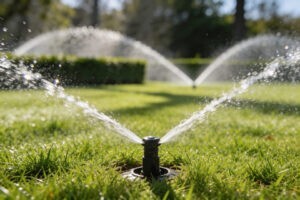
Outdoor watering can account for up to 30% of a home’s water usage, and a sprinkler system is supposed to make that water go further, not disappear. But when something breaks, an irrigation system can waste a startling amount of water — often quietly, underground, and for weeks before anyone notices. The first clue is usually a higher bill, not a puddle.
If your water usage has crept up or your lawn isn't thriving despite plenty of watering, your system may be working against you. Fixing lawn sprinklers early — before a small fault turns into weeks of waste — is almost always cheaper than ignoring it.
For more than 40 years, TLC Incorporated has helped Maryland homeowners with fixing lawn sprinklers and keeping their irrigation systems running efficiently — saving water, protecting the lawn, and lowering bills.
Here are the most common signs of a broken or inefficient sprinkler, why they waste so much water, and how to fix them.
Signs Your Lawn Sprinkler System Is Wasting Water
Common signs of a wasteful system, what causes them, and what to do.
|
Sign |
What You'll Notice |
Likely Cause |
What to Do |
|
Rising water bill |
Your bill climbs while your watering habits haven't changed |
A hidden leak, a valve stuck partly open, or an underground line break |
Compare to the same month last year; investigate a sudden jump quickly |
|
Pooling water & soggy spots |
Puddles around a head, ground soggy long after a cycle, or soil washing away |
Broken fittings, cracked pipes, a worn seal, or a leaking swing joint |
Find and repair the leak — often below the surface, usually a job for a pro |
|
Broken or cracked heads |
Water gushing up, bubbling at the base, or flooding one spot while the zone stays dry |
A cracked, snapped, or sunken sprinkler head |
Replace with a matching head (same spray pattern and flow rate) if the threads are intact |
|
Overspray onto pavement |
Heads spraying the driveway, sidewalk, patio, or street |
A misaligned head, the wrong nozzle, or a head bumped out of position |
Adjust or realign the heads so water stays on the landscape |
|
Misting & fogging |
Heads produce a fine mist or fog instead of distinct droplets |
System pressure is too high |
Bring pressure into range with a regulator or pressure-regulating heads (best diagnosed by a pro) |
|
Zone won't shut off or runs too long |
A zone keeps running, the system won't stop, or run times are excessive |
Debris in a valve, a worn diaphragm, a controller fault, or an outdated schedule |
Shut off at the controller or main, have the valve or controller checked, and adjust schedules seasonally |
|
Watering during or after rain |
The system runs in the rain or right after a soaking storm |
A missing or failed rain sensor, or a controller with no weather awareness |
Add a rain sensor or upgrade to a smart, weather-based controller |
|
Chasing dry spots by overwatering |
Brown patches that don't improve no matter how long you water |
Uneven coverage — heads spaced too far apart, blocked, or mismatched |
Correct the coverage so every part of the zone gets the right amount |
Note: Simple fixes like realigning a head or replacing a broken one are DIY-friendly. Hidden leaks, pressure problems, and valve or controller faults are worth a professional's diagnosis.
Fixing Lawn Sprinklers That Waste Water
Some of these issues are simple to handle yourself: realigning a head, cleaning a clogged nozzle, adjusting a schedule, or replacing a broken head with a matching one. Others — hidden leaks, pressure problems, valve and wiring faults, and rain-sensor issues — are worth a professional's diagnosis, because pinpointing the real cause is what actually stops the waste.
When it comes to fixing lawn sprinklers, the value isn't in swapping parts and hoping; it's in identifying the true cause the first time. A professional system audit can check every zone for leaks, coverage, pressure, and controller settings, then correct what's driving up your usage.
If your system is showing any of these signs, request a free, no-obligation estimate and put a stop to the waste.

FAQ's
How do I know if my sprinkler system is wasting water?
The most common red flag is a water bill that climbs while your watering habits haven't changed. Other signs include water pooling around heads, soggy spots that linger, misting instead of clean droplets, overspray onto pavement, and dry patches that never improve. Because much of the system runs underground, the waste often adds up for weeks before you notice — so a rising bill is frequently the first clue.
Why is water pooling around my sprinkler heads?
Pooling water, a soggy patch that stays wet long after a cycle, or soil washing away near a head all point to a leak — a broken fitting, cracked pipe, worn seal, or a leaking swing joint beneath the head. Many of these leaks are underground and never form an obvious puddle, which is exactly why they can waste so much water before they're caught.
Why are my sprinklers spraying a fine mist instead of droplets?
Misting or fogging means your system pressure is too high. That fine mist drifts on the breeze and evaporates before it reaches the soil, so much of the water never waters your lawn at all. It's usually corrected by adjusting a pressure regulator or installing pressure-regulating heads — and because it involves the system's pressure settings, it's best diagnosed by a professional.
Should my sprinklers run when it's raining?
No — watering during or right after a storm is pure waste, and it oversaturates the lawn and invites disease. It usually means a missing or failed rain sensor, or an older controller with no weather awareness. Upgrading to a smart, weather-based controller solves it by automatically skipping cycles when rain is coming, or the ground is already wet.
Can I handle these repairs myself?
Some are DIY-friendly: realigning a head that sprays the driveway, cleaning a clogged nozzle, adjusting an overly long schedule, or replacing a broken head with a matching one. But fixing lawn sprinklers often means finding a hidden leak, correcting a pressure problem, or tracing a valve or wiring fault — and those are worth a professional's diagnosis, because the real savings come from correctly identifying the cause rather than swapping parts and hoping.
When should I call a professional about a water-wasting system?
If your bill has spiked without explanation, water is bubbling up from the ground, a zone won't shut off, or dry spots persist no matter how long you water, it's time for a professional look. A system audit checks every zone for leaks, coverage, pressure, and controller settings — so fixing lawn sprinklers actually stops the waste instead of just treating the symptom.
