Search for topics or resources
Enter your search below and hit enter or click the search icon.
Ready to Start Your Dream Project?
If you're reading this guide, you've probably experienced standing water, soggy lawn areas, erosion, or another drainage problem that just won't go away. This guide was written to help you understand why those problems occur, what they mean, and how to make an informed decision before investing in repairs. Our goal is education first. Whether you hire TLC, another contractor, or simply want to understand your property better, we want you to leave this guide with confidence.
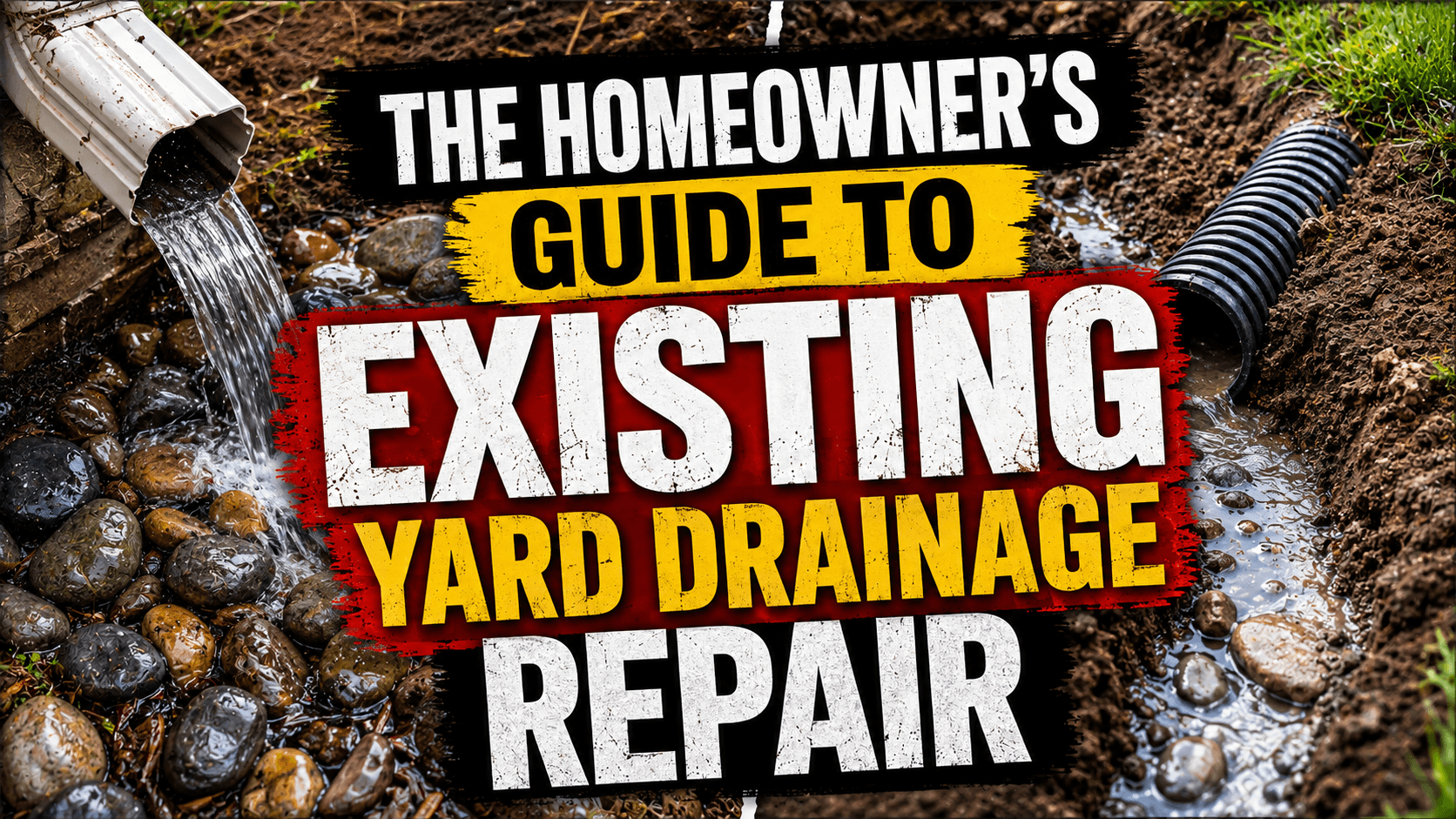
Water always follows the path of least resistance. It never decides where to go randomly. Gravity, elevation, soil conditions, and available drainage paths determine every movement of water across your property.
When rain falls, your property either manages that water effectively or it begins showing symptoms that something is wrong. Those symptoms include puddles, erosion, saturated turf, and water collecting near the home.
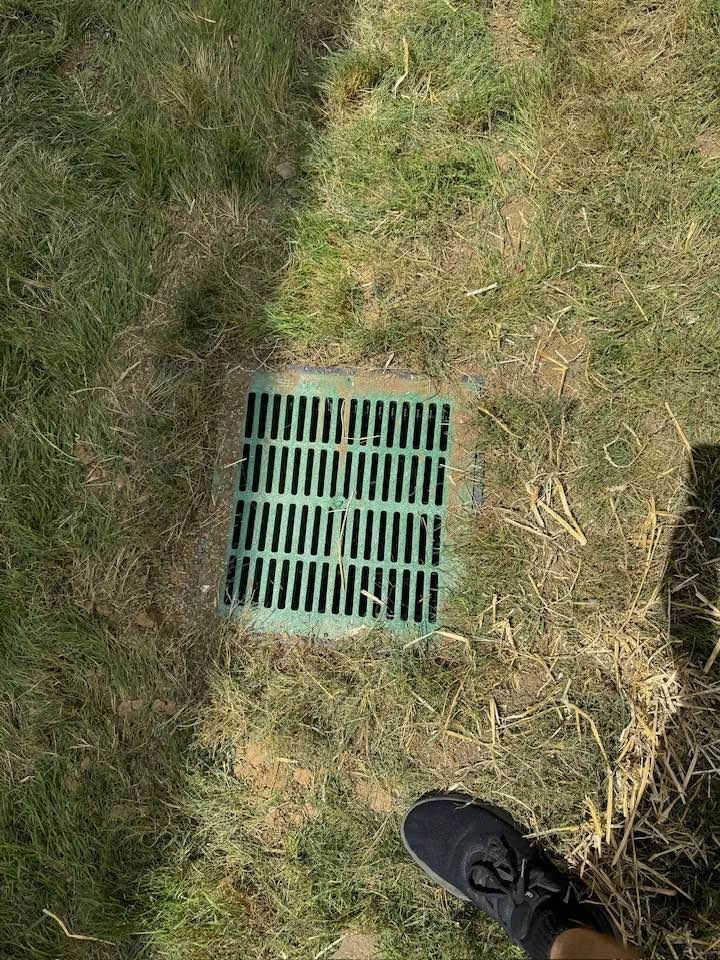
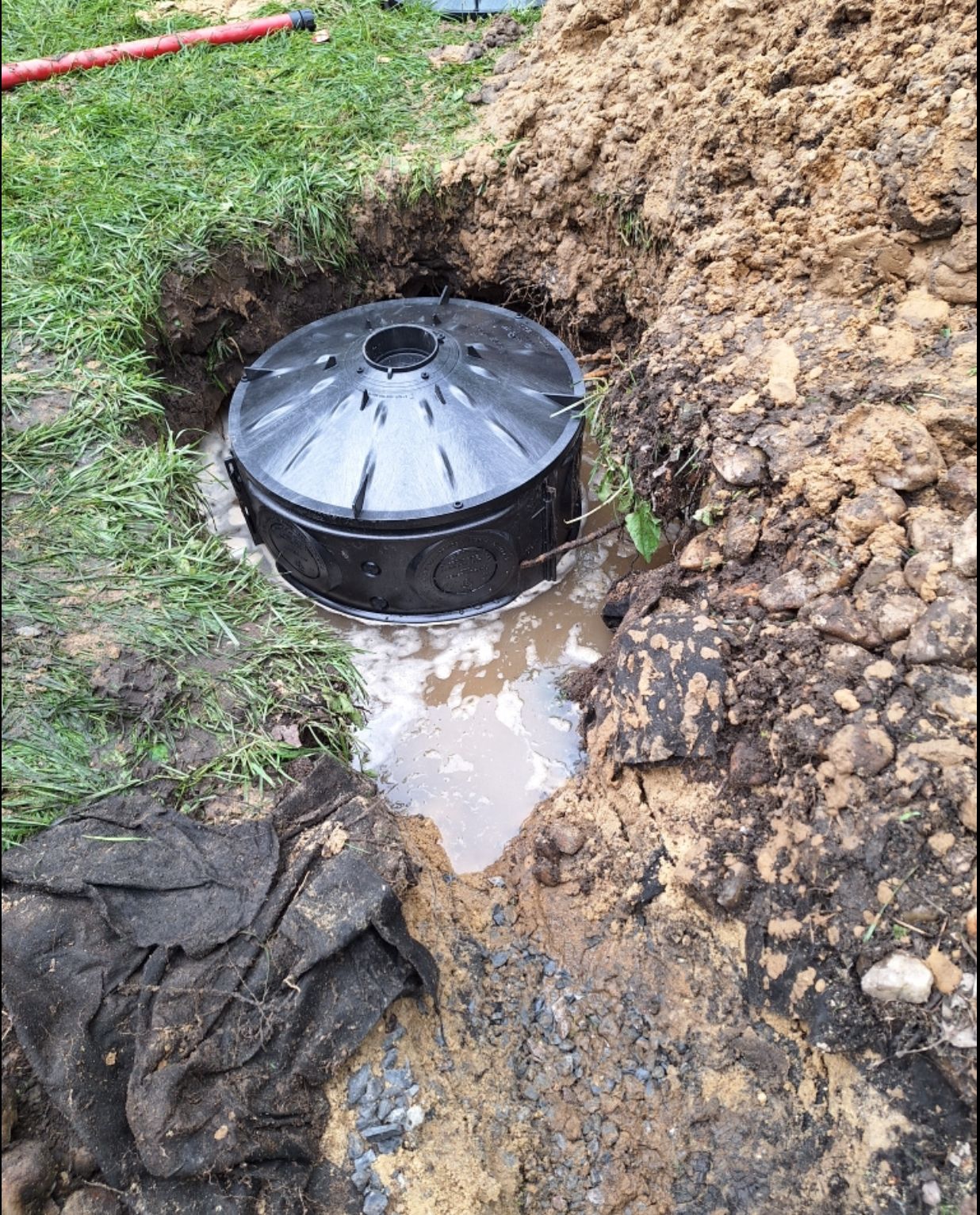
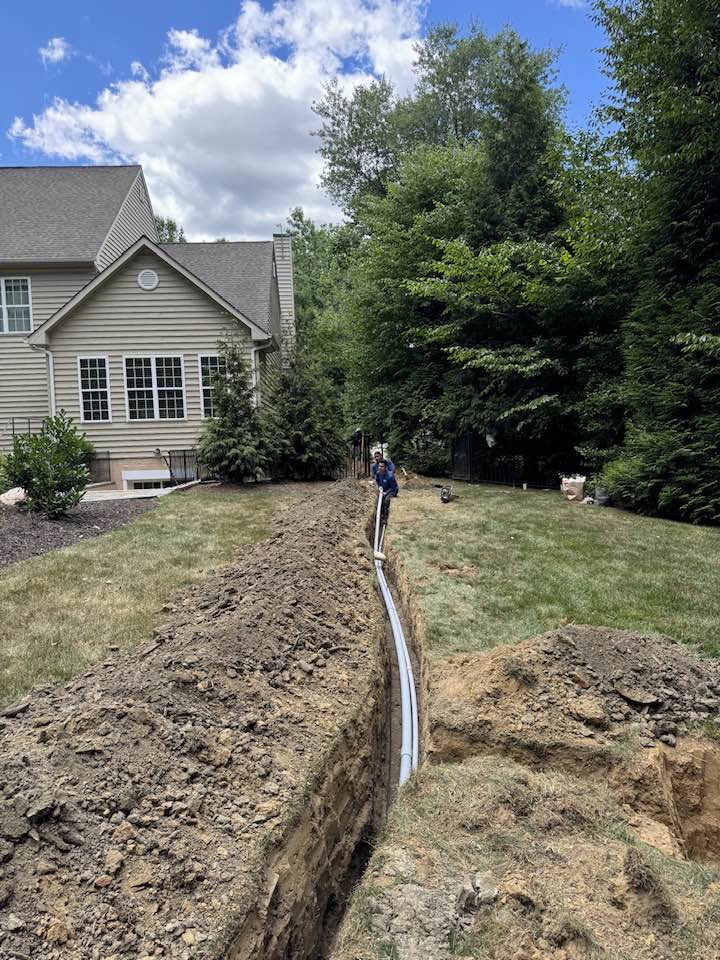
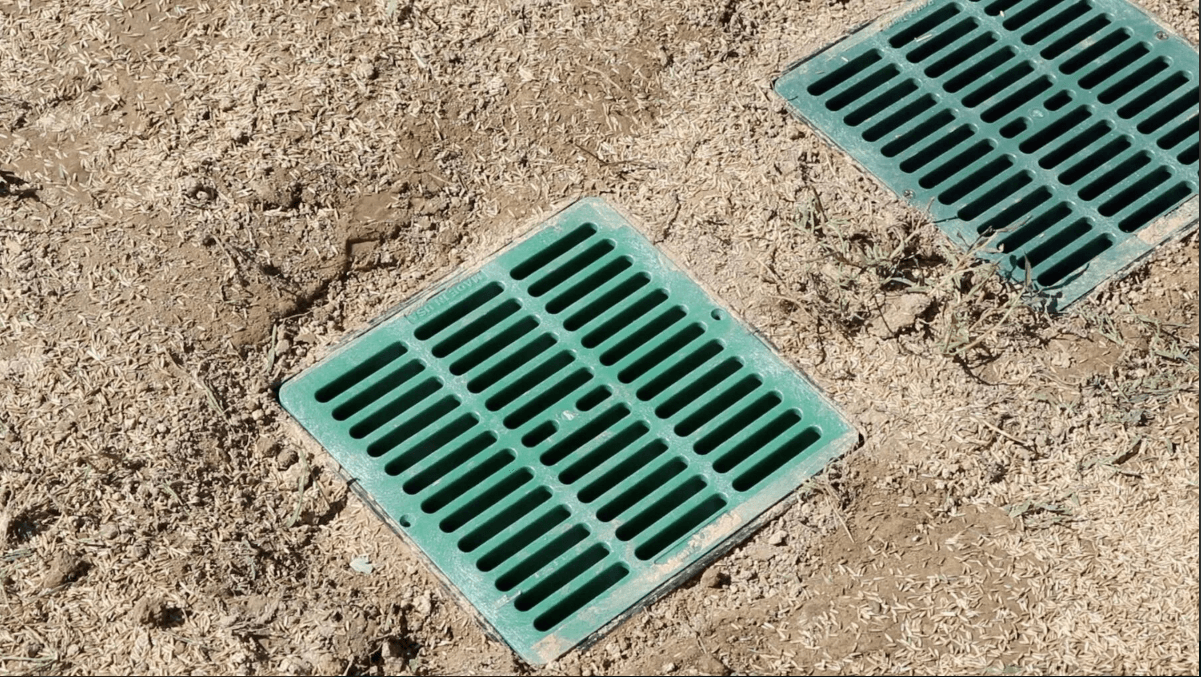
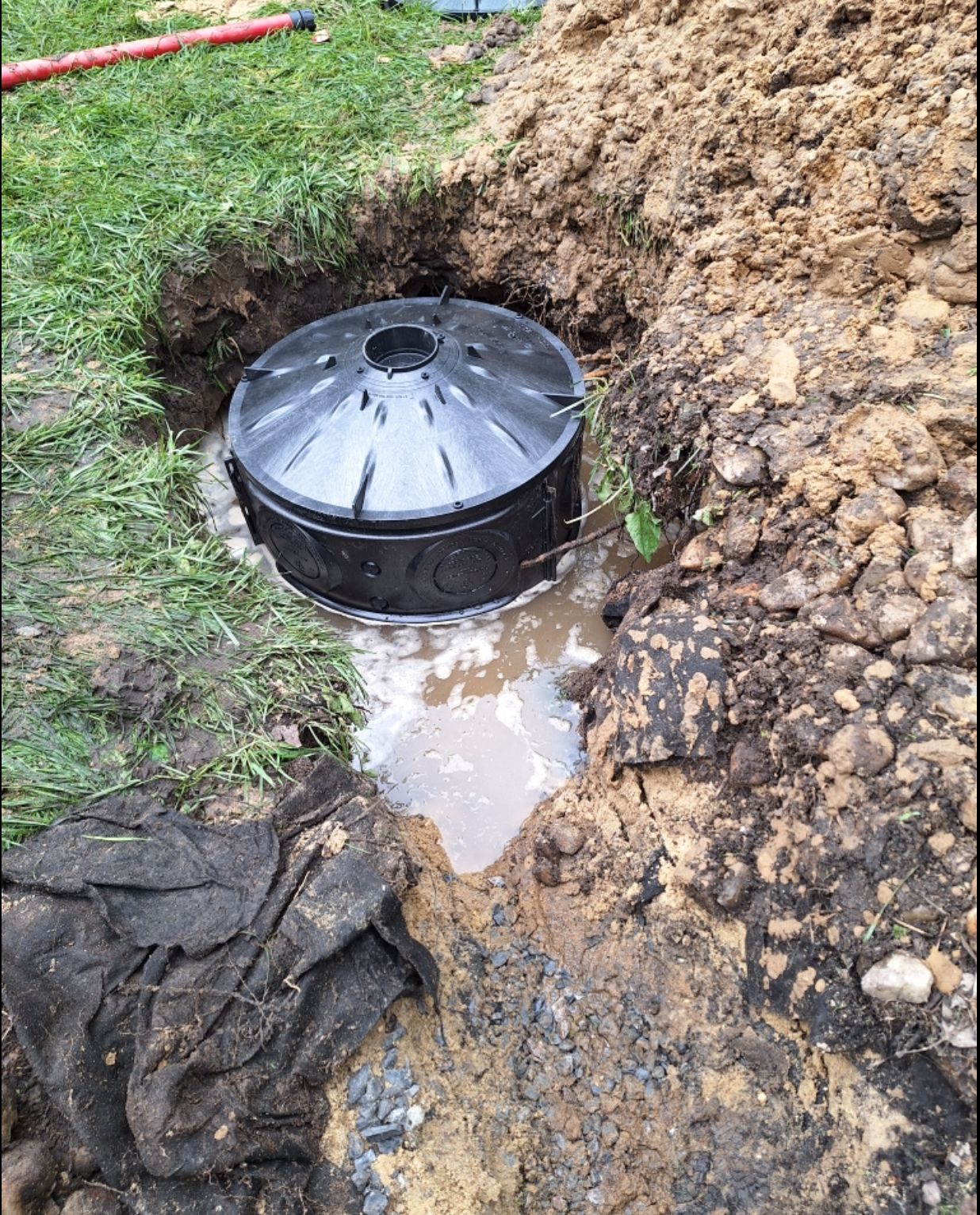
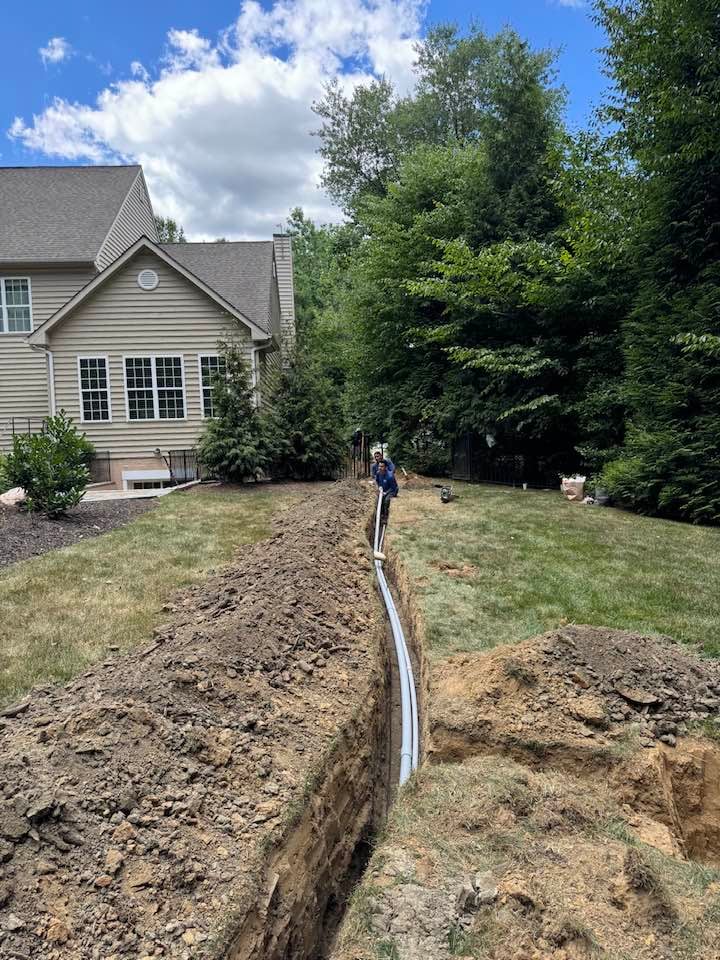
A properly designed drainage system works with water instead of fighting it. Good grading, catch basins, French drains, underground piping, and properly located discharge points all work together to guide water safely away from the home.
Professional drainage specialists learn to read the landscape. Every puddle, washed-out mulch bed, or low spot tells part of the story. Rather than treating the symptom, they work backward to discover why the water chose that path in the first place.
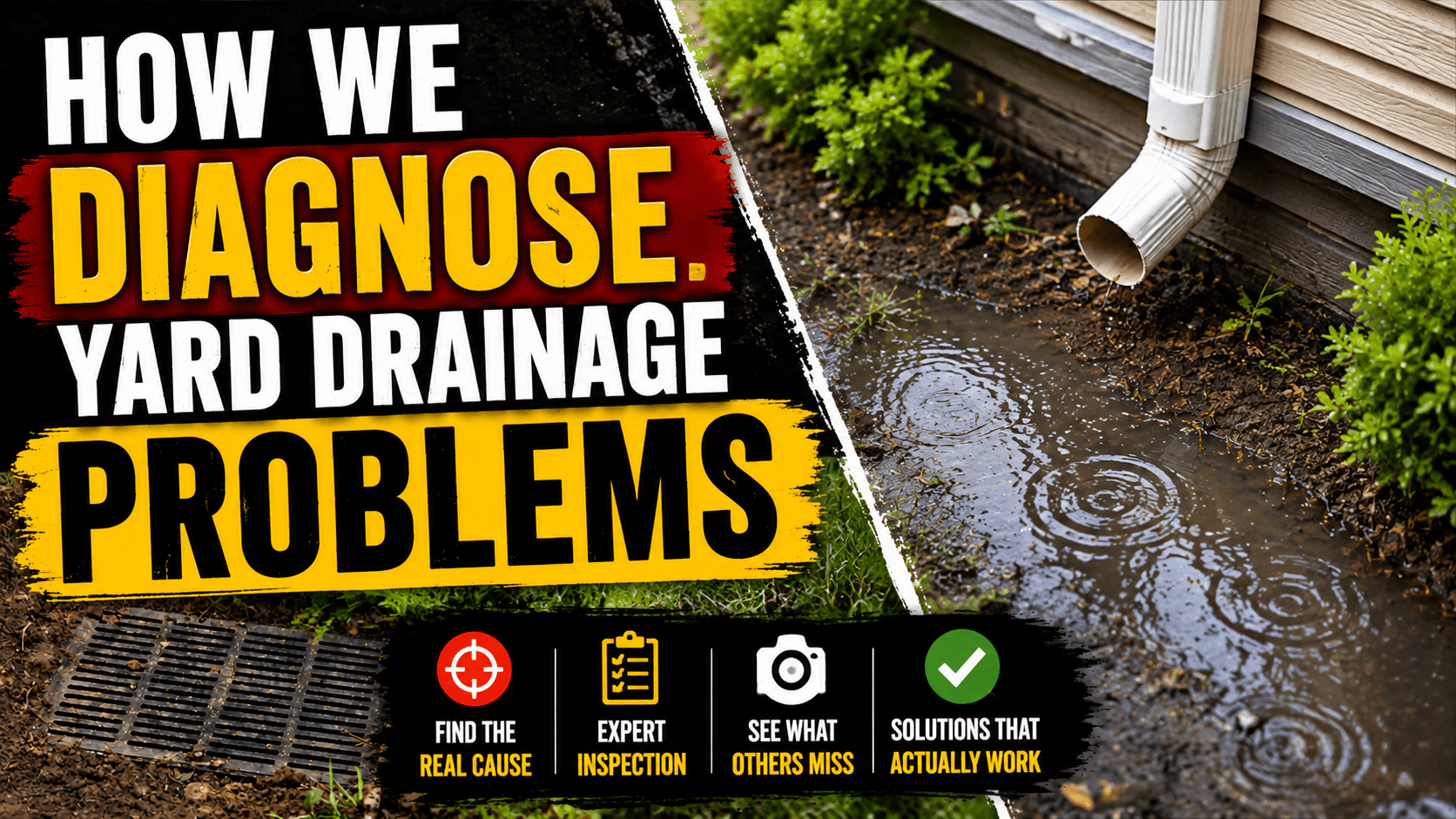
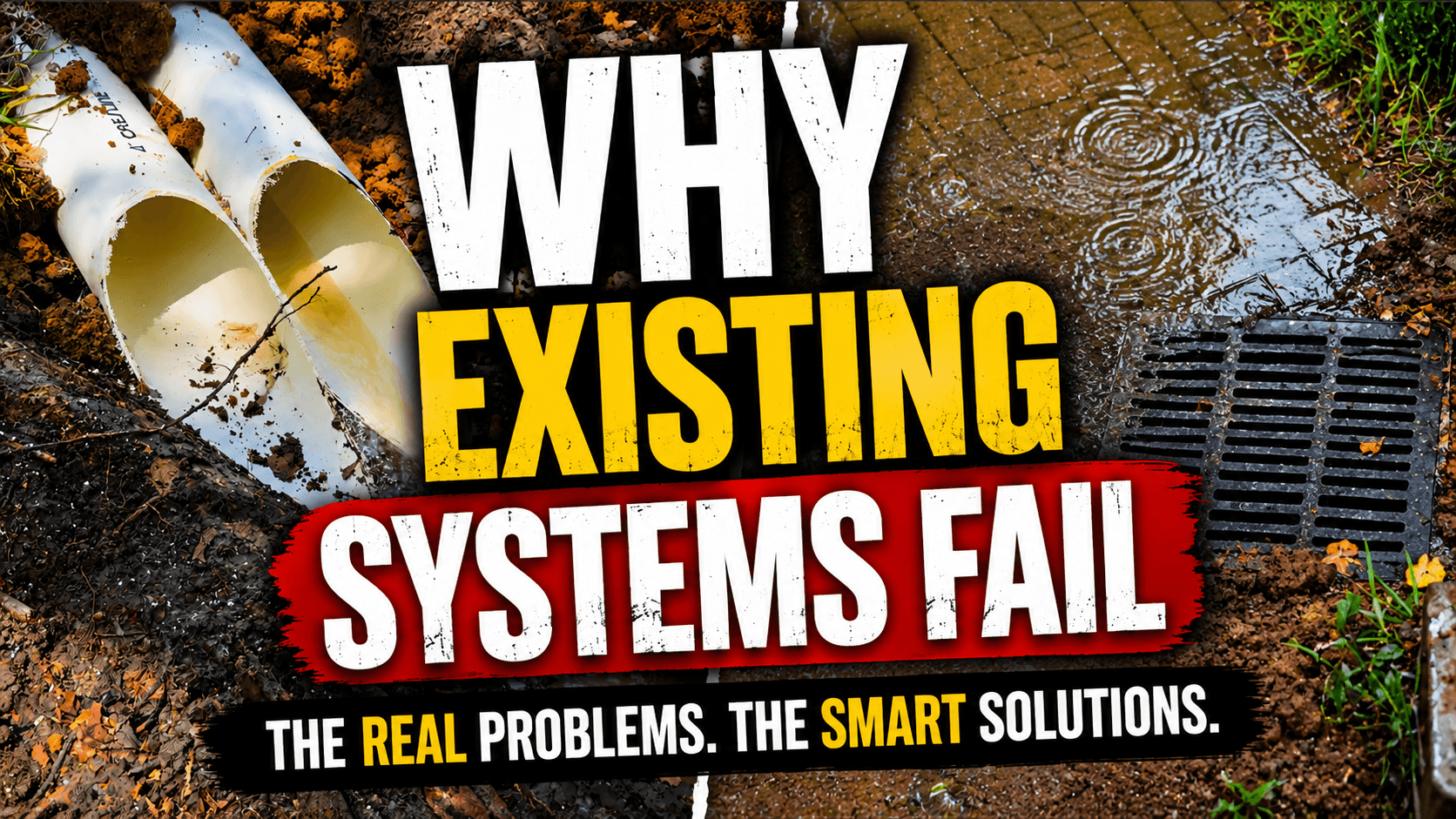
Drainage systems rarely fail overnight. Most problems develop gradually as leaves accumulate, sediment settles, tree roots invade underground pipes, or soil movement changes the slope of the system.
The five most common causes of failure are clogged pipes, root intrusion, crushed or collapsed pipe, improper slope, and blocked outlets. Different failures often create the same visible symptoms, which is why proper diagnosis is so important.
Many homeowners assume the visible puddle is the problem. In reality, it is often only the evidence. The actual failure may be many feet away beneath the lawn or under a driveway.
Early diagnosis usually leads to smaller, less expensive repairs. Waiting allows water to continue damaging the landscape and increases the likelihood that additional sections of the system will eventually require attention.
.png)

.png?width=1193&height=1522&name=IMG_1507%20(1).png)
Yard drainage problems tend to show up in a handful of familiar ways, and each one points back to a specific cause. The most common issues homeowners run into include:
In many Maryland yards, these problems trace back to the same root causes — clay-heavy soil that drains slowly, grading that directs water the wrong way, and heavy seasonal storms that overwhelm a yard with no clear route for the water to escape.
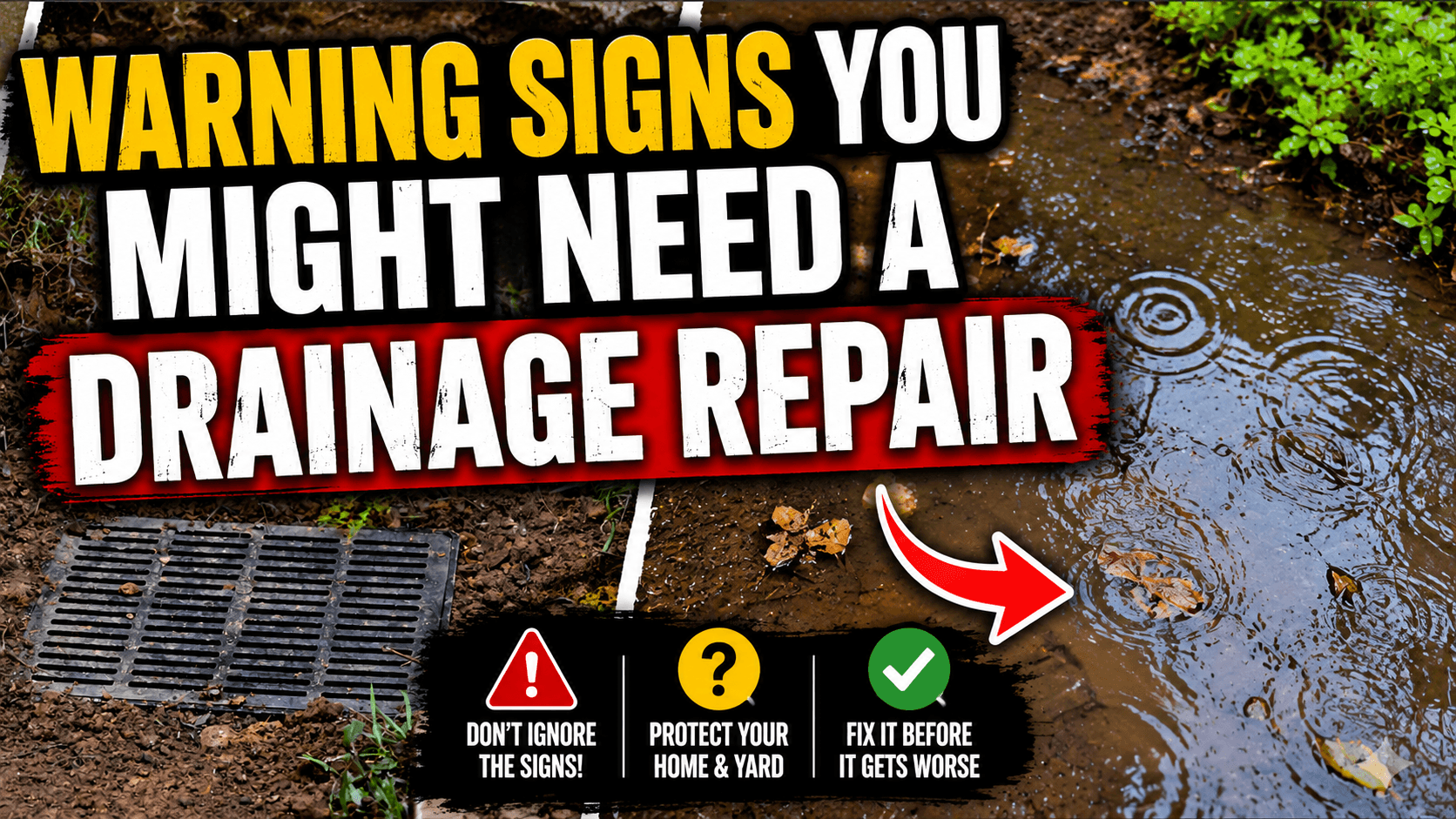
One of the first questions homeowners ask is whether the drainage system can be repaired or whether it must be replaced. The honest answer depends on evidence gathered during a proper inspection.
Many systems require only isolated repairs, such as replacing a damaged section of pipe, correcting a blocked outlet, or improving grading. Others have widespread failures that make replacement the better long‑term investment.
A recommendation should always follow a diagnosis—not the other way around. Camera inspections, grading observations, and an understanding of how water moves across the property provide the information needed to make the right recommendation.
Before approving major work, ask to see the evidence, understand the options, and compare long‑term value rather than simply the lowest price
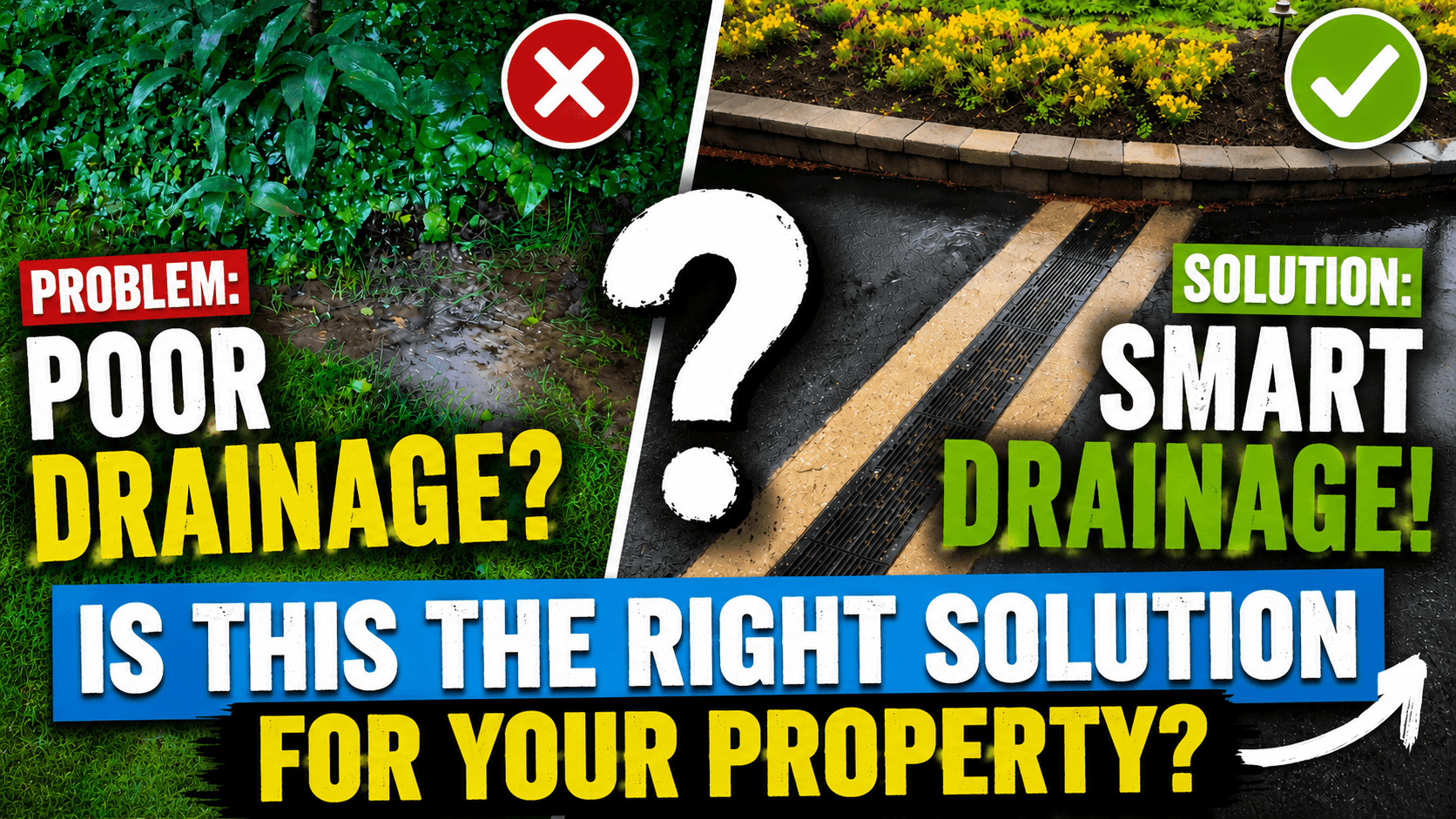
A professional drainage inspection is much more than walking around the yard looking at puddles. It is a systematic investigation designed to determine where water comes from, how it moves across the property, and why it is not leaving the way it should.
A quality inspection begins with questions. When did the problem start? Has it become worse? Does it happen after every rain or only major storms? Have landscaping, patios, or neighboring properties changed? Every answer provides another clue.
The property is then evaluated from high ground to low ground. Downspouts, grading, catch basins, swales, retaining walls, landscaping, and discharge points are observed together because drainage problems are rarely caused by one issue alone.
When underground piping is involved, a camera inspection may be recommended. Instead of guessing what is happening below the surface, the homeowner and contractor can see root intrusion, crushed pipe, standing water, separated joints, or debris inside the system.
The goal of the inspection is not to sell a repair. The goal is to understand the problem so every recommendation is based on evidence rather than assumptions.
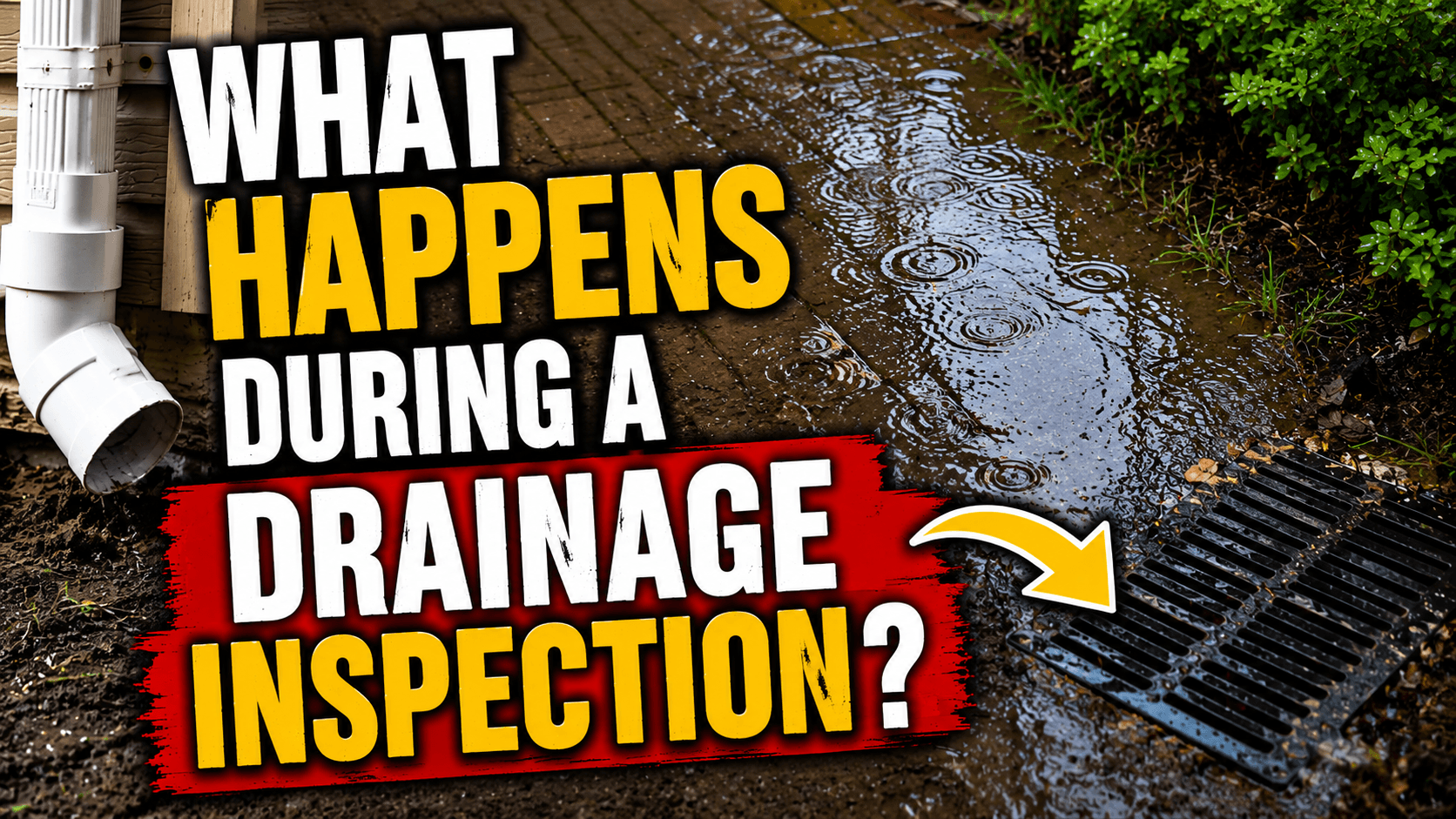
Price is one of the first questions homeowners ask and one of the least explained topics in the drainage industry. Although every property is different, homeowners should understand what causes estimates to increase or decrease.
Factors that commonly increase cost include difficult access, greater excavation depth, longer pipe runs, mature landscaping, hardscape restoration, and larger volumes of water that require more robust drainage systems.
Costs may be lower when problems are identified early, repairs are isolated, access is simple, or cleaning restores the existing system.
Rather than comparing estimates by price alone, compare the scope of work, materials, restoration, warranty, and the evidence supporting each recommendation.
The best proposal is rarely the cheapest or the most expensive. It is the proposal that best solves the actual problem and provides long-term value.
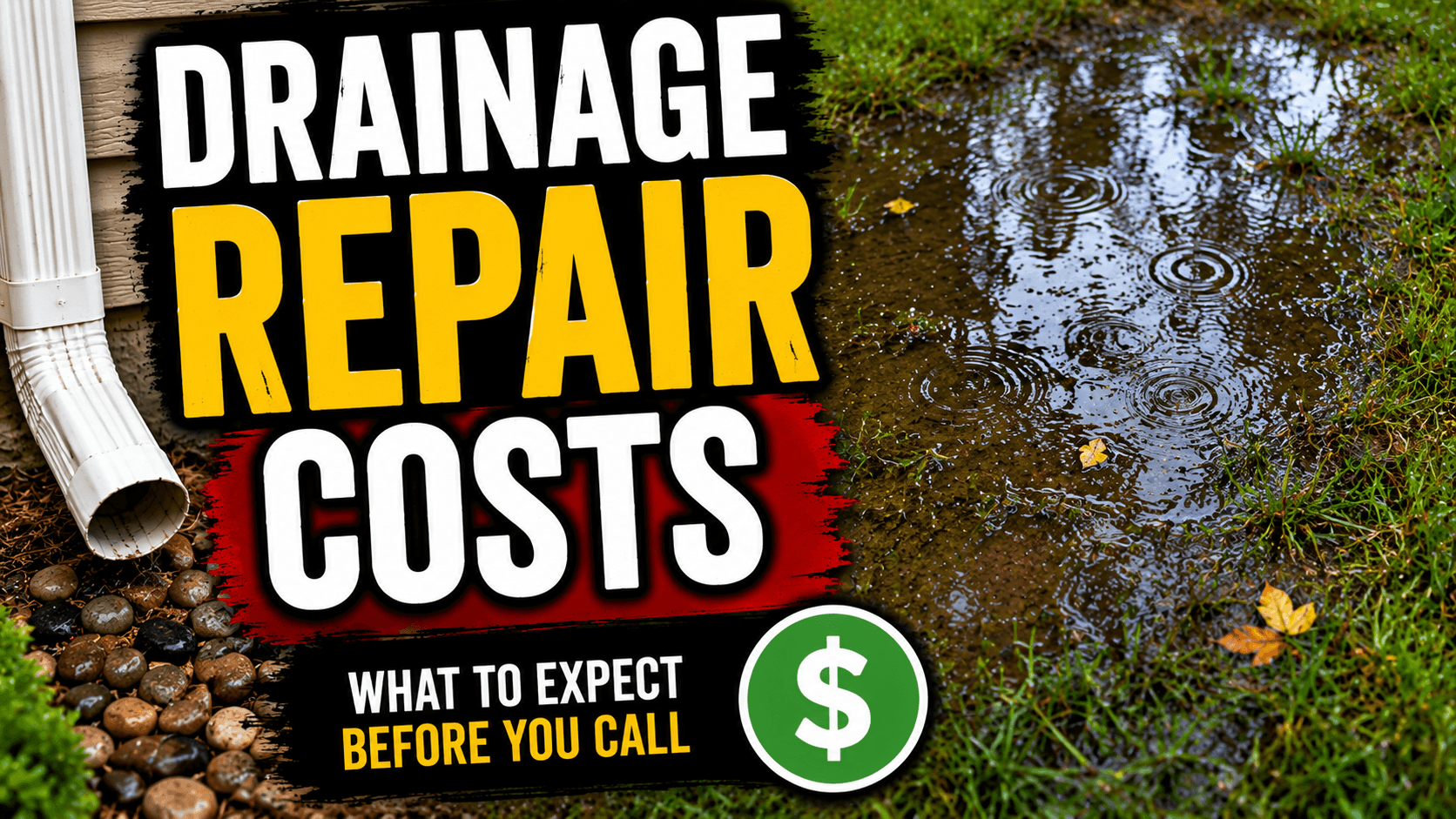
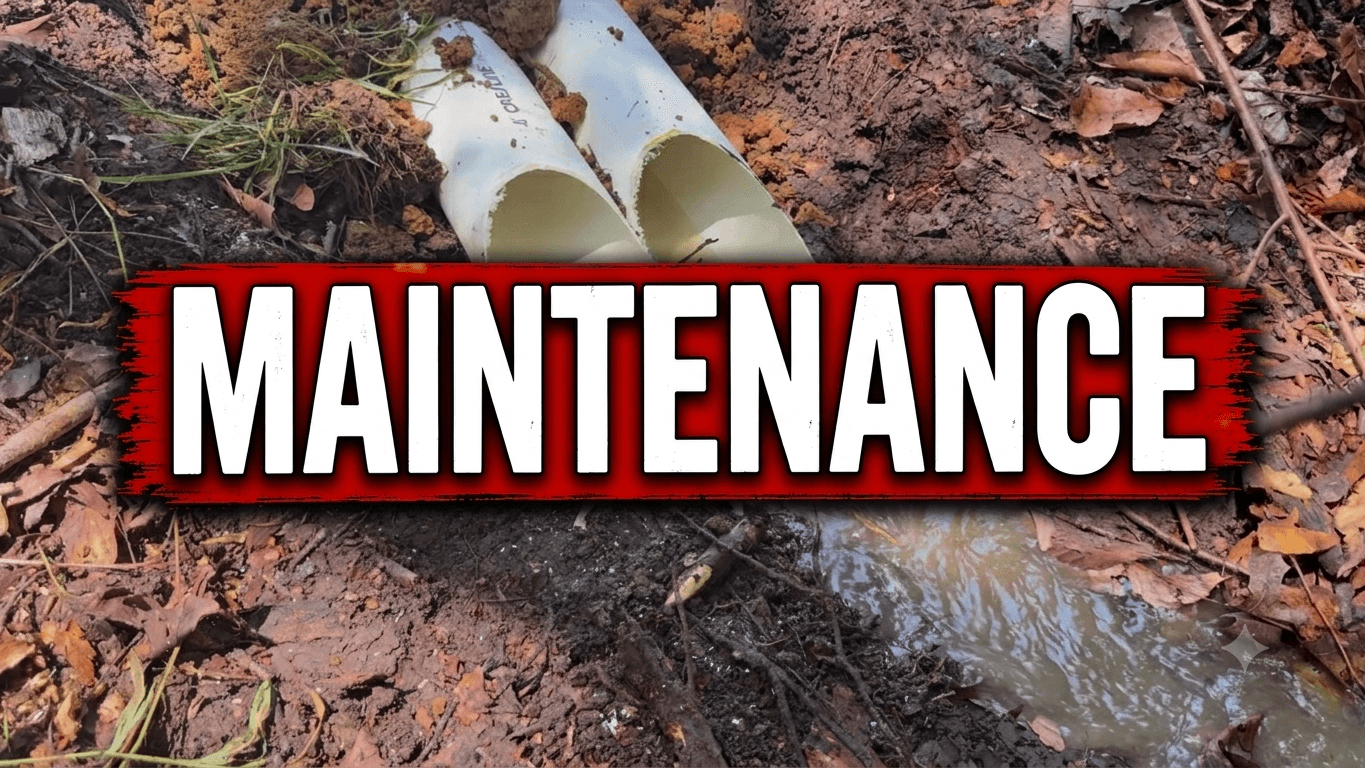
Like your roof or HVAC system, your drainage system benefits from routine maintenance. Most major failures begin as small issues that go unnoticed for months or years.
Inspect your property after significant rainfall. Watch where water enters, where it collects, and how it leaves the property. Small changes over time often reveal developing drainage problems.
Clean gutters, catch basins, and discharge points regularly. Keep downspouts connected and ensure outlets remain open. Remove leaves and debris before they enter the underground system.
If your property contains mature trees near underground drainage piping, periodic camera inspections may help identify root intrusion before it causes a complete blockage.
Preventive maintenance is almost always less expensive than emergency repairs. A small investment of time each season can protect your landscape and your home for years.
Choosing the right contractor is about much more than finding the lowest price. A quality drainage contractor should educate you, explain the problem clearly, and support every recommendation with evidence.
Ask to see photographs, camera inspection findings, grading observations, and an explanation of why the recommended solution fits your property. A contractor who welcomes questions is usually focused on solving the problem rather than simply selling a project.
Compare proposals based on diagnosis, scope of work, restoration, warranty, communication, and long-term value—not price alone.
By reading this guide you have already taken an important step. You now understand how water behaves, why drainage systems fail, what warning signs matter, how inspections work, why prices vary, and how to choose the right contractor.
Our goal has never been to pressure you into buying a drainage system. Our goal is to help you make an informed decision that protects your home, your landscape, and your investment.
Whether you choose TLC or another qualified contractor, insist on education, evidence, and a solution that addresses the root cause—not just the visible symptom.