
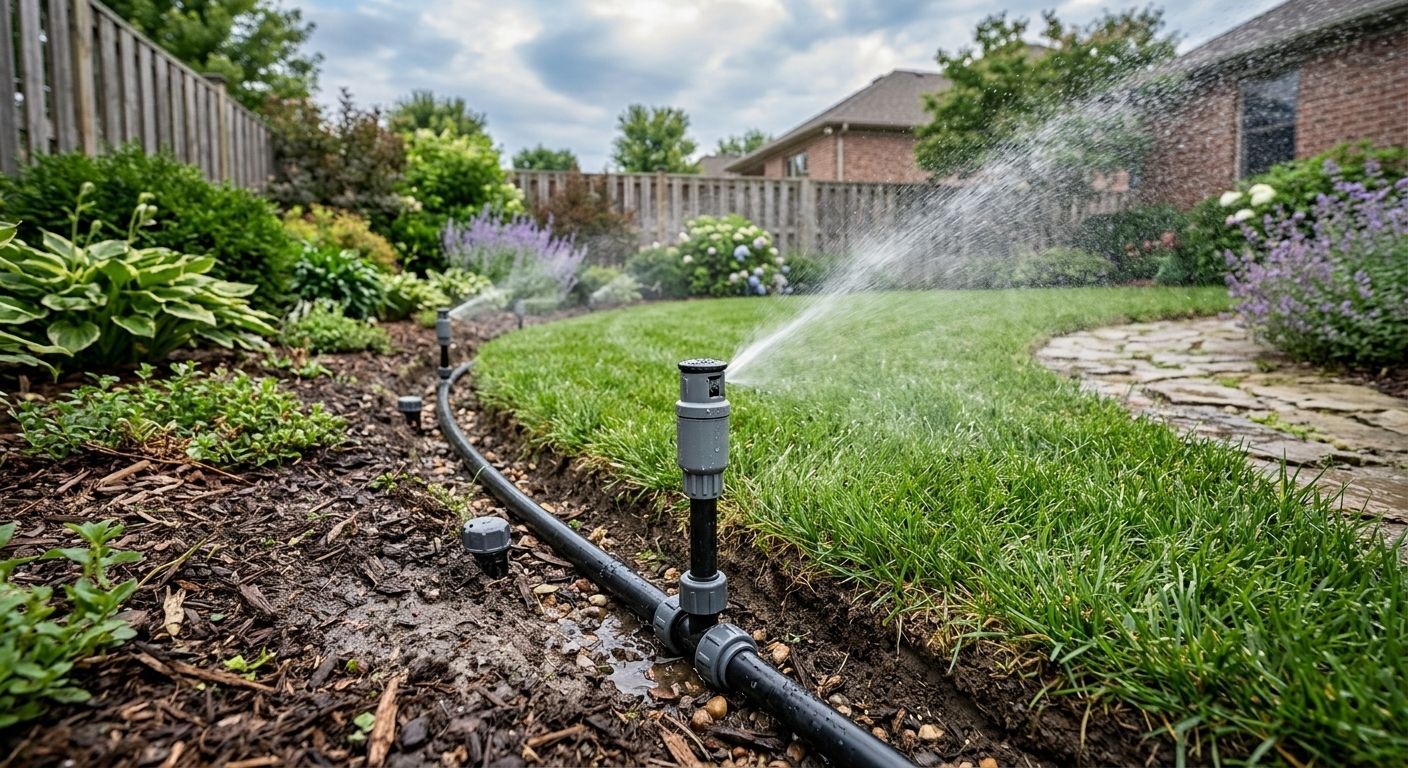
You're planning a new patio, a fence, or maybe a retaining wall along the side yard. The contractor is lined up and the materials are ordered. Then someone asks: "Do you know where your sprinkler lines run?" That single question can turn a straightforward project into an expensive repair.
Underground sprinkler line locating is the process of identifying and mapping buried irrigation pipes, valves, and wiring before any digging begins. For homeowners in Maryland, DC, and Northern Virginia, where clay-heavy soils and decades-old neighborhoods make buried infrastructure unpredictable, this step matters more than most people realize.
This article explains what sprinkler line locating involves, when you need it, and how professional irrigation line mapping protects your property and your investment.
Key Takeaways: Underground Sprinkler Line Locating
- Underground sprinkler line locating identifies buried irrigation pipes, valves, and wiring before you dig on your property.
- Most residential sprinkler lines are PVC or polyethylene, which standard metal detectors cannot find.
- Calling 811 marks public utility lines only, so private irrigation systems require separate professional locating.
- TLC Incorporated provides custom irrigation diagrams and proposals that document your system layout before landscaping work.
- Locating sprinkler lines before a landscaping project prevents costly pipe repairs and system downtime.
What Is Underground Sprinkler Line Locating?
Underground sprinkler line locating is a field investigation that traces the path of buried irrigation pipes, valve boxes, control wiring, and backflow devices beneath your yard. The goal is to create a clear picture of where your sprinkler system runs so that future work on your property avoids damaging it.
This process typically involves a combination of methods. Electromagnetic (EM) locators can trace metallic components like copper control wiring or tracer wire installed alongside PVC pipe. Ground penetrating radar (GPR) sends signals into the soil to detect non-metallic pipes and trenches based on density contrasts with the surrounding earth.
The result is a set of surface markings, flags, or a documented map showing irrigation line routes, valve locations, and approximate depths. That information gives you and your contractor a reliable reference before breaking ground.
Why Are Residential Sprinkler Lines Difficult to Find?
Most residential sprinkler systems in Maryland and the Mid-Atlantic region use PVC or polyethylene pipe. Both materials are non-metallic, which means a standard metal detector won't pick them up. If your system was installed years ago, there may not be tracer wire running alongside the pipe either.
Add to that the fact that many older sprinkler systems were never documented with as-built drawings. The original installer may have recorded nothing beyond the zone layout on the controller. Over the years, landscaping changes, tree root growth, and seasonal soil movement can shift pipe positions slightly, making even a rough mental map unreliable.
Maryland's clay soils present another challenge. Clay retains moisture, which can interfere with GPR signals and make it harder to distinguish a buried pipe from the surrounding soil. A locator familiar with Mid-Atlantic conditions will adjust their technique accordingly.
When Do Homeowners Need Irrigation Line Mapping?
Irrigation line mapping becomes critical any time you're planning work that involves digging, trenching, or grading near your lawn or landscape beds. The most common situations include:
- Fence installation: Post holes driven through a mainline or lateral pipe can flood your yard and require emergency repair.
- Patio or hardscape construction: Grading and excavation for a paver patio or retaining wall can sever pipes running just inches below the surface.
- Drainage system installation: French drains, channel drains, and other yard drainage solutions often follow paths that intersect with existing irrigation routes.
- Tree planting: A root ball excavation in the wrong spot can cut through a zone's lateral line.
- Outdoor lighting projects: Trenching for outdoor lighting wiring frequently crosses irrigation zones.
When you've been installing and maintaining sprinkler systems in Maryland for more than 42 years, you start to see certain patterns. One of the most common: homeowners discover a severed irrigation line only after a new fence or patio is already in place. At that point, the repair costs more than a locate would have upfront.
What Happens If You Skip the Locate?
Skipping a line locate before a landscaping project is a gamble with real consequences. A single shovel strike through a pressurized mainline can send water gushing across your yard within minutes. The immediate result is a flooded work site, and the longer-term result is a repair bill covering excavation, pipe replacement, and landscape restoration.
Underground utility damage across the United States costs an estimated $83.2 billion annually, according to a 2026 report from the Common Ground Alliance. While that figure covers all buried utilities, the underlying message applies directly to your backyard: locating before digging is far less expensive than repairing after a strike.
Beyond the financial cost, a damaged sprinkler system means zones of your lawn won't receive water until the repair is complete. In the middle of a Maryland summer, even a few days without irrigation can stress turf and plantings significantly.
Does Calling 811 Cover Your Sprinkler System?
This is one of the most misunderstood parts of any digging project. Calling 811 is required by law before excavation in most states, and it's a critical first step. Public utility companies will come out and mark gas, electric, water, sewer, and telecom lines on your property at no charge.
However, 811 only marks lines owned by public utility companies. Your irrigation system is privately owned. The pipes, valves, wiring, and backflow devices running through your yard will not be marked by an 811 response. The same applies to landscape lighting wiring, invisible fence wiring, and septic lines.
You need a separate private utility locating service, or an irrigation professional with locating capabilities, to identify your sprinkler system's layout before work begins.
How Professional Sprinkler Line Locating Works
A professional locate starts with a review of any available documentation. If you have an as-built drawing, a system diagram, or even a photo of the original installation, that gives the technician a starting point. From there, the technician uses detection methods suited to your system and soil conditions:
- Electromagnetic locating: A transmitter sends a signal along metallic components like copper control wire or tracer wire. The technician traces the signal path with a handheld receiver, marking the route on the surface.
- Ground penetrating radar: A GPR unit rolls across the surface and sends radar pulses into the ground. When those pulses hit an object with a different density than the surrounding soil, they bounce back, revealing the approximate location and depth of buried infrastructure.
- Zone testing: Running each irrigation zone one at a time and observing which heads activate helps confirm pipe routes between valves and sprinkler heads.
Once the investigation is complete, the locator marks the surface with paint or flags and may provide a written map. That documentation becomes a reference for your sprinkler system and for any future projects on your property.
How TLC Incorporated Helps Protect Your Sprinkler System
At TLC Incorporated, we've been designing, installing, and maintaining sprinkler systems across Maryland, DC, and Northern Virginia since the 1980s. With 42+ years of regional experience and over 600 reviews averaging 4.8 stars, we know these neighborhoods, these soils, and these systems.
When we install a new sprinkler system, we provide custom irrigation diagrams and proposals that document every pipe run, valve location, and zone layout. That documentation is your first line of defense when future work happens on your property. If you're an existing TLC customer, we can reference your system records to coordinate with your landscaper before a project starts.
We also offer maintenance memberships that include regular inspections, seasonal adjustments, and winterization. These routine visits catch developing issues before they become problems during a future dig.
Tips for Protecting Your Irrigation System Before a Landscaping Project
You don't need to be a contractor to take practical steps that protect your sprinkler system. Before any project that involves breaking ground, consider the following:
- Gather your records: Check whether you have an as-built drawing, a system diagram, or any notes from your original installation. Even a hand-drawn sketch helps.
- Call 811 first: This covers public utilities and is required before digging. It costs nothing and protects you from liability.
- Schedule a private locate: Contact your irrigation company or a private utility locating service to map your sprinkler lines, valves, and wiring.
- Share findings with your contractor: Make sure everyone on the job site knows where the irrigation infrastructure is before work begins.
- Plan your project around your system: Whenever possible, route fences, trenches, and footings away from known irrigation lines. A small adjustment in layout can prevent a costly repair.
If you're working with TLC Incorporated on a new irrigation, drainage, and lighting project, we coordinate all of these systems together so that future work on any one system doesn't compromise the others. That kind of integrated planning is one of the most practical ways to avoid surprises down the road.
In Conclusion: Locate Your Sprinkler Lines Before You Dig
Underground sprinkler line locating is a straightforward step that saves homeowners from expensive repairs, wasted water, and damaged landscapes. If you're planning any work that involves digging on your property, locating your irrigation system first is one of the most practical investments you can make.
For homeowners across Maryland, DC, and Northern Virginia, TLC Incorporated offers the local expertise, system documentation, and irrigation maintenance knowledge to help you protect your sprinkler system before, during, and after any landscaping project. Reach out for a free, no-obligation quote, and let's make sure your next project starts with a clear picture of what's underground.
FAQs About Underground Sprinkler Line Locating
What tools are used to locate underground sprinkler lines?
Professional locators use electromagnetic (EM) detection to trace metallic components like control wire and tracer wire. Ground penetrating radar (GPR) identifies non-metallic PVC and polyethylene pipes by detecting density differences in the soil. Zone testing, where each irrigation zone runs individually, confirms pipe routes between valves and sprinkler heads.
How much does it cost to locate underground sprinkler lines?
Costs vary based on property size, system complexity, and the detection methods required. Professional locating services generally charge by the hour or by the project scope. TLC Incorporated provides custom irrigation diagrams as part of new installations and can reference existing system records for current customers at no additional charge.
Can I find sprinkler lines on my own without professional equipment?
You can narrow down pipe routes by running each zone individually, marking active sprinkler heads, and tracing logical paths between valve boxes and heads. This approach gives you a rough estimate. For accurate locating before a digging project, professional EM and GPR equipment provides the precision needed to avoid damaging buried pipes.
Does 811 mark residential sprinkler and irrigation lines?
No. The 811 service marks public utility lines owned by utility companies, such as gas, electric, water, and telecom. Your sprinkler system is privately owned, so it's not included. Private irrigation lines, valves, and wiring require a separate locate from an irrigation professional. TLC Incorporated helps homeowners across Maryland, DC, and Northern Virginia document and protect their systems.
When should I schedule a sprinkler line locate before a landscaping project?
Schedule the locate at least one to two weeks before your project start date. This gives you time to receive the results, share them with your contractor, and adjust your plans if needed. TLC Incorporated recommends coordinating sprinkler system maintenance at the same time to confirm your system is working before construction begins nearby.
Bob Carr is the founder and president of TLC Incorporated, which he started in 1981 as a small residential lawn sprinkler and irrigation business in Maryland. Over four decades later, he leads a team of specialists serving the Mid-Atlantic region with lawn irrigation, outdoor and holiday lighting, and yard drainage solutions. Bob's approach is built on transparent pricing, quality installation, and treating every customer with respect.
