
You're standing in the backyard after a heavy Maryland downpour, and there it is again: water pooling in the same low spot, creeping toward the patio, turning the grass into a soggy mess. If that scene sounds familiar, you're dealing with a yard drainage system problem that won't fix itself.
With over 42 years of experience installing drainage systems across Maryland, DC, and Northern Virginia, TLC Incorporated helps homeowners figure out which solution actually fits their property. This article walks you through the most common drainage system types, when each one works, and how to match the right approach to your yard's specific conditions.
Key Takeaways: Yard Drainage Systems for Heavy Rain
- French drains collect subsurface water and redirect it away from soggy lawn areas and foundations.
- Channel drains intercept surface runoff across driveways, patios, and walkways before pooling starts.
- Downspout drainage systems carry roof runoff underground and away from your home's foundation walls.
- TLC Incorporated designs combined drainage systems that address multiple water sources in a single plan.
- Choosing the right system depends on your soil type, yard slope, and where water enters the property.
Common Yard Drainage Systems for Residential Properties
1. French Drains
A French drain is a gravel-filled trench with a perforated pipe buried below the surface. Water in the surrounding soil seeps through the gravel, enters the pipe, and flows by gravity to a discharge point away from your home.
This system works when subsurface water is the problem. If your lawn stays spongy days after the rain stops, or if water pressure is pushing against your basement walls, a French drain relieves that pressure. In Maryland's clay-heavy soils, we've seen this system make the difference between a usable backyard and one you avoid half the year.
2. Channel Drains
A channel drain is a long, narrow grated trench installed flush with a paved surface. It captures sheet flow, the water that runs across driveways, patios, and pool decks, and routes it into an underground pipe.
If your driveway slopes toward the garage or water collects along the edge of your patio after every storm, a channel drain solves that specific problem. The system handles high volumes of surface runoff quickly, which makes it a practical fit for properties with large hardscape areas.
3. Downspout Drainage Systems
Your roof collects a significant volume of rainwater during a storm, and your gutters funnel all of it to a few downspout locations. If those downspouts dump water right next to your foundation, you're concentrating the problem instead of solving it.
A downspout drainage system connects buried PVC pipe to your existing gutter outlets and carries the water underground to a safe discharge point. At TLC, we use PVC pipe in critical runs because it resists crushing, doesn't trap debris, and maintains consistent flow over time.
4. Catch Basins
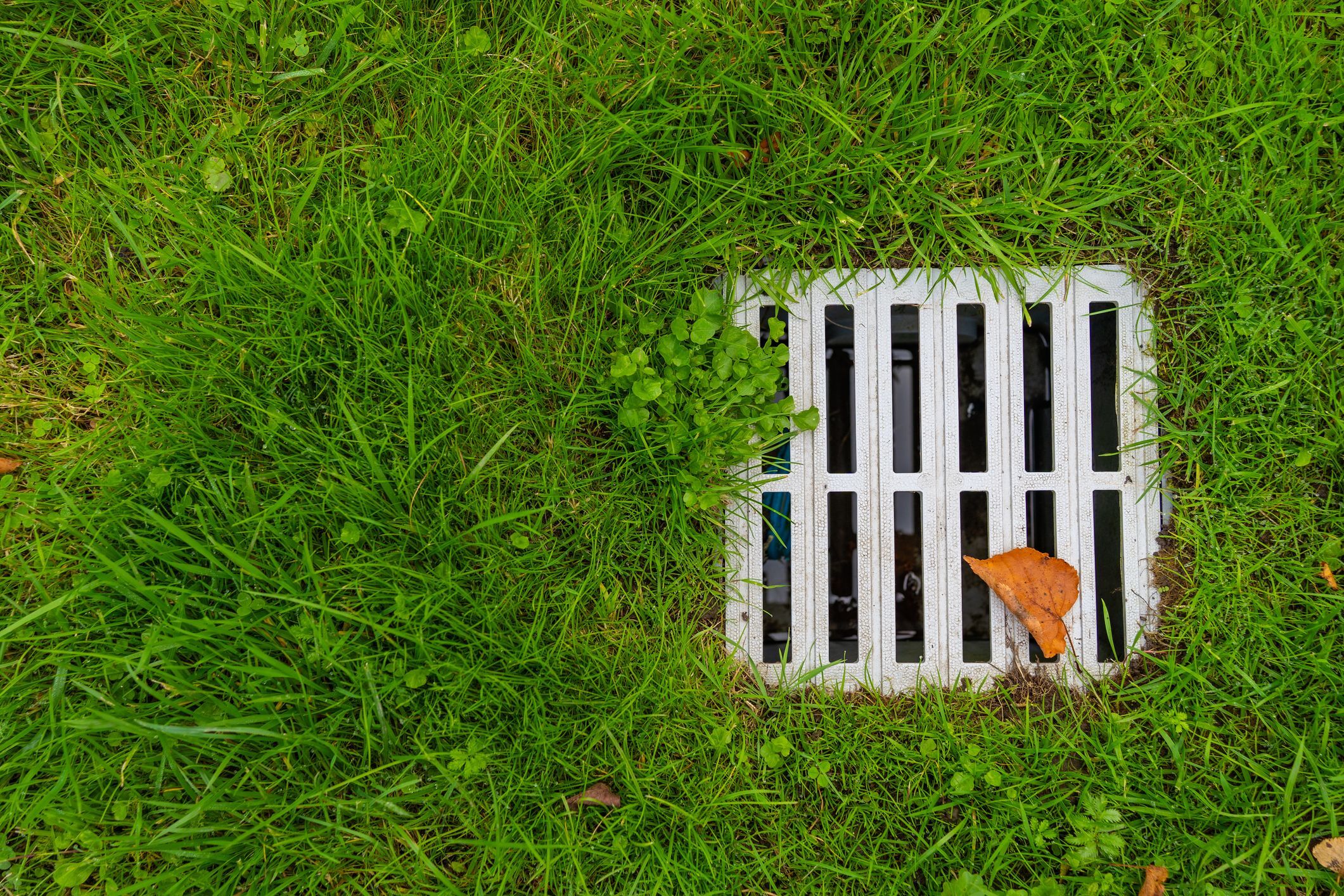
A catch basin is an underground box with a grated opening at ground level. It collects surface water at specific low points in your yard, then channels it through buried pipe to a discharge area.
Catch basins work when you have isolated spots where water consistently pools. They also pair well with other drainage components. A strainer basket inside the basin traps leaves and sediment, which helps protect the rest of the system from clogs down the line.
5. Grading and Slope Correction
Sometimes the issue isn't a missing pipe or trench. It's the shape of the land itself. If your yard slopes toward your house instead of away from it, water will always find its way to the foundation.
Regrading reshapes the soil surface so water moves in the right direction. According to a 2026 RAND Corporation study on basement wetness, improper surface grading is among the most common contributors to residential water intrusion. Correcting the slope is often the first step before any additional drainage system goes in.
6. Sump and Pumping Systems
On low-lying properties where gravity alone can't move water to a safe outlet, a pumping system becomes necessary. A sump pump collects water in a pit and mechanically pushes it uphill or across the property to a discharge location.
We install pumping systems on properties throughout Anne Arundel County, Frederick County, and the Eastern Shore where natural grade simply won't cooperate. When combined with French drains or catch basins, a pump ensures the collected water actually leaves the property.
7. Dry Wells
A dry well is an underground chamber filled with stone or a perforated barrel that holds stormwater temporarily and lets it percolate into the surrounding soil. It's a useful endpoint for downspout systems or yard drainage runs where you don't have access to a storm drain.
Dry wells work when the surrounding soil has enough permeability to absorb the water within a day or two. In Maryland's heavier clay soils, a dry well might need to be oversized, or it may need to be paired with a French drain to handle the volume.
How to Choose the Right Drainage System for Your Yard
Picking a drainage system starts with understanding what the water is doing on your property. Walk your yard during a hard rain and note three things: where the water enters, how it moves across the surface, and where it collects.
If the water is coming from your roof, you're looking at downspout drainage. If it's running across your driveway, a channel drain is the right tool. If your lawn stays saturated for days after the rain stops, you likely need a subsurface system like a French drain.
Soil type matters just as much. Maryland yards frequently sit on clay-heavy soil that holds water and drains slowly. We've seen this pattern across thousands of properties since the 1980s: without the right system matched to the soil conditions, water finds a way back.
TLC Incorporated provides custom drainage diagrams and proposals at no cost, so you can see exactly what your property needs before any work begins. Our team evaluates your soil, slope, and water sources on-site, then designs a system that combines the right components for your specific yard.
With a free 7-year parts and labor warranty and installations typically completed within 7 to 14 days, you get a lasting solution built on getting it right the first time. Reach out to schedule your on-site evaluation.
FAQs About Yard Drainage Systems
What is the most common yard drainage system for soggy backyards?
French drains are the most frequently installed system for chronically soggy lawns. They collect water below the surface and redirect it through a buried perforated pipe. TLC Incorporated installs French drain systems across Maryland, DC, and Northern Virginia using PVC pipe in critical runs for long-term reliability.
How do I know if my yard needs a drainage system?
Water that stays pooled for more than 48 hours after a rainstorm signals a drainage problem. Other signs include spongy soil, basement moisture, and visible erosion along slopes. A professional on-site evaluation identifies the cause and the right solution for your property.
Can one drainage system handle all the water on my property?
Most properties with heavy rain exposure need a combination of systems. A French drain might handle the lawn, while a channel drain manages the driveway and a downspout system redirects roof water. Combined planning ensures every water source has a path away from your home.
How long does a professionally installed drainage system last?
A drainage system built with quality materials and proper slope typically performs for 20 years or longer. PVC pipe in critical runs resists collapse and debris buildup. Regular inspection of discharge points and grate openings keeps the system running at full capacity.
Does yard grading alone fix drainage problems?
Grading corrects how surface water flows, but it doesn't address subsurface saturation or concentrated runoff from roofs and driveways. In many cases, regrading is the first step, followed by a French drain, catch basin, or targeted drainage solution for the remaining issues.
What should I expect during a professional drainage installation?
A qualified team begins with an on-site evaluation of your soil, slope, and water behavior. From there, you receive a custom diagram showing the proposed layout. Installation involves trenching, pipe placement, gravel backfill, and final grading. TLC Incorporated handles the complete process from design through cleanup, typically within 7 to 14 days.
Bob Carr is the founder and president of TLC Incorporated, which he started in 1981 as a small residential lawn sprinkler and irrigation business in Maryland. Over four decades later, he leads a team of specialists serving the Mid-Atlantic region with lawn irrigation, outdoor and holiday lighting, and yard drainage solutions. Bob's approach is built on transparent pricing, quality installation, and treating every customer with respect.
