
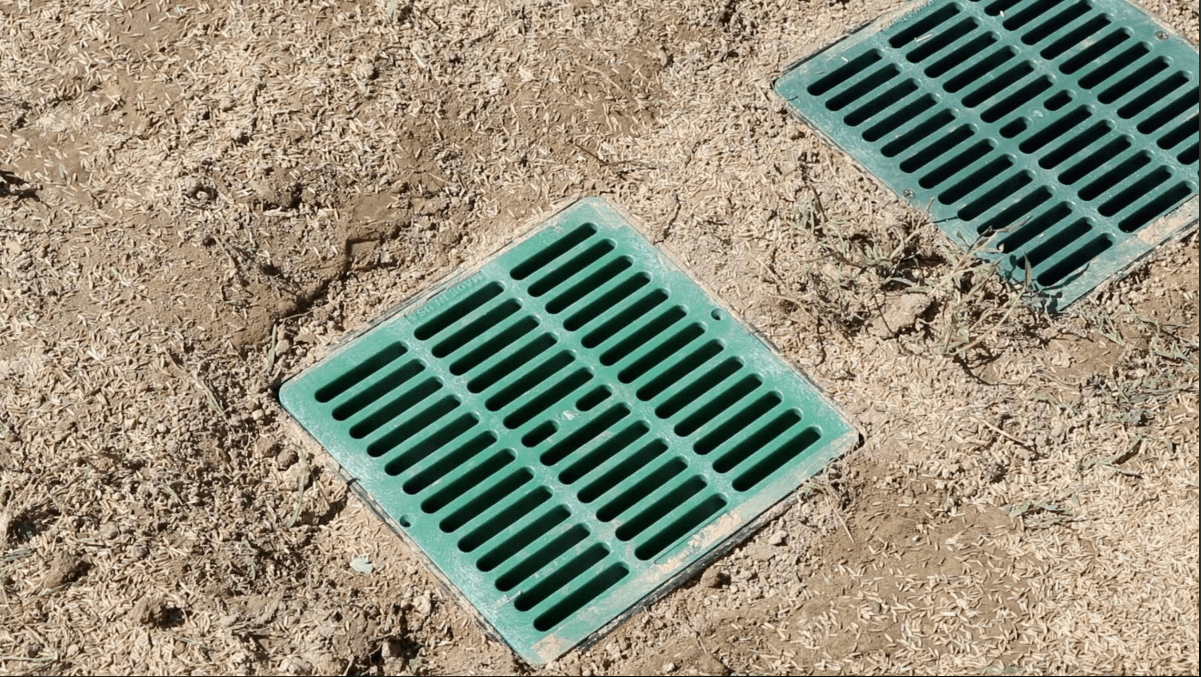
You're standing in your backyard after three days of rain, and there it is again: that stubborn puddle near the patio that never goes away. Maybe the slope behind your house keeps sending water toward your foundation. Or the low spot by the fence line has turned into a mud pit.
When you've been designing and installing yard drainage systems across Maryland, DC, and Northern Virginia for over 42 years, you start to see these same patterns on property after property. This guide walks you through every major drainage solution and helps you match the right system to your yard.
We built it so you can skip the vague advice and get a straight answer about what your yard actually needs.
Key Takeaways: Yard Drainage Systems for Sloped Yards and Erosion Control
- Every yard drainage problem falls into one of three categories: poor grading, compacted or clay-heavy soil, or surface runoff with no outlet.
- French drains, channel drains, dry wells, and swales each solve different problems, so choosing the wrong type wastes time and money.
- Sloped yards need erosion-control measures like terracing or retaining walls combined with subsurface drainage to protect foundations.
- TLC designs comprehensive drainage systems that combine multiple methods for long-term water control on Maryland and Mid-Atlantic properties.
- Diagnosing where water comes from and where it can go is the single most important step before installing any drainage system.
Why Yard Drainage Problems Get Worse When You Ignore Them
Water doesn't wait for you to make a decision. Every rainstorm that sends runoff against your foundation adds hydrostatic pressure to your basement walls. Over months and years, that pressure opens hairline cracks, lets moisture seep in, and creates conditions for mold growth inside your home.
Soil erosion on sloped yards compounds the damage. Each heavy rain carries away a thin layer of topsoil, exposing roots, destabilizing plantings, and gradually reshaping the grade of your property in ways that make future drainage problems even harder to fix.
Standing water also becomes a breeding habitat for mosquitoes and other pests. In the Mid-Atlantic region, where clay-heavy soils are common in areas like Anne Arundel County and parts of Northern Virginia, even moderate rainfall can saturate a yard for days if there's no system in place to move the water.
Three Root Causes Behind Every Yard Drainage Failure
Almost every drainage issue we've encountered across four decades falls into one of three categories. Identifying which one you're dealing with is the first step toward choosing a system that actually works long-term.
How Improper Grading Sends Water Toward Your Home
Your yard should slope away from your house at a rate of roughly six inches over the first ten feet. When the grade is flat or tilted back toward the foundation, every rainstorm pushes water directly against your basement walls. This is one of the most common issues we see across Maryland where soil settling has shifted the original grade.
Regrading involves reshaping the soil surface so water drains away from the structure by gravity alone. For smaller areas near the foundation, it's a straightforward job. For larger sections of the yard, the equipment and precision required usually call for professional help.
What Happens When Clay or Compacted Soil Won't Absorb Water
Sandy and loamy soils let water pass through relatively quickly. Clay soil does the opposite. It absorbs water slowly and holds it for a long time, creating surface ponding that can persist for days after a storm. Soil compaction from years of foot traffic, mowing, or heavy equipment produces a similar effect.
If your yard stays spongy well after the rain stops, and you notice moss replacing grass in low spots, the soil's permeability is likely the primary issue. This is extremely common across the Mid-Atlantic, where clay subsoils sit just a few inches below the surface in many neighborhoods.
When Surface Runoff Has No Place to Go
Driveways, patios, sidewalks, and other hard surfaces shed water instead of absorbing it. Without a designated path, that runoff collects in the lowest spot it can find, often right against your foundation or in the middle of your lawn. Downspouts that dump water directly onto the ground close to your home make the problem worse.
This is a surface-flow issue, and it requires surface-level solutions: redirected downspouts, swales, channel drains, or catch basins that intercept the water and send it somewhere safe.
How to Diagnose Your Yard's Drainage Problem Before Buying Anything
The most expensive mistake homeowners make with drainage is buying materials before diagnosing the problem. A French drain won't fix a slope issue. Regrading won't help if clay soil is the real barrier. Take twenty minutes with your yard and you'll save hundreds, potentially thousands, on a solution that actually matches what you're dealing with.
The 24-Hour Observation Test After a Heavy Rain
After at least an inch of rainfall, walk your yard 24 hours later and note where water is still standing. Take photos. Identify the low points. If water lingers for more than a full day, the soil can't absorb it fast enough, or the grade isn't moving it.
If the water disappears within a few hours, you're dealing with a surface-flow problem, not a subsurface one. That distinction changes which systems belong on your list.
Checking Your Yard's Slope with a Simple String-Level Test
You don't need surveying equipment for a basic grade check. Hammer two stakes into the ground, one near the foundation and one ten feet out. Tie a string between them, use a line level to make it level, and measure from the string to the ground at the far stake.
You want at least a six-inch drop over that ten-foot span. Anything less, and water isn't moving away from your house quickly enough.
How to Tell if Your Soil Is the Real Problem
Dig a hole about twelve inches deep and fill it with water. Time how long it takes to drain completely. If it takes more than 24 hours, soil permeability is a major factor in your drainage issues.
You'll also notice signs above ground: thin or yellowing grass in wet areas, moss growth, a spongy feel underfoot days after rain, and dense gray clay visible just inches below the surface.
What Is a French Drain and When Does Your Yard Need One?
A French drain is a trench filled with gravel and a perforated pipe, wrapped in filter fabric, that collects water below the surface and moves it by gravity to an outlet. The pipe must maintain at least a one-percent slope to keep water flowing.
French drains are the right choice when water saturates the soil and lingers below the surface. They're especially effective along the base of slopes, around foundations where hydrostatic pressure builds, and across low-lying areas that stay soggy for days after rain.
TLC installs French drains across Maryland properties using PVC pipe in critical runs, non-woven geotextile fabric rated for fine-particle filtration, and clean washed gravel. In our experience, systems built with these materials last decades while cheaper alternatives clog and fail within a few years.
For yard applications, the trench typically runs 18 to 24 inches deep. Foundation perimeter drains need to reach the base of the footing, sometimes four to six feet down, and that depth makes professional installation the safer choice.
How Channel Drains Control Water Movement on Hard Surfaces
Channel drains, also called trench drains or linear drains, are narrow grated inlets installed flush with a paved surface. They capture sheet flow across driveways, patios, pool decks, and garage aprons before the water can reach a vulnerable area like your garage or basement entry.
The drain must sit at the actual lowest point of the paved surface. Even a small error in placement means water flows past the inlet and collects somewhere else. A solid discharge pipe carries the captured water to a safe outlet such as a pop-up emitter, a dry well, or a storm system connection.
Channel drains are a surface solution for a surface problem. They won't address subsurface saturation, but they're extremely effective at intercepting runoff from impervious areas before it pools or enters your home.
Dry Wells: When There's Nowhere Else to Send the Water
A dry well is an underground chamber, either a precast concrete ring, a plastic crate system, or a gravel-filled pit, that collects stormwater and lets it slowly percolate into the surrounding soil. They're commonly used as outlets for downspout extensions, sump pump discharge lines, and French drains.
The catch is soil type. In sandy or loamy ground, a properly sized dry well handles significant volumes. In clay-heavy soils like we encounter across much of Maryland, that same well fills up during the first heavy rain and provides no relief for the rest of the storm.
Before installing one, dig a hole twelve inches deep, fill it with water, and time the drain. If it takes more than a day to empty, a dry well isn't the right endpoint for your property.
When soil conditions support them, dry wells are a practical, hidden solution. When they don't, the water needs a gravity outlet or a mechanical pump, and that's where combining multiple drainage methods becomes essential.
How Swales and Regrading Control Water Movement on Sloped Yards
A swale is a shallow, gently sloped channel, usually lined with grass, that directs surface runoff to a safe outlet like a street drain, dry well, or rain garden. Swales give water a defined path instead of letting it spread and pool in low spots. They're inexpensive, blend naturally into most landscapes, and handle large volumes when properly sized.
On sloped yards where erosion is the primary concern, swales intercept water as it flows downhill and slow it enough to prevent soil loss. Pairing a swale with regrading, where you reshape the soil surface to redirect water flow, creates a two-part system that addresses both the speed and direction of runoff.
For steeper slopes, adding retaining walls or terracing breaks the grade into manageable sections. Each level slows the water further, giving the soil time to absorb what it can and channeling the rest into a controlled path. This combination is one of the most effective approaches we've used on hillside properties throughout the region.
Why Most Drainage Systems Underperform in Mid-Atlantic Clay Soil
Most drainage guides you'll find online assume average soil, typically loam to sandy-loam with decent permeability. That assumption falls apart across much of Maryland, Northern Virginia, and the broader Mid-Atlantic, where clay subsoils are the norm rather than the exception.
Clay has a dramatically lower percolation rate than loam. French drains back up. Dry wells fill and stop functioning. Even gravel-filled trenches become temporary water storage instead of active drainage.
The filter fabric that's supposed to keep soil out of the pipe clogs faster in clay. Systems built with lightweight corrugated pipe can crush or deform under clay's weight within a few years.
In our experience across four decades of drainage work in this region, systems installed in clay-heavy soil typically need to be 25 to 40 percent larger than what a standard guide recommends. That means wider trenches, deeper gravel beds, and a confirmed gravity outlet.
TLC's drainage designs account for local soil conditions from the start, because a system sized for average soil in Maryland clay is a system that fails within a few seasons.
How Erosion Control Works on Sloped and Hillside Properties
Erosion on sloped yards isn't just an aesthetic problem. It destabilizes plantings, exposes root systems, shifts the grade of your property, and can undermine structures including retaining walls, patios, and walkways. Controlling erosion requires slowing the speed of water as it moves downhill and giving it a defined path to follow.
Vegetative cover is the first line of defense. Deep-rooted grasses and ground cover hold topsoil in place and absorb some rainfall before it becomes runoff. On slopes steeper than 25 percent, mowing becomes impractical, and planting low-maintenance ground cover or native species is a more durable approach.
For yards where the slope is too steep for vegetation alone, structural solutions like terracing and retaining walls come into play. Terracing breaks a long slope into shorter, flatter sections, each with its own drainage path.
According to the Building America Solution Center, ridges and terraces constructed and planted on slopes are among the most effective methods for slowing water flow and stabilizing the soil beneath.
Combining Multiple Drainage Methods for a Complete System
Most yards don't have a single drainage problem. They have two or three working together. Surface runoff from a driveway hits a low spot where clay soil can't absorb it, and the accumulated water creeps toward the foundation.
Solving one piece without addressing the others usually means the problem moves rather than disappears.
A comprehensive approach might pair regrading near the foundation with a French drain along the base of a slope, a catch basin at the yard's lowest point, and a channel drain across the driveway apron. Each component handles a specific type of water in a specific location, and the whole system shares a common outlet.
This is exactly how TLC approaches drainage on properties across the Mid-Atlantic. We start with a full assessment, diagnose every source of water, and design a system that combines the right methods for your specific yard conditions.
The result is a solution built to last, backed by our free 7-year parts and labor warranty.
When to Call a Professional for Yard Drainage Installation
Some drainage projects are realistic weekend work for a homeowner comfortable with tools and physical labor. Extending downspouts, shaping a basic swale in an open area, building a dry creek bed, or regrading a small section near the foundation, these are manageable with the right materials and a clear plan.
Excavation within three to five feet of a foundation wall is a different matter. Disturbing that soil can compromise the wall's lateral support, and improper backfill can funnel water toward the structure rather than away from it.
Foundation perimeter drainage, deep French drains, and any work requiring municipal storm system connections should be handled by a licensed professional who understands hydrostatic pressure and local code requirements.
One non-negotiable step before any digging project: call 811. This free service marks underground utility lines on your property. Hitting a gas line with a rented trencher creates an emergency, not a drainage solution.
Call at least three business days before you plan to start, and respect the marked zones even if they interfere with your original layout.
How to Choose the Right Drainage System for Your Yard
Choosing the right drainage system starts with matching the solution to the actual water problem, not the other way around. Here's a quick reference based on the most common scenarios we see across Maryland and the Mid-Atlantic region:
| Problem | Recommended System | Supporting Method |
|---|---|---|
| Water pooling at a low point | Catch basin with outlet pipe | Regrading toward the basin |
| Yard stays soggy for days | French drain system | Soil amendment in planting areas |
| Runoff from driveway or patio | Channel drain | Swale or rain garden as outlet |
| Water flowing down a slope | Swale or terracing | French drain at the slope base |
| Clay soil, minimal slope | Oversized French drain to gravity outlet | Catch basin at lowest point |
| Erosion on steep hillside | Retaining walls and terracing | Deep-rooted ground cover |
The common thread is diagnosis first, then materials. When you start with a clear understanding of where water comes from, how it moves, and where it can safely go, the right system becomes obvious. If you're not sure after walking your yard, a professional assessment can clarify the picture quickly.
How to Maintain Your Yard Drainage System for Decades of Performance
A well-built drainage system can last 30 to 40 years with proper maintenance. The primary cause of early failure in underground systems is filter fabric blinding, where fine soil particles build up on the fabric surface and prevent water from entering the pipe. This happens faster in clay soils.
Flush your French drain pipes with a garden hose every couple of years to clear accumulated sediment. Clean catch basin grates and sumps after heavy storms, especially in fall when leaves and debris accumulate. Inspect channel drain grates quarterly and remove anything blocking the inlet.
Avoid planting trees or large shrubs directly over buried drainage lines. Root intrusion is one of the most common causes of pipe damage and system failure.
Keep an eye on the ground surface above your drains. If you notice settling or new low spots forming, it may indicate a pipe issue below that's worth investigating before it grows.
In Conclusion: Getting Yard Drainage Right Starts with Getting the Diagnosis Right
Every drainage system on the market works when it's applied to the right problem. The trouble starts when homeowners skip the diagnosis and jump straight to buying materials. Walk your yard after a heavy rain. Check your slope. Test your soil. Understand where the water is coming from and where it needs to go.
If you're in Maryland, DC, or Northern Virginia and want a straight answer about what your yard needs, TLC has been solving these exact problems since the 1980s. We'll assess your property, design the right system for your conditions, and build it to last.
You can reach out for a free, no-obligation quote whenever you're ready.
FAQs About Yard Drainage Systems
What Is the Most Effective Drainage System for a Sloped Yard?
A combination of swales and subsurface French drains typically works well on sloped properties. The swale intercepts surface runoff and slows it down, while the French drain collects water that saturates the soil below. TLC designs slope-specific drainage systems that pair these methods with regrading and erosion-control plantings for long-term stability.
How Deep Should a French Drain Be for Residential Yards?
For general yard drainage, 18 to 24 inches is the standard depth. Foundation perimeter drains need to reach the base of the footing, which can be four to six feet deep. The pipe must maintain at least a one-percent slope from start to outlet.
TLC sizes every French drain based on the specific soil and slope conditions of the property.
Can Clay Soil Prevent a Drainage System from Working?
Clay soil doesn't prevent drainage from working, but it changes the design requirements significantly. Systems in clay-heavy soil need to be 25 to 40 percent larger than standard recommendations, with heavier filter fabric and a confirmed gravity outlet.
Relying on soil percolation as the endpoint in clay soil is a setup for failure.
How Long Does a Properly Installed Yard Drainage System Last?
A French drain built with quality materials and maintained periodically can last 30 to 40 years. Catch basins with solid PVC outlet pipes have a similar lifespan. Concrete channel drains with quality grates are virtually permanent.
Systems built with corrugated plastic flex pipe tend to deform and clog within five to ten years. TLC uses professional-grade components backed by a free 7-year parts and labor warranty.
Does Poor Yard Drainage Damage Home Foundations?
Yes. Water collecting against a foundation creates hydrostatic pressure that can crack concrete walls, allow moisture into basements and crawl spaces, and in severe cases cause wall bowing or footing settlement.
Addressing drainage before cracks form is significantly less expensive than structural foundation repair after the fact. TLC's drainage solutions are designed to control water movement away from foundations and protect your home long-term.
Do I Need a Permit to Install Yard Drainage in Maryland?
It depends on the scope. Projects that tie into municipal storm sewer systems typically require a permit. Work contained entirely on your own property, like a French drain that outlets on your land, often does not.
Requirements vary by county and municipality in Maryland. Checking with your local building or engineering department before starting is always a smart step.
Bob Carr is the founder and president of TLC Incorporated, which he started in 1981 as a small residential lawn sprinkler and irrigation business in Maryland. Over four decades later, he leads a team of specialists serving the Mid-Atlantic region with lawn irrigation, outdoor and holiday lighting, and yard drainage solutions. Bob's approach is built on transparent pricing, quality installation, and treating every customer with respect.
