A Real Homeowner Story (And Why Erosion Never Fixes Itself)
One of the more frustrating calls we get from homeowners goes something like this:
“Bob, every time it rains, part of my yard washes away. We fix it… and then it happens again.”
If that sounds familiar, you’re not alone.
And I’ll tell you right up front—this is not just a landscaping problem.
👉 It’s a water control problem
After more than 42 years as an educator and contractor here in Maryland, DC, and Northern Virginia, working with thousands of homeowners—and with over 600 reviews averaging 4.8 stars and an A++ Better Business Bureau rating—I can tell you this clearly:
👉 Erosion problems don’t go away on their own
👉 And if they keep coming back, it means the real issue hasn’t been solved yet
This is the story of a sloped yard that kept eroding year after year… and how we finally fixed it the right way.
The Situation: “We Keep Fixing It… But It Keeps Coming Back”
This homeowner in Northern Virginia had a backyard with a noticeable slope—nothing extreme, but enough to move water during storms.
Every time it rained hard:
- Soil washed downhill
- Mulch ended up at the bottom of the yard
- Grass thinned out in key areas
- Small channels (rills) began forming in the soil
- Edges along a patio started to undermine slightly
At first, they tried simple fixes:
- Regrading small areas
- Adding more mulch
- Reseeding the lawn
- Installing a few edging stones to “hold” soil
Each time, it looked better—for a while.
Then the next storm came.
👉 And the same problem showed up again
That cycle went on for two seasons.
The Big Idea Most Homeowners Miss
Here’s the truth about erosion:
👉 It’s not a surface problem
It’s a water movement problem.
If water is not controlled:
👉 It will always find a way downhill
👉 And it will take soil with it
So unless you control how water moves across your yard:
👉 You’re just resetting the problem—not solving it
Why Sloped Yards Are Especially Vulnerable
Slopes change everything.
On flat ground, water tends to pool.
On a slope:
- Water accelerates
- Flow concentrates
- Velocity increases with distance
That means even a moderate storm can create enough force to move soil.
Add in typical DMV conditions—like clay-heavy soil and sudden heavy downpours—and you get:
👉 High runoff + low absorption = erosion
Step 1: Understand How Water Was Moving
Instead of focusing on the damaged areas, we started by watching how water moved during a storm.
We identified:
- Water entering from the top of the yard (including roof runoff)
- Runoff accelerating as it moved downhill
- Two concentration points where flow narrowed and sped up
- A final collection zone at the bottom where soil and mulch accumulated
👉 The slope wasn’t the problem
👉 Uncontrolled water on the slope was
Step 2: Identify Contributing Factors
We found several key contributors:
1. Roof Runoff Entering the Yard
Downspouts were discharging near the top of the slope.
👉 Adding significant volume during storms
During a heavy rain, each downspout can discharge hundreds of gallons per hour. Placing that at the top of a slope is like pouring a bucket of water at the start of a slide.
2. Lack of Water Break Points
There was nothing to slow or redirect water.
👉 Water gained speed as it moved downhill
No terraces, no check points, no capture—just a continuous slope.
3. Poor Soil Stability
The topsoil layer was loose and had been disturbed over time by repeated washouts.
👉 Once soil structure breaks down, it becomes easier to move
4. No Defined Drainage Path
Water moved randomly instead of being directed.
👉 Random flow = unpredictable erosion
5. Landscaping That Didn’t Support the Grade
Mulch beds without containment on a slope act like loose material on a ramp.
👉 They move with water, not against it
Step 3: The Real Problem
At this point, it was clear:
👉 The yard wasn’t failing
👉 The water management was
The previous “fixes” were surface-level and temporary.
They didn’t change how water moved across the property.
Step 4: The Solution Strategy (Control, Slow, Capture, Move)
We built the solution around four principles:
- Control where water enters the slope
- Slow it down before it accelerates
- Capture it at key points
- Move it safely to a proper discharge
Everything we installed tied back to those four ideas.
Step 5: What We Installed (And Why It Worked)
Redirected Downspouts (Control the Volume)
- Extended and redirected downspouts away from the slope start
- Tied key downspouts into underground lines
👉 Reduced the amount of water hitting the slope at the top
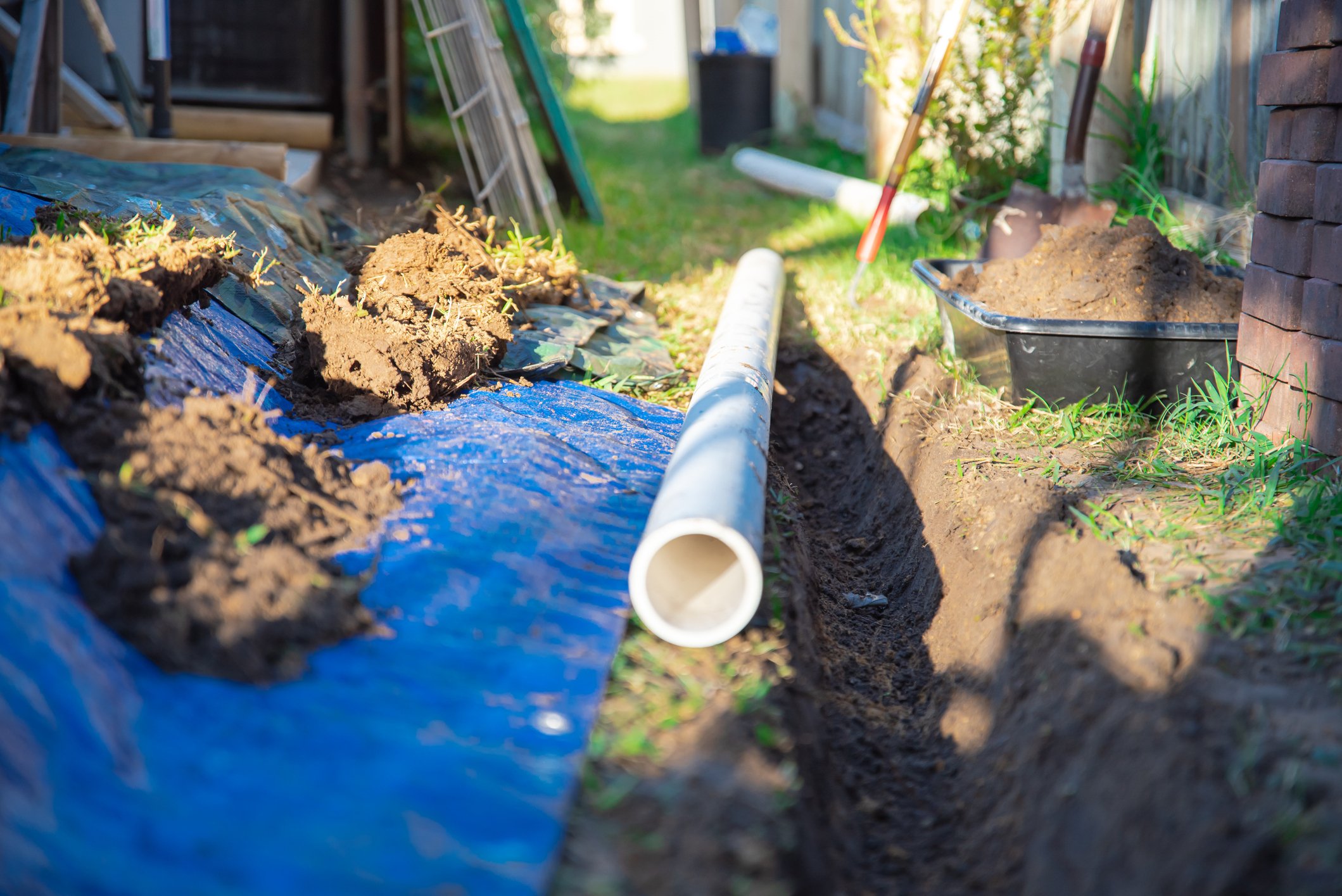
Installed Interception Drain (Capture Early)
- A French drain installed near the top third of the slope
- Sized to handle peak flow from storms
👉 Captured water before it gained speed
Added Check Points / Breaks in the Slope (Slow It Down)
- Subtle grade transitions and reinforced sections
- Strategic use of stone and edging to interrupt flow
👉 Reduced velocity and prevented channel formation
Created Defined Flow Paths (Control Direction)
- Shallow swales to guide surface water
- Directed runoff into collection points
👉 Water moved where we wanted it—not randomly
Stabilized the Soil (Hold It in Place)
- Added topsoil with better structure
- Installed erosion control matting in critical areas
- Reinforced with appropriate planting in select sections
👉 Soil stayed in place even under heavy flow
Upgraded Discharge (Move Water Away)
- Extended drainage lines to a safe discharge area
- Ensured proper slope in all piping
👉 Water exited the system without backing up or re-entering the slope
Cost Breakdown
Total project:
👉 $6,200
What the Homeowner Avoided
Without fixing this properly:
- Annual regrading and reseeding ($1,000–$2,000 per year)
- Progressive slope damage
- Potential impact to patio and foundation areas
Over 3–5 years:
👉 $5,000–$10,000+ in repeated “repairs” with no real solution
The Result
After the fix:
- No more soil washout
- Water moved in controlled, predictable paths
- Yard remained stable even after heavy rain
- Mulch stayed in place
- Lawn filled back in over one growing season
👉 Problem solved—not managed
Why This Worked (And Prior Fixes Didn’t)
Previous attempts focused on:
- Adding material (mulch/soil)
- Smoothing the surface
We focused on:
- Changing how water behaves
👉 That’s the difference
When you control water, you control erosion.
Why Erosion Problems Keep Coming Back
Across the DMV, recurring erosion usually comes down to the same issues:
1. Water Is Not Controlled
👉 It continues to move unpredictably
2. Fixes Are Surface-Level
👉 Don’t address root cause
3. Volume Is Underestimated
👉 Storm water is powerful
4. No Discharge Plan
👉 Water has nowhere to go once collected
What Most Homeowners Get Wrong
Mistake #1: Adding More Mulch or Soil
👉 Temporary fix on a slope
Mistake #2: Ignoring Water Source
👉 If you don’t control the top, the bottom always fails
Mistake #3: Treating Erosion as Cosmetic
👉 It’s structural and progressive
Mistake #4: Waiting
👉 Damage spreads and costs increase
How to Know If You Have an Erosion Problem (Early Signs)
Look for:
- Soil moving downhill after rain
- Exposed roots
- Small channels forming
- Mulch collecting at the bottom of beds
- Grass thinning along flow lines
👉 These are early indicators—not minor issues
The Right Way to Fix It (After 42 Years)
- Identify all water sources (roof, slope, neighboring flow)
- Observe movement during real rain events
- Design interception and flow control
- Stabilize soil where needed
- Provide a clear, adequate discharge
👉 That’s how you stop erosion permanently
Cost Reality
Minor fixes (early)
👉 $1,000 – $3,000
Full, permanent solutions
👉 $4,000 – $10,000+
Repeated temporary fixes (over time)
👉 Often equal or exceed the cost of doing it right once
Long-Term Value of Fixing It Right
When erosion is solved properly:
- Maintenance drops significantly
- Landscaping lasts longer
- Property usability improves
- Future repair costs are avoided
👉 It’s one of those fixes that pays for itself over time
Final Thoughts
If your yard keeps eroding, remember this:
👉 It’s not bad luck
👉 It’s uncontrolled water
After more than four decades helping homeowners across the DMV, I can tell you:
👉 The only way to fix erosion is to control how water moves
And when you do that:
👉 The problem stops—for good
Quick Answers
Q: Why does erosion keep coming back?
A: Water isn’t being controlled across the slope
Q: Can it be fixed permanently?
A: Yes—with proper drainage and flow design
Q: Typical cost?
A: $4,000 – $10,000+ depending on scope
Q: Biggest mistake?
A: Treating symptoms instead of controlling water movement
Bob Carr is the founder and president of TLC Incorporated, which he started in 1981 as a small residential lawn sprinkler and irrigation business in Maryland. Over four decades later, he leads a team of specialists serving the Mid-Atlantic region with lawn irrigation, outdoor and holiday lighting, and yard drainage solutions. Bob's approach is built on transparent pricing, quality installation, and treating every customer with respect.
Topics: