Case Study: Upgrading a 1990s Sprinkler System for Modern Efficiency
March 11th, 2026
4 min read
By Bob Carr
If your home was built in the 1990s in Maryland, Northern Virginia, or Washington, DC, there’s a good chance your sprinkler system was installed around the same time.
And if it hasn’t been fully upgraded since then, you’re probably running 1990s technology in a 2024 environment.
We recently completed a full sprinkler system upgrade for a homeowner in Fairfax County whose original system was installed in 1996. It still “worked.” The lawn got water. The controller turned zones on and off.
But it was inefficient, inconsistent, and costing more than it should have.
This is a detailed case study of what we found, what was outdated, what we upgraded, what it cost, and what changed.
Because older irrigation systems don’t usually fail dramatically.
They underperform quietly.
The Property: Classic 1990s Suburban Installation
The home sat on a 0.5-acre lot in Northern Virginia with:
- Heavy clay soil
• Mature landscaping
• Multiple sun and shade transitions
• Original 8-zone sprinkler system
• Standard mechanical timer controller
The homeowner’s primary concerns were:
- Brown patches every summer
• High water bills
• Uneven coverage
• Repeated minor repairs
On paper, the system was functional.
In reality, it was inefficient.
What 1990s Irrigation Systems Typically Include
Most systems installed in the 1990s across Fairfax, Rockville, and Annapolis shared similar characteristics:
- Basic mechanical or early digital timers
• Spray heads with high precipitation rates
• Minimal hydraulic calculations
• Limited zoning separation
• Shallow pipe burial depth
• No weather-based adjustments
At the time, this was standard.
Today, irrigation technology has advanced significantly.
The Problems We Identified
1. Outdated Spray Heads
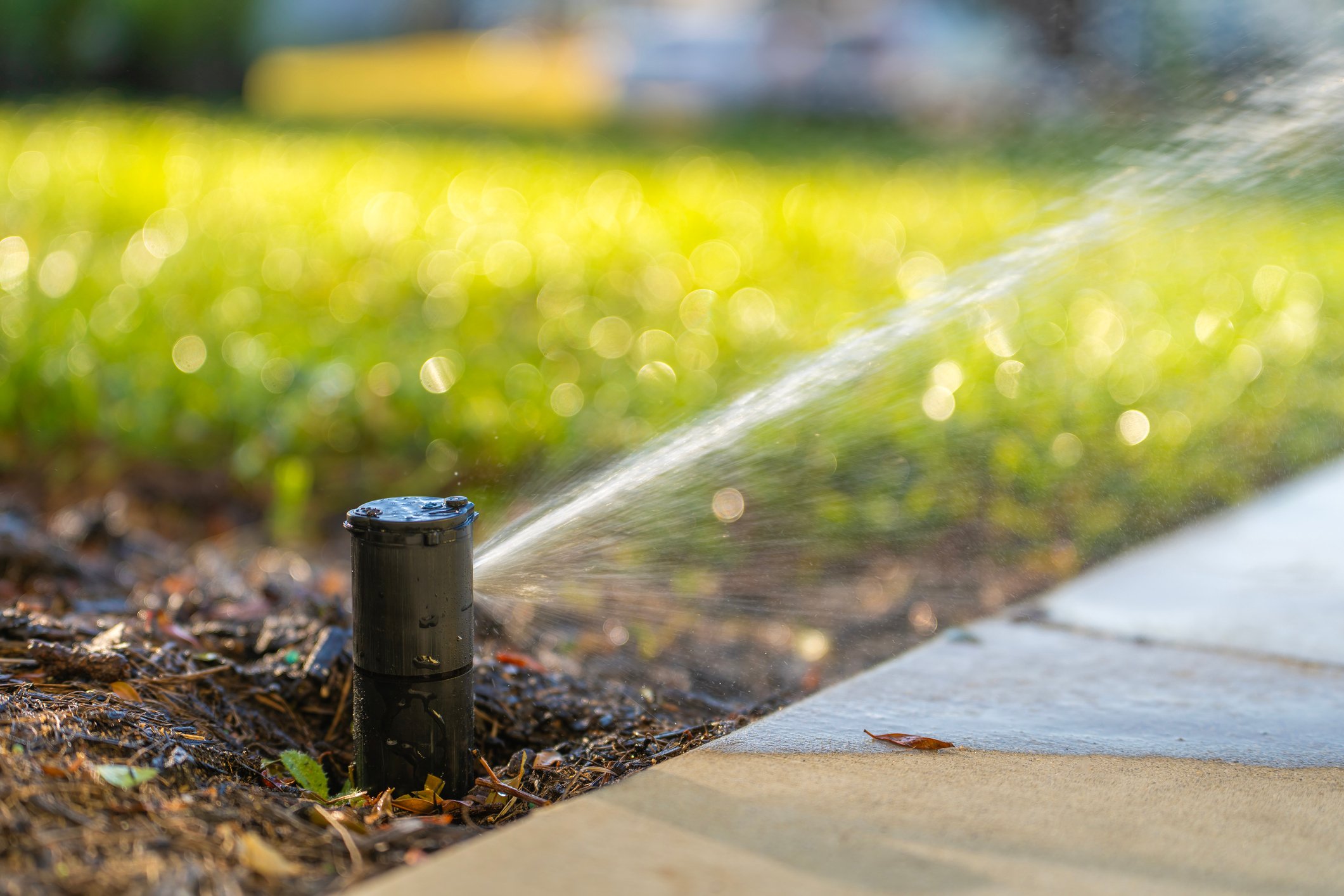
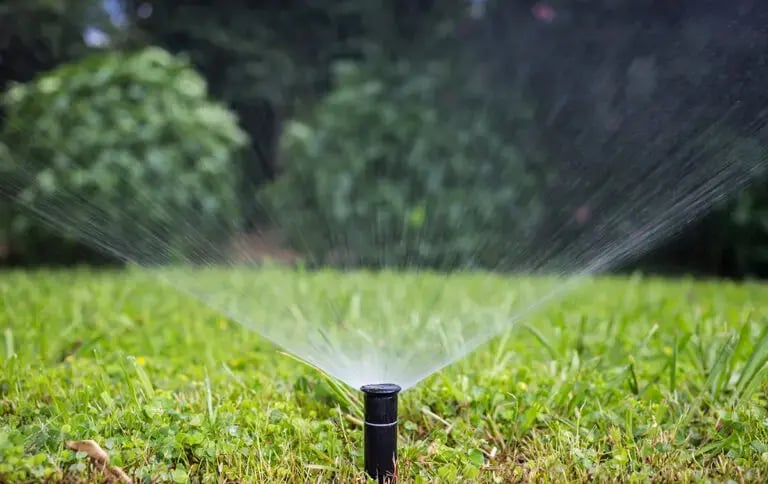
The original system used fixed spray heads throughout most turf areas.
Issues included:
- High water output rate
• Increased runoff on clay soil
• Inconsistent distribution
• Overwatering in shaded areas
Spray heads from that era were not designed for modern water efficiency standards.
2. No Pressure Regulation
The system lacked pressure-regulated heads.
Measured PSI was fluctuating between 55–70 depending on time of day.
Optimal performance for many heads is closer to 30–45 PSI.
Excess pressure leads to:
- Mist overspray
• Water waste
• Uneven coverage
3. Inadequate Zoning
Full-sun areas and shaded zones were grouped together.
In clay-heavy Fairfax soil, this created:
- Drought stress in sun zones
• Oversaturation in shade zones
Modern systems separate zones based on exposure.
This one did not.
4. Mechanical Timer Without Seasonal Adjustment
The controller required manual seasonal changes.
Homeowner admitted:
“We usually just set it once in spring and leave it.”
In the DMV, seasonal weather shifts require frequent runtime adjustments.
Without them, systems either underperform or waste water.
5. Minor Mainline Stress Cracks
While inspecting the system, we found:
- Two aging PVC fittings showing stress
• Shallow burial in certain sections
Not catastrophic — but early warning signs.
The Upgrade Plan
We did not recommend tearing everything out.
The lateral pipe network was structurally sound.
Instead, we focused on modernization.
Step 1: Convert Spray Heads to High-Efficiency Rotary Nozzles
We replaced traditional spray nozzles with high-efficiency rotary nozzles.
Benefits:
- Lower precipitation rate
• Reduced runoff in clay soil
• More even coverage
• Increased water penetration depth
Immediate visual improvement was noticeable within weeks.
Step 2: Install Pressure-Regulated Heads
We replaced older heads with pressure-regulated models to stabilize output.
This eliminated misting and overspray.
Reduced water waste by an estimated 20–30%.
Step 3: Reconfigure Zones by Sun Exposure
We split two mixed zones into four balanced zones:
- Full sun turf
• Partial shade turf
• Dense shade turf
• Bed irrigation
This allowed runtime customization.
Cost for zone expansion and valve addition:
Approximately $2,600.
Step 4: Upgrade to Smart Weather-Based Controller
We installed a Wi-Fi enabled smart controller with:
- Weather-based evapotranspiration adjustment
• Rain skip functionality
• Remote access
• Seasonal automatic adjustments
• Leak detection capability
Controller cost installed:
$1,200.
Step 5: Replace High-Stress PVC Fittings
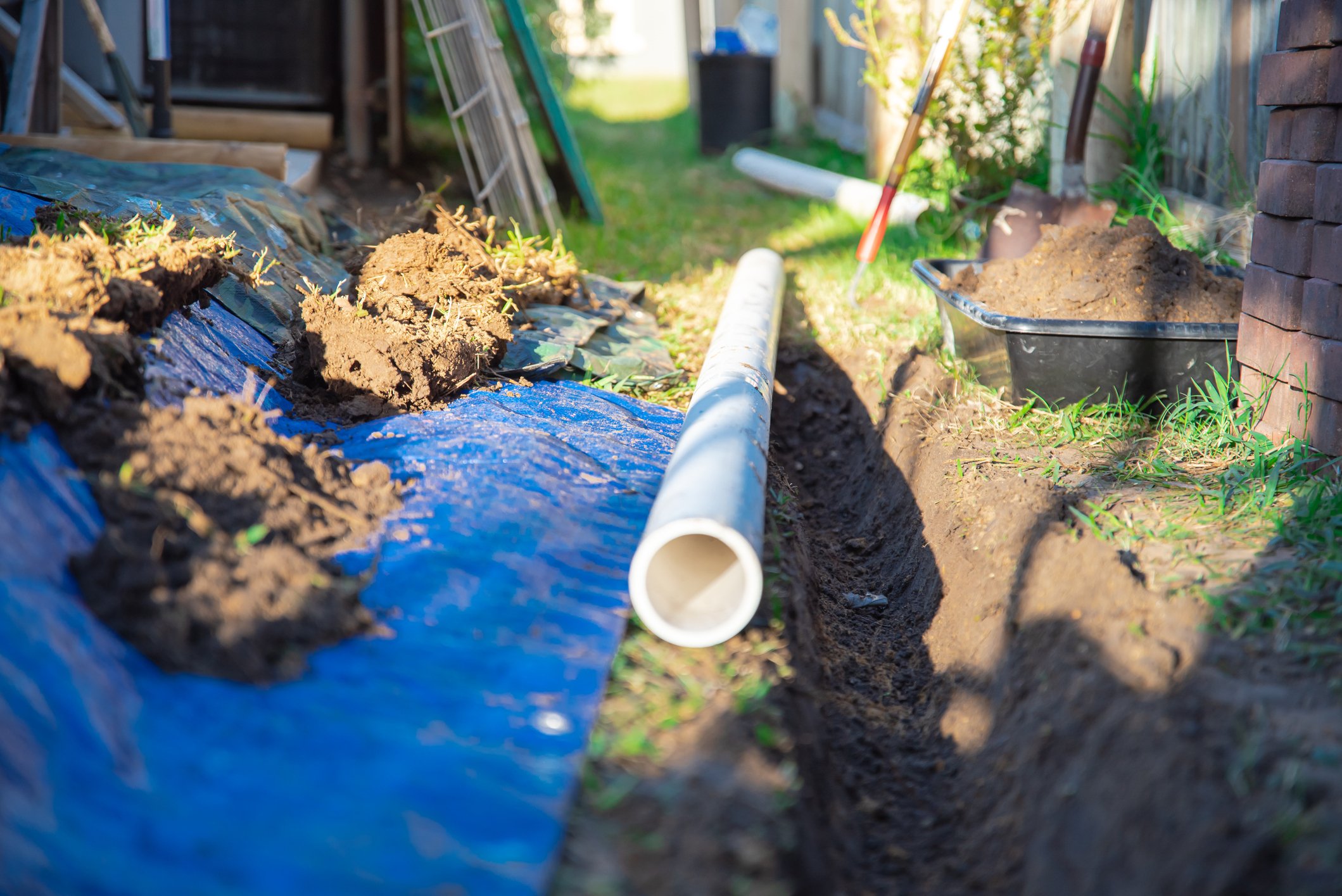
We upgraded two vulnerable PVC mainline fittings to reinforced fittings to prevent future cracking.
Preventative cost:
$400.
Total Upgrade Cost
Complete system modernization totaled approximately:
$5,800.
Compared to full system replacement ($8,000–$12,000 in the DMV), this was a strategic upgrade rather than a full rebuild.
Results After One Season
Within one growing season, the homeowner reported:
- Even turf density
• No brown patching in sun zones
• Lower water bill (approx. 22% reduction)
• Fewer mid-season adjustments
• No emergency repair calls
The biggest improvement?
Predictability.
The system now adjusted automatically to rainfall and temperature.
Water Savings Impact
Pre-upgrade water usage averaged:
~1,200 gallons per irrigation cycle.
Post-upgrade:
~900 gallons per cycle.
Annual savings projected:
$400–$700 depending on season.
Over 10 years, savings alone offset most of the upgrade cost.
Why 1990s Systems Underperform Today
Technology has changed.
1990s systems were designed around:
- Simpler timers
• Higher water output heads
• Less precise hydraulic modeling
Modern systems emphasize:
- Efficiency
• Zoning precision
• Smart weather integration
• Water conservation
In high-value neighborhoods like McLean, Potomac, Bethesda, and Severna Park, landscape investment often exceeds $20,000.
Outdated irrigation technology undermines that investment.
When a Full Replacement Makes More Sense
Not every 1990s system is upgradeable.
Full replacement may be necessary if:
- Pipe depth is inadequate throughout
• Widespread cracking exists
• Hydraulic design was severely flawed
• Multiple mainline failures occur
• Coverage pattern is fundamentally incorrect
In those cases, replacement typically ranges:
$8,000–$14,000 depending on yard size.
The Long-Term Financial Comparison
Option 1: Continue patch repairs
- Annual repairs: $600–$1,200
• High water bills
• Uneven turf
• Possible pipe failures
10-year cost projection: $10,000+.
Option 2: Strategic modernization
- One-time upgrade: ~$5,800
• Lower water usage
• Fewer repairs
• Improved turf health
Long-term savings and stability.
The Bigger Lesson
Older irrigation systems rarely collapse all at once.
They decline gradually.
- Efficiency drops
• Coverage weakens
• Pressure imbalances increase
• Repairs become more frequent
Modern upgrades don’t just replace parts.
They improve design logic.
After 42 years serving Maryland, DC, and Northern Virginia homeowners, I’ve learned this clearly:
You don’t always need to start over.
But you do need to evaluate whether your system was built for 1996 — or for today.
The Bottom Line
Upgrading a 1990s sprinkler system for modern efficiency isn’t about replacing everything.
It’s about identifying what still works — and modernizing what doesn’t.
In this Fairfax case, we:
- Improved coverage
• Reduced water waste
• Increased system stability
• Lowered long-term repair risk
• Delivered measurable water savings
For homeowners in the DMV with aging systems, modernization is often the most cost-effective long-term decision.
Because irrigation infrastructure should evolve with technology.
And when it does, performance improves immediately — and stays that way.
Bob Carr is the founder and president of TLC Incorporated, which he started in 1981 as a small residential lawn sprinkler and irrigation business in Maryland. Over four decades later, he leads a team of specialists serving the Mid-Atlantic region with lawn irrigation, outdoor and holiday lighting, and yard drainage solutions. Bob's approach is built on transparent pricing, quality installation, and treating every customer with respect.
Topics: